I Deleted My TikTok and I'm Not Going Back
Under its new owners, TikTok is storing an alarming range of personal data on its users.
Neta Collab
Who else just broke up with TikTok?
I’m throwing a party. The room will be decorated with printed-out memes. The playlist will only feature songs that are no longer than one minute, but they’ll have the catchiest lyrics. And Neace Robinson (@neacedagr8) will perform “1, 2, 3 release ’em” with balloons in hand. Now, if I’ve lost you already, I’m sorry, but I needed to drop you into my chronically online mind.
Since the 2020 rise of TikTok, I’ve been an avid consumer of the app. I’ve gone there for hot takes, political education, dancing trends, multipart gossip stories from people I’ll never meet and so much more. I’m an internet kid. I’m talking Gen Z-Millenial cusper whose teenage years were shaped by Myspace and Tumblr. I’ve seen social-media apps rise and fall. I know that Vine crawled so TikTok could run. I remember the Tumblr exodus. We all saw the Twitter/X exodus.
Like so many of us, I’m used to searching for an internet home. It starts with the dopamine rush of finding a platform with new, exciting features. Filters. Green screen. More music. Longer runtime. Then the suspicion creeps in. Who is behind the app controlling and profiting from my experience, and how are they doing it? I’m conflicted knowing that online connection is important to me — but as long as these greedy companies hardwire our connection points, our communities’ safety, autonomy and expression will be compromised.
That’s why I officially deleted my TikTok account. I joined the many others leaving the platform, following the company’s ownership change from ByteDance to a group of Trump-allied U.S. investors, including Oracle, the cloud-computing and database-software company that now houses all of TikTok’s data.
First off, how did we get here?
The fight over TikTok
TikTok has been in a legal battle since 2024, and Free Press has covered it. In 2024, President Biden signed a law designed to force ByteDance to divest its holdings if it wanted to keep the app available in the United States. Then in late 2025, an executive order President Trump signed strong-armed ByteDance into a ban-or-sell deal benefiting his political minions. So, ByteDance sold the app to a group of far-from-ethical investors, which include Oracle, Abu Dhabi-based investment firm MGX and private-equity group Silver Lake.
Oracle’s owner is the mega-rich, MAGA-loving Larry Ellison. He’s the head of the family that’s gobbling up the media, one platform at a time — just take a look at his son’s Paramount Skydance merger deal. Larry Ellison is also closely allied with Israeli Prime Minister Benjamin Netanyahu and is one of the top donors to the country’s military.
From the beginning, the consortium’s intentions were clear. For example, when discussing the future of AI and surveillance during an Oracle Financial Analyst meeting back in September 2024, Ellison said, “Citizens will be on their best behavior because we are constantly recording and reporting everything that’s going on.”
Fast forward to Jan. 22, 2026, when TikTok users were greeted with a single pop-up describing the app’s new terms of service.
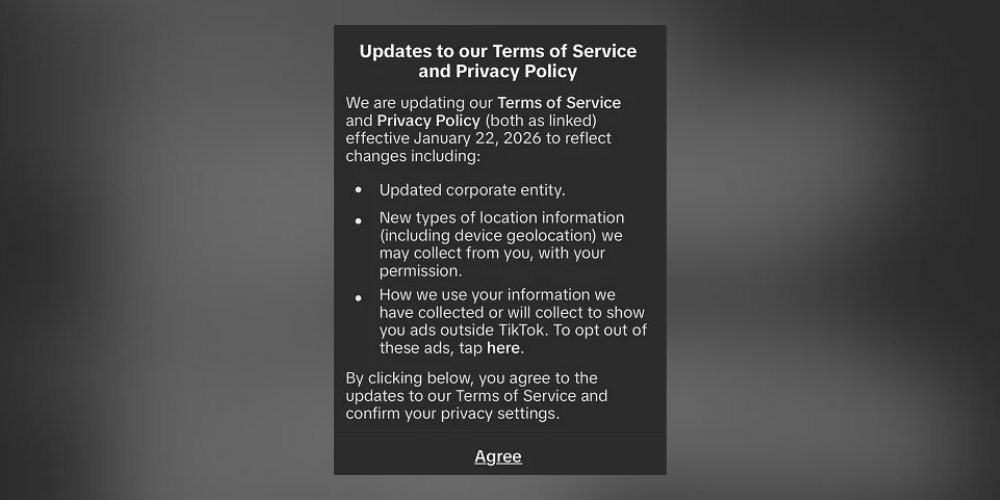
The updated privacy policy states that TikTok will collect “precise location data” from users if their location settings are enabled, while previous versions of the app did not collect precise or approximate GPS location data. The company also shared an alarming list of personal data it would be storing on users’ “racial or ethnic origin, national origin, religious beliefs, mental or physical health diagnosis, sexual life or sexual orientation, status as transgender or nonbinary, citizenship or immigration status, or financial information.”
You can imagine how Trump would use this data to bolster his campaign of terror against immigrants and anyone the administration marks as “other.” We’ve seen the ways in which the administration comes for journalists, talk-show hosts and, most indiscriminately, everyday people for simply dissenting. So, it’s deeply unsettling to think the very people bankrolling state-sanctioned violence are behind the scenes of an app collecting information on exactly who we are and where we are. And they have total control over what we see on the app — or don’t.
Since the day the ownership changed, censorship has already taken hold on TikTok. Award-winning Palestinian journalist Bisan Owda’s account was temporarily banned; other users reported being unable to write the name “Epstein” in direct messages on the app or post videos related to ICE. Though the company denied these allegations, it hasn’t inspired much hope in its future. Even their partners haven’t shied away from speaking on their agenda.
In September 2025, Netanyahu said:
“We have to secure that part … that is being challenged systematically. We have to fight with the weapons that apply to the battlefield in which we’re engaged and the most important ones are on social media. And the most important purchase that is going on right now is TikTok.”
Our presence is power — and so is our absence
We’re at a critical point in society where we need to decide between what is convenient and what is right — and we need to be willing to sacrifice our comfort to protect ourselves and each other. I’m still on imperfect platforms as we speak — Instagram, Facebook, Google, YouTube, I’m looking at you — but the boycott needs to start somewhere. I can no longer bypass my values and my safety for the sake of entertainment if it’s in the hands of warmongers. I refuse to trade my attention and my data just for abhorrent billionaires to get richer, if I can help it.
This escalation of abusive power gave me no other choice. But the choice isn’t without grief. I’m not grieving because I’m a die-hard TikTok fan. I know I spent way too much time on the app and was long overdue for a cleanse. I’m grieving because, yet again, another tech company has failed to hold the line on platform accountability and instead put billionaires’ interests first — forfeiting any real chance of this app remaining a space for authentic expression, diverse voices and creativity.
TikTok decentralized how we get news and entertainment, rivaling mainstream television networks and inspiring countless styles of short-form video content. My time streaming TV used to pale in comparison to my screen time spent on TikTok, as it gave me original content directly from regular people who are hilarious, smart and skilled — like comedian Yasmine Sahid (@ladyyasmina1), political analyst Joshua Doss (@doss.discourse), forager Alexis Nikole (@alexisnikole) and biologist Christian Cave (@caveman_wildlife).
It was the birthplace of so many trends that still take days or even weeks to gain traction on Instagram Reels. Many of those trends came from young Black and Brown creators, who have reached commercial success without any agents backing them. So many businesses grew and thrived. What I’m grieving is the loss of a platform for the ones who mainstream media misrepresent or straight up erase.
While TikTok inspired a generation of creativity, the power is and has always been in the people and what we bring to these spaces. Our cultures, experiences and opinions shape their popularity. We make these companies relevant … and rich. And ultimately, they need us more than we need them. That’s why Trump and his goons came for it. That’s why we need to quit it.
The choice to stay or go is ours to make, but the largest responsibility of all falls on the social-media companies. They must prioritize users’ privacy and safety on their platforms to ensure these spaces can facilitate free speech and free expression. Yet in this era of authoritarianism, the trend is: Trump says, they listen. How much longer until the capitulators say “no”?
According to Sensor Firm, the rate of TikTok users deleting their accounts has skyrocketed 150 percent since the company announced its new ownership. With its invasive data collection and changing algorithm, TikTok may be following in the footsteps of Musk’s X, breeding a landscape of hate that’s exacerbated by the unregulated use of generative AI and unchecked misinformation — and in time TikTok’s value may plummet just like X’s has, too. Competitors have already entered mainstream discourse, including UpScrolled, a social-media app “designed for clarity, fairness, and freedom, giving communities the power to grow and thrive on their own terms.” Only time will tell.
After a night of compulsively downloading my favorite TikToks and screenshotting the accounts of creators I adore, I opened and closed the app one last time. Good riddance, TikTok. You are no longer going to get my data, my time and my attention. I won’t be bait in your propaganda machine, nor will I allow my data to be siphoned off to other racist companies and government agencies working to target anyone who dissents against the president. We’re through.