Milwaukee Residents Want Better Access to Information About What's Happening in Their Communities
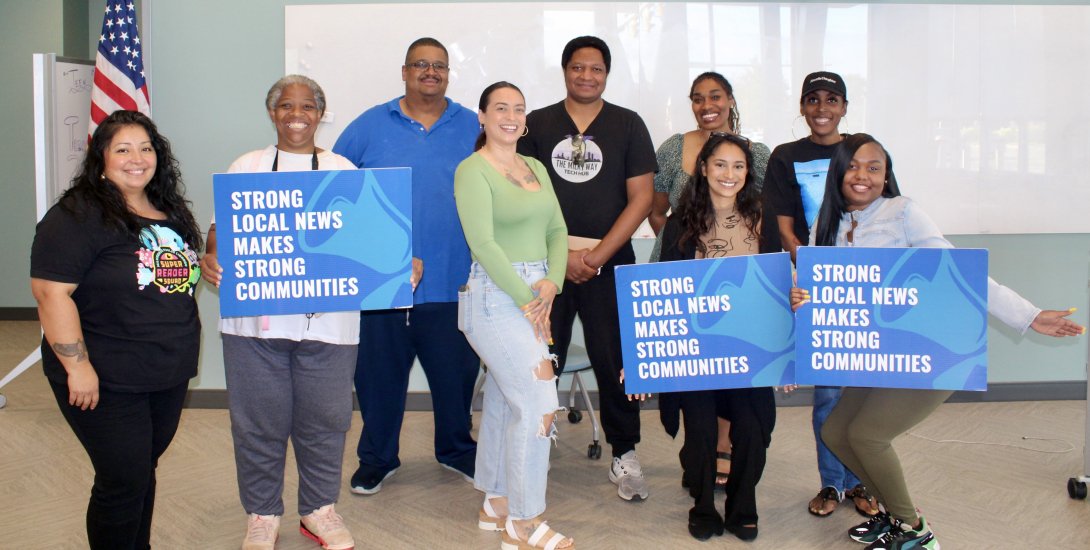
Free Press’ Arin Anderson (front row, second from right) with participants at a community-listening event in Milwaukee
On Aug. 2, Free Press hosted our first community-listening session in Wisconsin. While I was setting up the room at the Milwaukee Public Library and preparing for guests to arrive, a young woman walked through the door with our catering order and asked “What’s going on here today? Is there an event happening?” I thanked her for bringing the order and told her that we were going to discuss how communities stay informed. She said how she wished she’d known about the event beforehand — and expressed how difficult it is to stay in the loop on community events and programs happening in her neighborhood.
Oftentimes, this is the case for many residents not just in Milwaukee, but across the entire state. It’s actually the reason I joined the Free Press team. Shortly before I started, I facilitated a focus group about where Wisconsin voters get their election information. In that particular group, not one participant named a news outlet or information source other than family and friends.
That was almost two years ago, and in the conversations I’ve had since then, I’ve continued to hear about how difficult it can be for Wisconsin residents to find information about issues that matter to them.
That’s why we hosted the listening session — it’s crucial to hear directly from community members about their information needs so that any policy solutions will benefit both journalists and residents themselves.
Community-centered listening and storytelling are essential
Part of building a healthier local information ecosystem is making sure communities aren’t simply the subjects of journalism, but have the knowledge and power to shape how their stories are told. But what can we do about it? How can we interact with media outlets as people of color when there’s already so much harmful reporting on our communities? How can we ensure that we have the information we need about state and local politics and other crucial issues?
Free Press has been fighting for media justice and informed communities for decades. Over the years, community voices and community-centered storytelling have always been central to this work. Without hearing directly from community members, how can we ensure that what we’re advocating for will help the people we aim to serve? No one knows what information a community needs better than the community members themselves.
That’s why I partnered with Enjoyiana Nururdin of The Capital Times to host a workshop about Black and Brown community members owning their stories in the media. We followed this with a conversation on how information flows through different communities across Milwaukee.
Owning your story in the media is about more than just preparing for an interview
Once we gathered in the library’s community room, Nururdin facilitated her workshop “Own Your Story.” She walked us through why Black journalism matters and explained how stories that cover the same subjects over and over — often with the same recycled headlines — shape narratives and opinions. She also discussed how to identify misinformation, learning to own your story and how to advocate for what’s important to you.
“The problem is that if the only stories being told are about communities instead of by communities, people never get the full picture,” Nururdin said.
After the workshop, we took a break before diving into our conversation about how information flows through different communities and neighborhoods across Milwaukee. I wanted folks to start thinking about where they get information about important local issues, so I started off by asking if people were familiar with the data-center proposal for the Midtown shopping center on the north side of Milwaukee. They were, so then I asked how folks knew about it — where did they get their information? Some said Facebook, some said a family member or friend. We agreed that we all knew about it, but we only learned about it after the proposed development was already underway. That was a problem.
Milwaukee residents want more information about issues that impact their safety and well-being
Access to information about issues that directly affect communities should be easy to find, come from a reliable source and be available in a timely manner. Residents should be able to find information about how to show up and take action before crucial decisions are made — not after they’ve already been decided.
Now that folks were thinking about how they find information on issues they care about, I wanted to dive deeper into how information travels through different communities across Milwaukee. I asked folks six questions:
- What are the most pressing issues impacting residents in Milwaukee and surrounding areas?
- How do people get the information they need to stay informed and take action?
- What are the challenges or gaps when getting local information?
- What’s working in keeping Milwaukee residents informed?
- What stories and information would you like to see more of in Milwaukee?
- How can the media build a better relationship and more trust within the community?
I wrote out the questions on poster boards propped up along different tables with sticky notes and markers. We spent about 20 minutes walking around the room, writing out our ideas and sticking them to each question. Then we gathered back together into a group and talked through the different responses everyone left on the boards.
After going through each response we noticed some common themes. Participants expressed the need for more information about community events and programs, mental-health resources, affordable housing and how to take action against reckless driving.
These conversations are especially important as Wisconsin heads toward another legislative session with real opportunities. Lawmakers are expected to revisit anti-SLAPP protections that came close to passage this year, as well as a broader package Sen. Mark Spreitzer and Rep. Brienne Brown introduced that includes a local-news subscription tax credit, a journalism-fellowship program and public grantmaking for local news and civic information.
As those proposals take shape, we want to make sure the voices and information needs of Wisconsin communities are part of the conversation. We’ll bring what we hear through these listening sessions into the policy agenda we’re developing with Wisconsin media and civic leaders, and use that agenda to evaluate the proposals lawmakers put forward next session.
This was our first community-listening session, and it laid the groundwork for bringing a broader range of Wisconsin residents, media leaders and civic organizations into the push for policies that will help communities stay informed and engaged in civic life.
Over the coming months, we’ll continue listening in other parts of the state and bring what we hear into conversations with lawmakers ahead of the 2027 legislative session. What communities need in Milwaukee may look very different from what residents need in rural Dunn County or elsewhere in the state.
Those differences matter. If Wisconsin is going to invest in stronger local news and civic information, the people who rely on that information should have a say in what those policies are designed to accomplish.
****
Help Free Press keep fighting for stronger local journalism: Donate today.