Speech Rights Don't End If You're an Immigrant Reporter
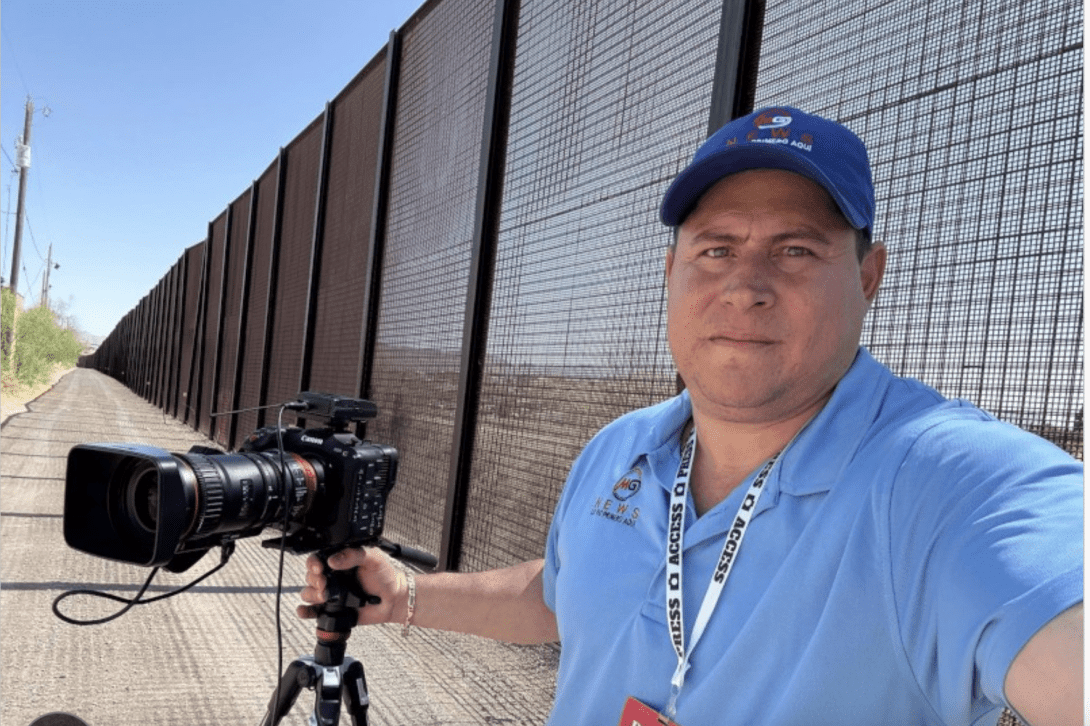
Journalist Mario Guevara spent more than 100 days in ICE detention before the Trump administration deported him.
Facebook page for Mario Guevara
Attacking media independence is page one of the authoritarian playbook. This comes in various forms, from outright repression and state violence against reporters on the ground to more structural constraints that weaken the media’s autonomy or access to those in power.
Around the world, authoritarian governments have perfected the practice of imprisoning journalists to silence truth and remove accountability to the public. In Belarus, China, Georgia, Myanmar, Russia, Serbia and Turkey, reporters are routinely jailed under national security, terrorism and anti-state laws. In the Philippines, journalist Frenchie Mae Cumpio — following years of harassment over her reporting — was sentenced to 12–18 years in prison in January 2026 on terrorism-financing charges. Hong Kong publisher Jimmy Lai remains a symbol of Beijing’s determination to criminalize independent journalism.
According to the Committee to Protect Journalists, 330 journalists were imprisoned worldwide at the end of 2025, with China, Israel and Myanmar among the leading government jailers.
Trump’s attacks on free speech and the press
The United States has long condemned these practices. However, under Trump, the litany of attacks on speech and the media is literally so long that I wrote an entire report examining hundreds of incidents in his second term.
This tactic fits together with the administration’s broader efforts to use immigrants to test the boundaries of novel legal theories that might allow the federal government to remove massive amounts of people in the United States. In 2025, graduate student Mahmoud Khalil was tossed into ICE custody during a warrantless arrest for protesting U.S.-supported Israeli attacks on Gaza. Authorities have also targeted and detained foreign students — including Badar Khan Suri, Mohsen Madawi and Rumeysa Ozturk — for their constitutionally protected speech.
These twin strategies place immigrant journalists in some of the most dangerous crosshairs, as they are often risking the most to provide information and coverage to communities with less. Foreign reporters have the same speech rights as anyone else in this country, despite the federal government’s attempts to carve out exceptions to the First Amendment.
The immigration system is a civil, not criminal, legal system — borne out of similarly chilling political circumstances to protect the United States from national-security threats during World War II and terrorism surrounding the 9/11 attacks. These public-safety frameworks have long been a pretext for our government to engage in surveillance, investigation and prosecution of individuals it seeks to root out.
Mario Guevara. Estefany Rodriguez. Luis Galeano. Sami Hamdi. Richard Parias. Yaakub Vijandre. The Trump administration has targeted and detained each of these individuals for their political reporting and for filming law enforcement.
Free Press has defended against several of these attacks in court with other civil-liberties and press-freedom organizations, aiding in the release of reporters Estefany Rodriguez and Luis Galeano. But others have not fared so well. Despite a global coalition fighting for his freedom, Mario Guevara was deported last October for his work filming police during a No Kings rally in the Atlanta area. Richard Parias (Richard “LA”) remains the longest-held journalist in U.S. detention. Both he and local Texan streamer Yaakub Viajndre have been held in rural detention facilities since last October.
Equally disturbing: I know several other immigrant reporters who have self-deported, abandoning their lives in the United States for fear of being targeted by an aggressive and increasingly lawless government bent on stamping out accountability.
The immigration courts have been haphazard at best in their rulings, making those detained vulnerable to the circumstances of where they are being held, the quality of the legal representation they manage to get, and the randomness of the judge assigned to their case. These courts are, however, no more than the leftover administrative tribunals from decades-old efforts to criminalize immigrant status.
The need for investigation and oversight
The constitutional violations that flow from these last two years of the Trump administration’s abuse of immigrant reporters deserve scrutiny.
Following the midterms, my colleague Craig Aaron explained: “Disgust with corruption was a defining issue in this election, and we need answers and evidence collection on all the high crimes and misdemeanors of this regime over the past two years, from DOGE to ICE to the destruction of USAID.”
Congress has a window in 2027 to investigate the Trump administration’s myriad corrupt practices. Rep. Robert Garcia, the incoming chairman of the House Oversight and Government Reform Committee, is already signaling his intention to investigate “the violence, abuse, and corruption carried out by the Department of Homeland Security” as well as abuse of federal government funds under the pretext of immigration enforcement.
Such efforts must also include accountability on press freedom and the investigation of unconstitutional acts targeting the media — and immigrant reporters specifically.
Congressional oversight doesn’t have to end at just investigations. There are tremendous reforms already on the table that have been introduced before, which the next Congress can reintroduce and pass. Priority reforms should include the Right to Record Act, which would protect people’s right to record government officials; shoring up privacy protections for reporters; and safeguarding journalistic sources through the PRESS Act.
Investigations won’t miraculously make whole those who have already suffered at the hands of the Trump administration’s attacks and deportations. But oversight by our democratically elected leaders would be a powerful signal that this country won’t ignore the human costs endured these last two years — and may rehabilitate the United States’ commitment to protecting vulnerable voices on the frontlines of reporting.
***
Help Free Press Action keep fighting to protect journalists under attack: Donate today.