Flock: the New Face of an Old Problem
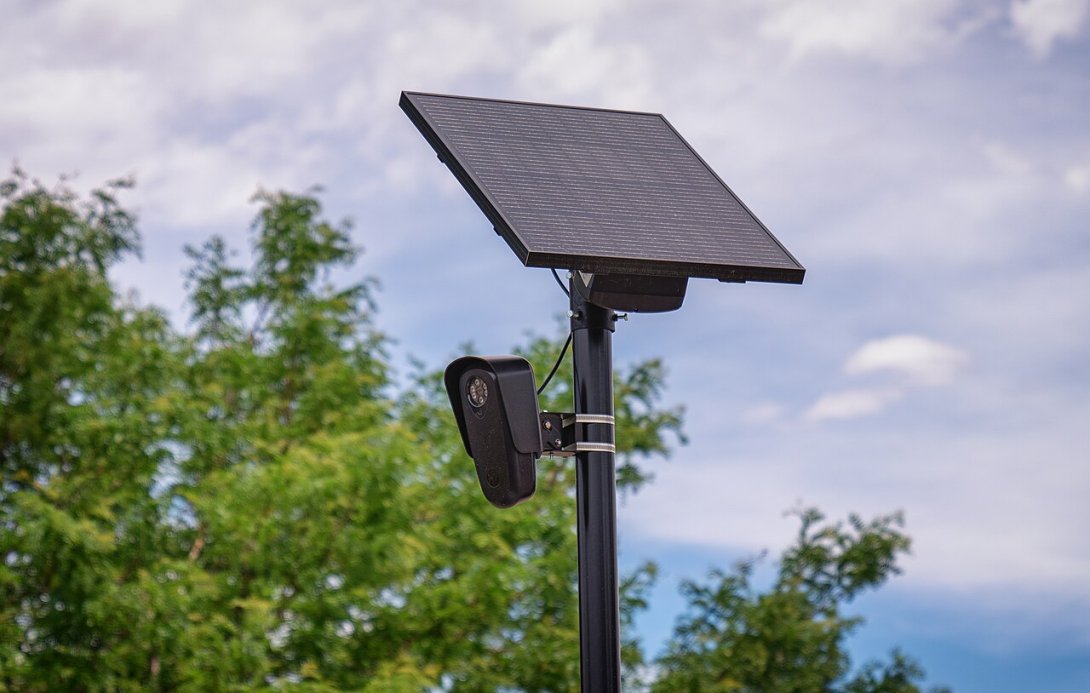
Flock cameras scan over 20 billion vehicles a month — enabling police departments around the country to reconstruct the movements of millions of people without a warrant.
Wikimedia Commons user Tony Webster
Flock — while just one company that supplies automatic license-plate readers to police departments across the country — has become the subject of outrage and concern from activists, advocates, everyday people and lawmakers at every level of government. In September, the Senate Judiciary Crime and Counterterrorism Subcommittee held a hearing on Flock cameras, and Rep. Rashida Tlaib joined the ranks of lawmakers including Rep. Alexandria Ocasio-Cortez and Sen. Bernie Sanders when she introduced a bill in October that would ban ALPRs.
When Congress returns from recess in November, addressing the many ways that the government conducts mass warrantless surveillance is likely to be a high priority. ALPRs in particular have become symbolic of this much larger issue. But license-plate readers in some form have been around for nearly two decades. So why is everyone paying attention now?
More cameras, more problems
ALPRs are not owned by the police departments that use them, and the information captured is maintained by companies in massive nationwide databases that police departments pay to access. And technological advances like AI have made it easier to analyze, aggregate and share information — and even predict people’s movements based on prior travel patterns.
Furthermore, the sheer scale of the network of ALPRs — over 130,000 in 49 states, with Flock cameras alone scanning over 20 billion vehicles a month — means police departments around the country can reconstruct the movements of millions of people without a warrant. Companies like Flock market ALPRs to police departments as a “targeted” resource that will help solve vehicle-related crimes like car theft or assist in finding missing people. However, they are actually a powerful surveillance tool that, without serious guardrails, can easily be weaponized against anyone.
So far over 100 police officers have been discovered abusing ALPRs for unauthorized reasons that include stalking romantic interests. If this wasn’t disturbing enough, these cameras have also targeted racial and ethnic minorities and surveilled areas near protests and demonstrations. Data sharing between state and local police departments and federal agencies like the Department of Homeland Security and FBI means that information ALPRs capture can be used for immigration enforcement and to track people seeking reproductive health care — weakening any sanctuary or pro-choice policies that individual communities or states may have.
Local advocacy has led over 250 local governments to end their use of ALPRs by canceling contracts with ALPR suppliers. Several states have passed laws that range from partial bans to restrictions on how ALPR data can be used, shared or retained. The concerns about the warrantless-surveillance implications of the rapidly expanding ALPR network caught the attention of Congress while lawmakers were considering a different warrantless surveillance authority — the reauthorization of Section 702 of the Foreign Intelligence Surveillance Act.
In May, Reps. Scott Perry and Chuy Garcia introduced an amendment to a federal transportation bill that would prohibit states that receive federal highway funding from using ALPRs for purposes other than tolling. While the amendment didn’t pass, it was the first of several legislative proposals to address the ALPR problem.
Since May, members of Congress from both parties have introduced four bills to regulate ALPRs. Check out the chart comparing the main mechanisms of these bills or download a PDF containing this analysis.
Major legislative components of ALPR bills
Bans on federal funds for ALPRs: A popular approach is cutting off the flow of money by prohibiting state and local governments from using federal funds to acquire ALPRs. Federal agencies like the Departments of Homeland Security, Housing and Urban Development, Justice and Transportation issue grants that states and localities can use for contracts with ALPR suppliers. Federal legislation can also establish grant programs that allow funds to be used for license-plate readers. Funds that individual members of Congress have earmarked for community projects could also be used to acquire ALPRs. While this isn’t an outright ban, it’s a significant disincentive that could result in more states and localities ending or not pursuing contracts with ALPR suppliers.
Ban on federal agencies using ALPRs: Although state and local law-enforcement agencies are the ones that have contracts with ALPRs, federal agencies can access these readers through data-sharing agreements. Through the “High Intensity Drug Trafficking Area” (HIDTA) program — an anti-drug trafficking program from the 1980s housed in the White House’s Office of National Drug Control Policy — data from ALPRs is aggregated on federal government servers. As a result, federal agencies that may not have their own contracts with ALPR companies can nonetheless access this information.
A procurement contract the FBI issued revealed that the agency is seeking a vendor to provide it with nationwide access to ALPR data. The use of ALPRs on private property — for example, on retail and commercial properties, homeowners’ associations and parking operators — could also be a way that federal law-enforcement agencies get information from ALPRs. This is similar to the way that Amazon allowed police departments to request video its Ring cameras capture.
Warrant requirement for accessing ALPR data: Our location information can reveal where we work, which health-care provider we see, people we meet, where we worship, if we attend a protest — basically most aspects of our lives. In the Chatrie v. United States decision from June, the Supreme Court decided that law enforcement needs a warrant to access cellphone-location data, and emphasized that “no government official should have free access to the most closely kept aspects of [Americans’] lives.” While other legislation, like the Fourth Amendment Is Not For Sale Act, would comprehensively close the data-broker loophole, requiring a warrant for ALPR data would be a significant step forward.
Retention limits: Privacy, civil-liberties and cybersecurity experts have highlighted that companies retain personal data for long periods of time — posing a major threat to our privacy. Mandatory retention limits were included in federal comprehensive data-privacy proposals like the American Data Privacy and Protection Act and in state data-privacy laws like those in California and Maryland. The issue has also been raised in FTC proceedings around corporate abuses of consumer data.
After outrage followed reports of ALPR misuse, Flock changed its default retention limit from 30 to seven days, although state and local governments can still require the company to store the data longer. Considering that Flock cameras alone conduct over 20 billion vehicle scans a month, a 30-day retention period still means that the locations of tens of millions of people — who are not suspected of a crime — have their information sitting in a database for law-enforcement agencies at every level of government to access.
Transparency and enforcement: Transparency requirements that mandate disclosure of the types of surveillance technologies law enforcement uses and how they use them are key to alerting lawmakers and the public to abuses.
But transparency on its own doesn’t prevent abuse of surveillance technology; that’s why strong enforcement mechanisms are needed. A private right of action empowers people to seek redress when their rights are violated and is a powerful deterrent. Another powerful enforcement mechanism: preventing evidence that is obtained from prohibited technology — or without a warrant — from being used against people in court proceedings.
Preemption of state and local laws: States and localities have historically built on federal laws when enacting privacy laws in areas like employment data, criminal history, housing, financial data and health-care information. While none of the legislation targeting ALPRs so far has provisions that preempt state or local laws, congressional efforts to target surveillance technology should be a strong baseline that states can build on.
A blast from the past
If any of these provisions sound familiar to you, it’s because these are the same types of policy provisions that Free Press Action and our coalition partners have been demanding for years to protect our privacy in the digital age. What stands out about these bills, though, is that they cut off the flow of dollars from the federal government to companies that profit from harvesting and selling our information at the expense of our civil rights.
Other legislative proposals, like one Sen. Ed Markey introduced in September, would employ the same mechanisms as several of the ALPR bills, but target another type of technology that allows for intrusive warrantless surveillance: biometric and facial-recognition technology.
The opposition to Flock cameras and biometric technology are at their core opposition to warrantless surveillance. In June, Congress allowed Section 702 of the Foreign Intelligence Surveillance Act to expire, rather than reauthorize it with reforms that would address long-standing abuses of that warrantless surveillance authority. Free Press Action’s next fight will be to keep Section 702 reauthorization out of the National Defense Authorization Act, so that we can get reforms — including closing the data-broker loophole — that protect us against the oppressive surveillance that occurs when our private information is for sale.
****
Help Free Press Action keep fighting the surveillance state: Donate today.