2025 Annual Report
Fighting Government Corruption and Protecting Free Speech
A MESSAGE FROM OUR CO-CEOs
2025 was a devastating year for our country. President Trump and his enablers tried to dismantle and weaponize the government for their own selfish interests, defunding crucial programs and sabotaging civil and human rights — including our most basic First Amendment rights to free speech, freedom of the press, and the freedom to dissent and protest.
But it was also a time of collective resistance — and Free Press and Free Press Action fought hard and effectively to combat authoritarianism, protect free speech, and expose the media and tech billionaires caving to the administration.
In 2025, we were at the forefront of issues ranging from corruption and censorship at the FCC to attacks on public media — and helped people understand why and how our media system is failing us. We gave people tangible ways to disrupt our nation’s slide into authoritarianism. At the same time, we organized powerful coalitions and built support for media that actually meets communities’ needs. We stopped and slowed a number of administration plans that would have collapsed a free and independent press.
We also mourned the losses of Free Press co-founder and mentor Robert W. McChesney, our visionary board member and dear friend Brandi Collins-Dexter, and legendary journalist Bill Moyers, who was one of our earliest supporters. We hope to honor their memories by continuing to carry forward the work, resisting tyranny and planting the seeds for a better future.
At a time when so many democratic principles are under threat, we remain committed to our mission of promoting a just and equitable media system that serves a multiracial democracy. Your generous support keeps Free Press and our sister organization, Free Press Action, independent from the government, political parties and the industries we track — and allows us to work solely for the public interest. Read on to learn what you helped us accomplish in 2025.
In solidarity,
Craig Aaron and Jessica J. González
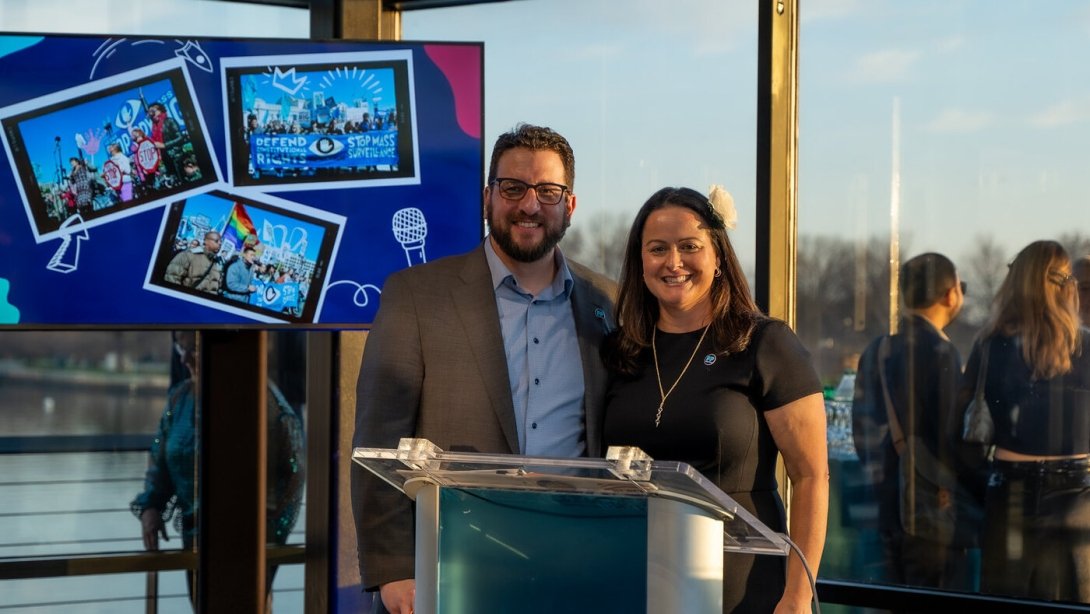
Courtney Morrison
STANDING UP FOR FREE SPEECH
In December, we released Chokehold: Donald Trump’s War on Free Speech & the Need for Systemic Resistance. Nora Benavidez’s comprehensive report analyzes how Trump and his political enablers worked to undermine and chill the most basic freedoms protected under the First Amendment throughout the course of 2025. Chokehold catalogues nearly 200 government attacks on free speech, including verbal threats, arrests, lawsuits, regulatory actions and military deployments. The report found that while no one is safe from Trump’s efforts to control the message, the administration is targeting the press most of all.
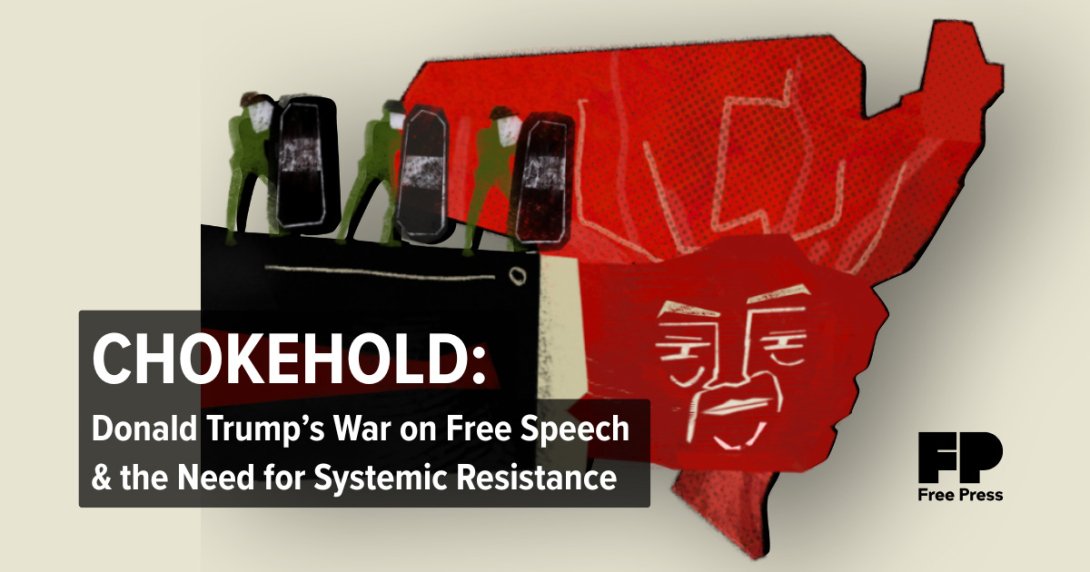
“Trump’s censorship playbook is responsible for the administration’s central retaliatory ethos and inspires a set of strategies that loyal actors in government use to silence dissent and chill free expression,” Benavidez wrote. “This playbook is to lie, distort reality for the public and deploy a cadre of henchmen to carry out Trump’s threats of reprisal.”
That same month, Benavidez published a New York Times Op-Ed about her findings. “Constitutional rights and democratic norms don’t disappear all at once; they erode slowly,” she wrote. “The next three years will require a vigilant defense of free speech and open debate.”
Chokehold built on Free Press’ efforts throughout the year to protect free speech. In February, Free Press Action Co-CEO Craig Aaron testified in a House hearing on the “censorship-industrial complex.” He discussed how the Trump administration is using the power of the government to shake down the media and quash dissent. “I’m a former journalist, sitting here with a panel of journalists,” he said. “I may not agree with them, but I will defend their rights to speak and write without fear of intimidation and harassment by government officials, without fear of unlawful government surveillance for simply speaking to their sources, without fear of unconstitutional censorship and retaliation.”
In May, we organized a powerful event in Los Angeles with FCC Commissioner Anna Gomez as part of her First Amendment tour. The gathering at California State University, Los Angeles — which drew coverage in The Los Angeles Times and The Wrap — featured discussions among Gomez, Hispanic LA founder Gabriel Lerner, UCLA Professor and MacArthur Fellow Safiya Noble, Rep. Raul Ruiz and Southern California Public Radio CEO Alejandra Santamaria. Local advocates, journalists and the public also had the opportunity to testify about their own experiences in the face of escalating government threats.
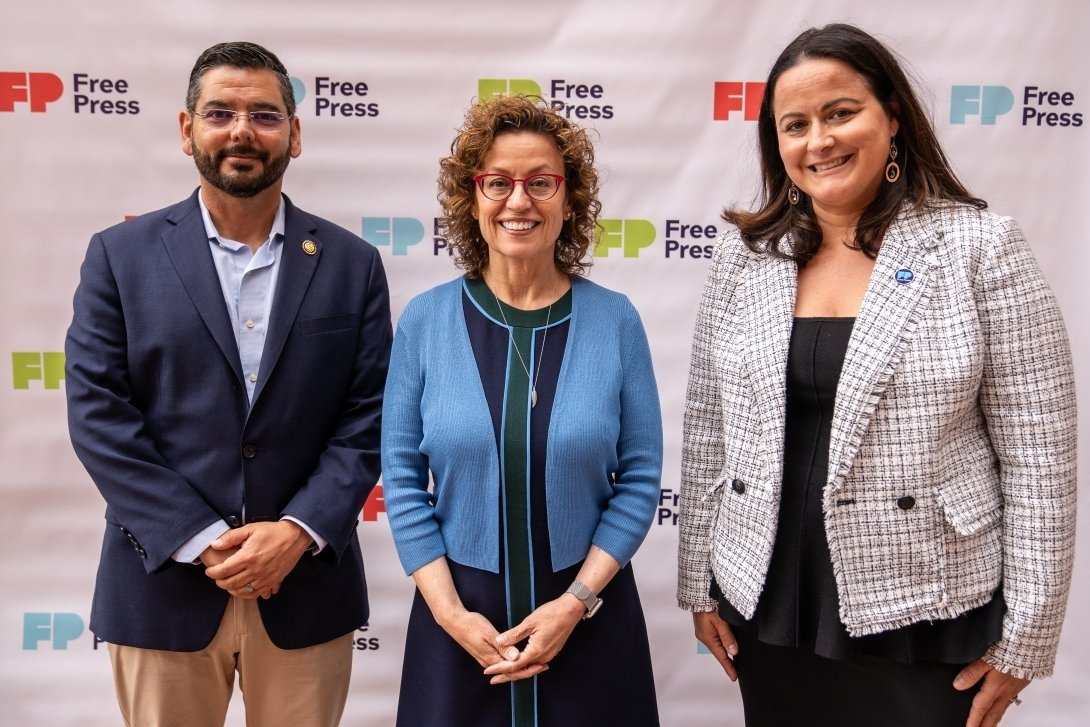
Rep. Raul Ruiz, FCC Commissioner Anna Gomez and Free Press Co-CEO Jessica J. González
Halline Overby
“I launched this First Amendment tour to bring attention to this administration’s campaign of censorship and control,” Gomez said during the event. “We all need to understand what is happening and we need people to speak up and to push back.”
We highlighted how Gomez’s bravery has stood in sharp contrast to Brendan Carr’s abuses of power. “Gomez has put her job in jeopardy by speaking out against the administration-wide crusade against dissenting voices in the media,” said Free Press Co-CEO Jessica J. González, who moderated the event. “This administration wants to whitewash U.S. history and shut down the diverse viewpoints that are fundamental to a healthy democracy.”
Lerner, the longtime editor of La Opinión, shared powerful remarks that connected his experience growing up during a time of repression in Argentina to what’s happening in the United States today. “Attacks on the press can be the introduction to regime change,” he said. “Like the courts, the universities, the lawyers, the media are essential to keeping our hopes alive.”
In November, we held an event with Commissioner Gomez at Rutgers University-Camden in New Jersey. González again moderated the discussion, which featured remarks from Senior Director of Journalism and Media Education Vanessa Maria Graber as well as local advocates and journalists. The First Amendment “marks the line between freedom and oppression,” Gomez said during the gathering. “We must defend it without compromise.”
FIGHTING AUTHORITARIANISM
Attacking the press is a classic strategy from the authoritarian playbook. Trump — who has described the press as the “enemy of the people” — ratcheted up his attacks on journalists and media companies in his second term. He targeted reporters who critiqued him, revoked press passes and filed multibillion-dollar lawsuits against newsrooms — even as he gave special access to regime-friendly propagandists. Billionaire owners of outlets including The Los Angeles Times and The Washington Post tried to curry favor with him instead of fighting to protect their papers’ journalistic integrity.
And they’re not alone: Tech and media billionaires including Amazon Chairman Jeff Bezos, Apple CEO Tim Cook, Fox’s Rupert Murdoch, Google CEO Sundar Pichai, Meta CEO Mark Zuckerberg, Paramount Skydance’s Larry and David Ellison, and X Chairman Elon Musk cozied up to Trump to boost their profits, secure merger approvals and snag lucrative government contracts. Throughout the year, Free Press tracked and spoke out about how these leaders are prioritizing their bottom lines over the health of our democracy.
In 2025, we documented how Trump’s second term has featured exhaustive attempts to roll back basic rights, eliminate checks on his power and demonize any groups — including universities, activists, law firms, public-health experts and artists — that refuse to capitulate. We convened internationally known experts, lawmakers and members of the media for a series of webinars to offer public education about the stakes of this moment — and how to defend our collective freedom.
Nora Benavidez moderated “Free Speech in the Age of Retaliation,” which explored the administration’s vindictive attacks on student protesters, immigrants and minority communities. The event featured powerful remarks from Baher Azmy, the legal director for the Center for Constitutional Rights and the attorney for persecuted activist Mahmoud Khalil, and Damon Hewitt, the president and executive director of the Lawyers’ Committee for Civil Rights Under Law.
Jessica J. González co-hosted “Defeating Authoritarianism” alongside Free Press board member Heidi Beirich, who heads the Global Project Against Hate and Extremism. During the conversation, Nobel Peace Prize laureate Maria Ressa of the Philippines, András Bíró-Nagy of Hungary and Rafal Pankowski of Poland discussed their own nations’ experiences with authoritarianism — and offered practical strategies on how to resist.
Campaign Manager Ruth Livier created a powerful toolkit, “Organizing Against Authoritarianism,” and presented it at the Netroots Nation conference. This toolkit gives journalists, newsrooms, activists and others strategies to stay safe while pushing back against authoritarian threats. We also created and shared other resources on topics including protest rights and how to recognize the red flags of authoritarianism.
HOLDING FCC CHAIRMAN CARR ACCOUNTABLE
Free Press was the first group to warn about Brendan Carr’s threats to democracy. Back when he was an FCC commissioner, we documented how he undermined the public interest at every opportunity. Before Trump took office, we exposed his ties to Project 2025 and his threats to free speech. And we showed how his bid to become FCC chairman revealed his willingness to punish Trump’s enemies. “Carr hasn’t just flirted with violating the First Amendment rights of companies the FCC has clear authority to regulate,” Jessica J. González wrote in The Hill soon after the 2024 election. “He plans to extend his crusade to entities the agency has no mandate to oversee.”
As FCC chairman, Carr has shown that his allegiance to Trump outranks his obligation to uphold the Constitution and maintain the FCC’s independence. But we’ve also seen how exposing and protesting his abuses has helped keep the agency in check. The Jimmy Kimmel debacle is a telling example. In September, Carr pushed Disney/ABC and its affiliates to cancel Jimmy Kimmel’s show after the host made comments about how right-wing extremists were responding to the killing of Charlie Kirk. “We can do this the easy way or the hard way,” Carr said in an interview with right-wing podcaster Benny Johnson. “These companies can find ways to change conduct and take actions on Kimmel, or there’s going to be additional work for the FCC ahead.”
After broadcasting-station giants Nexstar and Sinclair subsequently announced they would preempt Kimmel’s show, Disney/ABC caved and announced it was suspending the program indefinitely. “Donald Trump and Brendan Carr have turned the FCC into the Federal Censorship Commission, ignoring the First Amendment and replacing the rule of law with the whims of right-wing bloggers,” Craig Aaron said. “This is nothing more than censorship and extortion.”
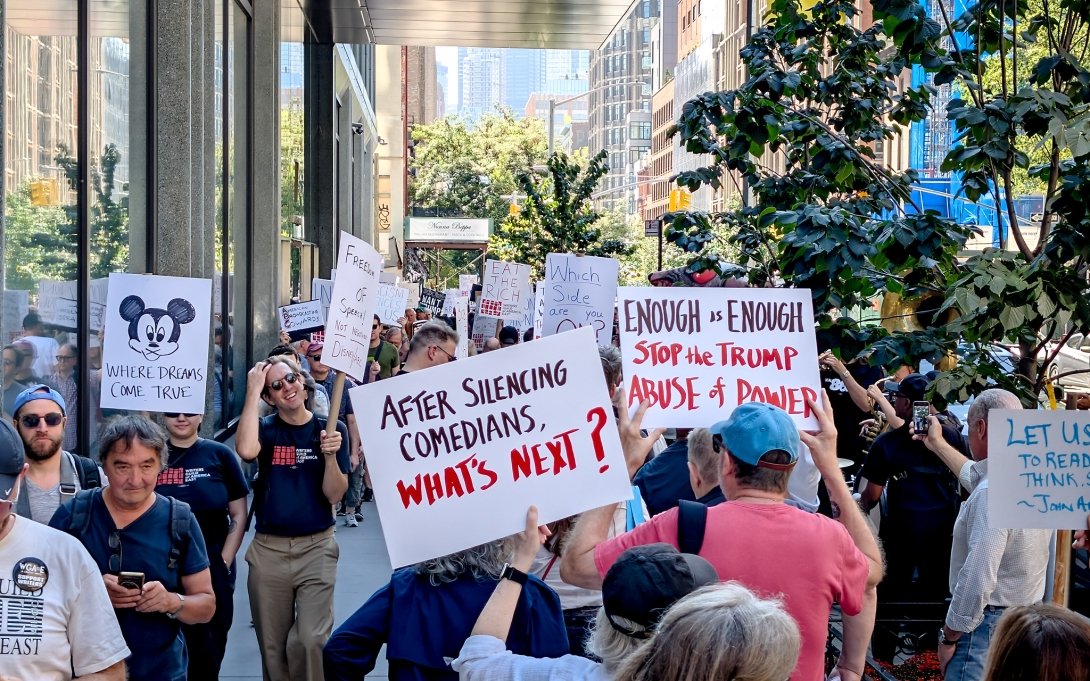
Timothy Karr
Free Press immediately kicked into action, building a tool that enabled us to mobilize thousands of people in just a few hours to call their local ABC affiliates and urge them to put Kimmel back on the air. Free Press staff also took part in protests outside Disney headquarters, and we helped the media make sense of the issues at stake. The public outcry — including 3 million canceled Disney+ subscriptions — forced the companies to put Kimmel back on the air and made Carr a household name (and the target of derision) from other late-night shows and even South Park.
Thanks in part to Free Press’ work, widespread public outrage over Carr’s actions broke through to bipartisan audiences. Members of his own party brought him in for oversight hearings in both the House and Senate, where he was admonished and questioned about the incident. Republican senators including Commerce Committee Chairman Ted Cruz, Majority Leader John Thune and Rand Paul issued statements condemning Carr’s actions as “dangerous” and “absolutely inappropriate” — and urged him to refrain from using his power “in a coercive way.” In addition, Democratic Sen. Ben Ray Luján, the ranking member on the Senate subcommittee that oversees the FCC, introduced the Broadcast Freedom and Independence Act of 2025. The bill would prohibit the FCC from punishing broadcasters on the basis of viewpoints aired.
The Kimmel fiasco was simply the most public expression of Carr’s corrupt approach. After Trump sued Paramount-owned CBS for $20 billion over its standard editing of a 60 Minutes interview with then-Vice President Kamala Harris, Carr delayed approval of Paramount’s merger with Skydance. In March, Free Press filed comments at the FCC stating that the Trump lawsuit and a related proceeding that Carr initiated were meritless: “If the agency goes any further with this inquiry, it will stoke fear among journalists that acting within their professional discretion to edit raw footage is worthy of government scrutiny,” said Legal Director Yanni Chen. “And perhaps that’s the FCC’s goal.”
Only after Paramount ponied up $16 million to settle the case did the FCC approve the merger with Skydance — and even then, it did so with an important condition: that CBS News appoint an ombudsman to monitor its coverage for alleged bias against conservatives. The network subsequently chose a Trump supporter with no journalistic experience. Free Press called out Carr’s efforts to shake down media companies — and underscored the devastating consequences for our democracy.
In February, Free Press condemned Carr’s decision to launch investigations into the DEI policies of Comcast and Verizon. These investigations were part of Carr’s broader effort to coerce companies into abandoning their DEI practices. Comcast subsequently canceled MSNBC programs that journalists of color hosted, and Carr approved Verizon’s merger with Frontier only after the company dropped its DEI policies. In March, Carr explicitly threatened to withhold merger approvals from any companies that promote diversity, equity and inclusion. “Carr is abusing his power by threatening to hold up mergers or otherwise punish companies with government investigations for failing to fall in line with Trump’s extremist agenda,” said Jessica J. González. “In doing so, he is eroding equal opportunity.”
In April, Free Press submitted comments denouncing Carr’s “Delete, Delete, Delete” proceeding, an attempt to eliminate decades of consumer protections. Potential rollbacks include proposals to stop the collection of Equal Employment Opportunity information from licensed broadcasters, narrow or remove digital-discrimination rules, and get rid of truth-in-billing rules. We called out this effort to undermine the agency’s mission of serving the public interest and protecting consumers.
In December, Free Press teamed up with Public Knowledge and TechFreedom to stage a public action against Carr outside the Federal Communications Bar Association Dinner at the Marriott Marquis in Washington, D.C. Right before Carr delivered his remarks to the assembled media, tech and telecom lawyers and lobbyists, we projected a series of images on a church across the street from the hotel, and provided pins for attendees that called on the chairman to safeguard free speech. The projections included text reading “Tell the FCC: Serve the Public,” “Resist Censorship” and “Defend the First Amendment.”
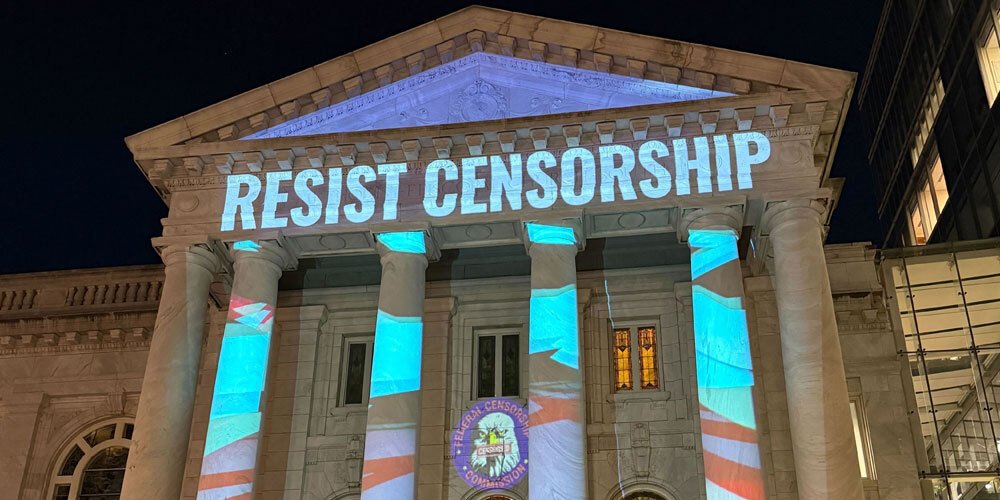
Craig Aaron
FIGHTING TO SAVE PUBLIC MEDIA
For “Protect Public Media Day,” Free Press joined dozens of activists and allies from Our Revolution, the ACLU and the Communications Workers of America for a rally outside NPR headquarters. The groups protested attacks on public media from Congress, the FCC and the Trump administration. “A vibrant, independent public-media system is essential to a healthy democracy,” Craig Aaron told the crowds. “So it’s no wonder that Donald Trump and Elon Musk hate public media.”
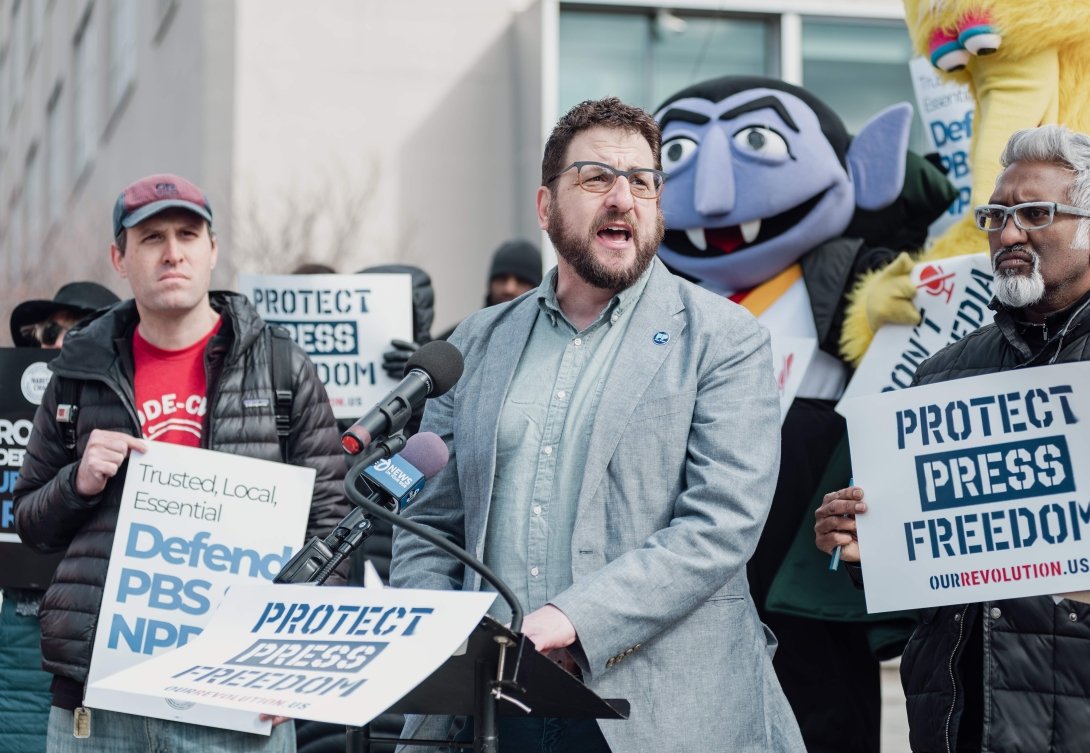
Free Press Co-CEO Craig Aaron speaking at a “Protect Public Media Day” protest
Alex Sakes
Free Press Action helped lead the nationwide opposition to Trump’s demand that Congress rescind the $1.1 billion it had previously appropriated for the CPB. In response to our outreach, thousands of our members called lawmakers to urge them to reject this request.
To educate people about the stakes in this fight, we teamed up with Partners in Health, Public Citizen and other allies to organize a virtual town hall highlighting the threats to public media — and to the other targets of the rescission request, including disaster-relief programs and essential international efforts like UNICEF. During this event — which more than 1,000 people attended — we highlighted how these cuts represented a senseless attack on essential educational programming, invaluable journalism and lifesaving emergency alerts. Our campaign to save public media drew widespread attention and attracted new followers, supporters and allies — including local station managers, public-media journalists and documentary filmmakers.
Despite our best efforts, Congress passed the rescission package — and in August, the CPB announced that it would cease operations by the end of the year. “With this vote, Congress has abandoned local communities, abdicated its constitutional responsibilities and dealt a devastating blow to what’s left of our democracy,” Craig Aaron said. “This is a vote to evade public accountability and hide the Trump administration’s destructive actions from independent scrutiny.”
There’s no sugarcoating it: This is a devastating loss. While stations in rural communities that drew a majority of their funding from the CPB are suffering the most, local stations of all sizes have announced that they will need to lay off staff, reduce programming — and in some cases, close. The cuts also devastated funding for documentary films, early-childhood education programs and emergency communications.
After Congress defunded the CPB, Craig Aaron worked behind the scenes to inform a blistering segment on public media on Last Week Tonight with John Oliver. The piece helped popularize the issue for millions of viewers — and highlighted the stakes for our democracy.
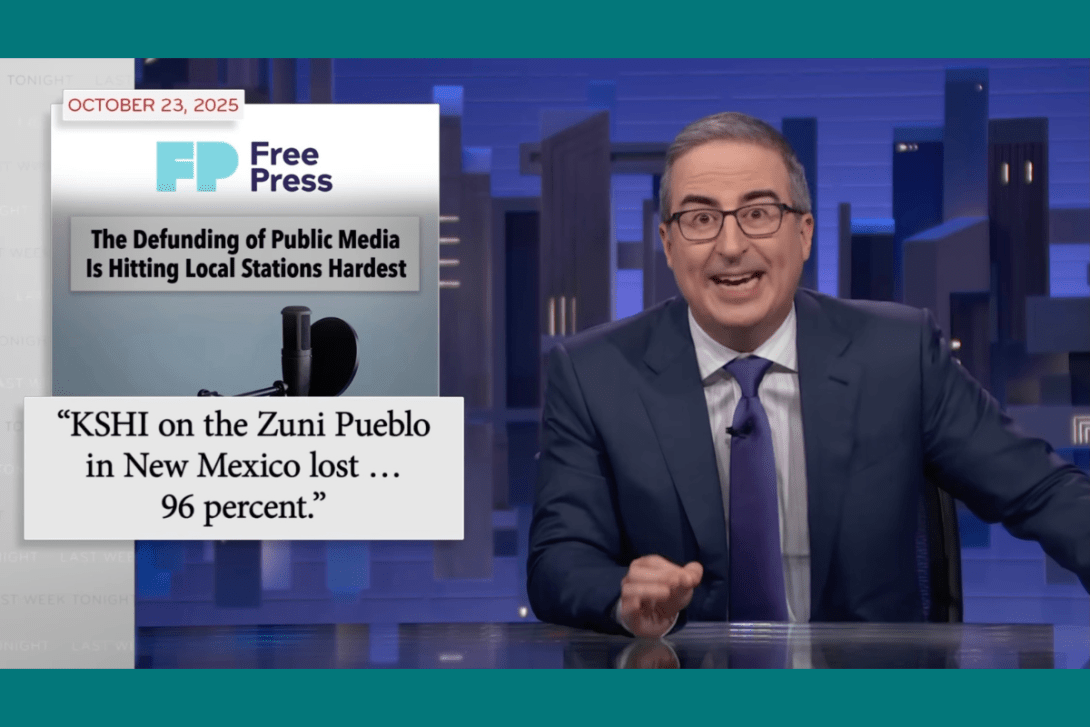
This crisis gives us the opportunity to create a new public-media system that’s grounded in community, committed to local newsgathering and freed from partisan meddling. “The battle on the federal level is lost, for now,” said Free Press Action Journalism Advocacy Director Alex Frandsen. “But frontiers are opening up in states and cities across the country to forge a new kind of public infrastructure for local media and civic information.”
In New Jersey, state officials and WNET — the operator of NJ PBS — couldn’t reach an agreement to keep the station broadcasting over the public airwaves. If they can’t reach a deal, the Garden State’s only dedicated public-television station could go dark in the summer of 2026. Mike Rispoli, Free Press Action’s senior director of journalism and civic information, testified before New Jersey’s Senate Legislative Oversight Committee. He urged lawmakers to invest in public media — and to specifically support the New Jersey Civic Information Consortium, which Free Press Action helped create. “While it may not look like public broadcasting, make no mistake: The statewide network of local-news initiatives supported by the consortium are public media,” Rispoli said. “The consortium is helping build and fund the future of what public media will look like.”
STRENGTHENING JOURNALISM IN THE STATES
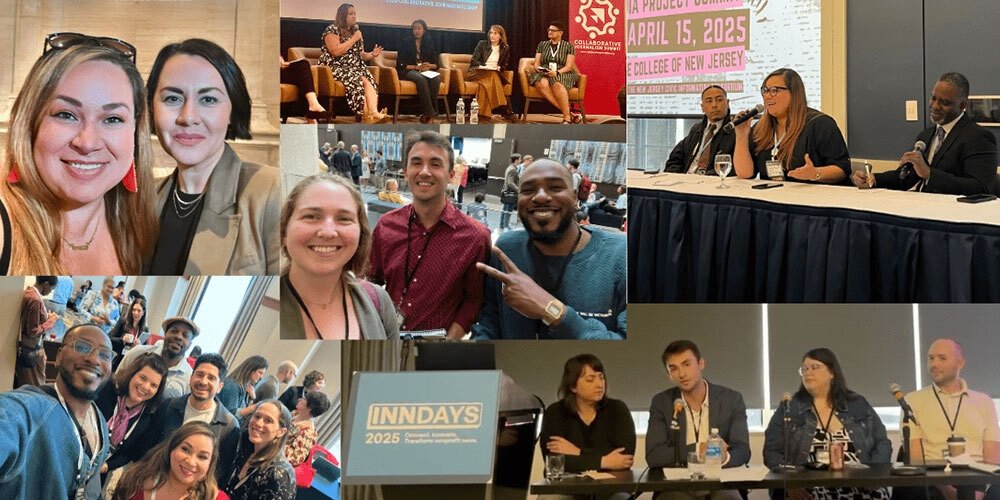
Vanessa Maria Graber
In June, Free Press Action played a key role in saving funding for the New Jersey Civic Information Consortium. Since 2021, the NJCIC — which we continue to guide — has awarded grants totaling more than $12 million to more than 50 organizations focused on diversifying journalism, improving government transparency, providing community-health news and better serving communities of color and immigrant communities. The outgoing governor’s proposed budget had initially zeroed out funding for the NJCIC, but a groundswell of support from state civic leaders and residents — including a critical contingent of Free Press Action members — swayed policymakers. The state subsequently allocated $2.5 million for the consortium in the 2026 budget.
In February, Free Press and MPC released Local News for the People: A Policy Agenda for Meeting Civic-Information Needs. The policy agenda urges lawmakers to treat local news like the public good it is. More than 60 leading journalism, pro-democracy and civic-information organizations and outlets have endorsed the agenda.
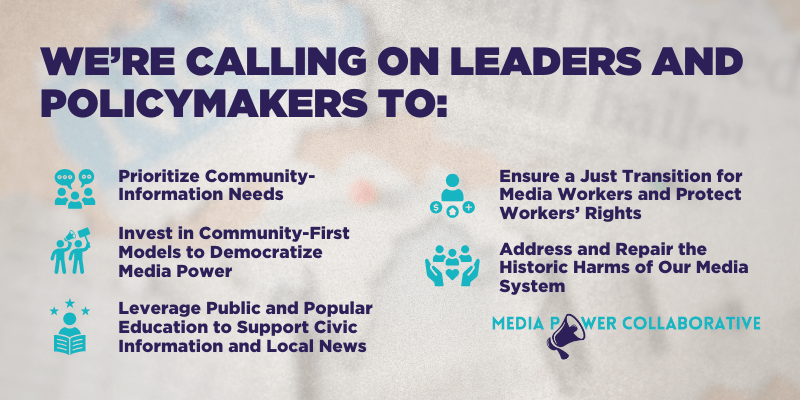
“The values and recommendations laid out in Local News for the People will help ensure that communities have the news and information they need to connect, coordinate and survive while building toward a brighter future,” said Mike Rispoli. “This crisis calls for robust public funding of a media system with sturdy firewalls in place to preserve editorial independence.”
In October, National Field Director Sarah Stone and Senior Producer and Strategist Julio Ricardo Varela went on a listening tour in Massachusetts to meet with local journalists and community leaders. During the tour, they visited both traditional newsrooms and more unconventional information hubs — like a food pantry that has become a trusted community resource.
Later in the fall, Stone and Wisconsin Civic Media Campaign Manager Arin Anderson embarked on a similar tour in Wisconsin — which has lost roughly 60 percent of its newspapers since 2004. The two met with journalists, lawmakers and local leaders about the challenges compromising access to trustworthy news and information. In both Massachusetts and Wisconsin, Free Press is working to build support for policies that will give people the news and information they need to thrive.
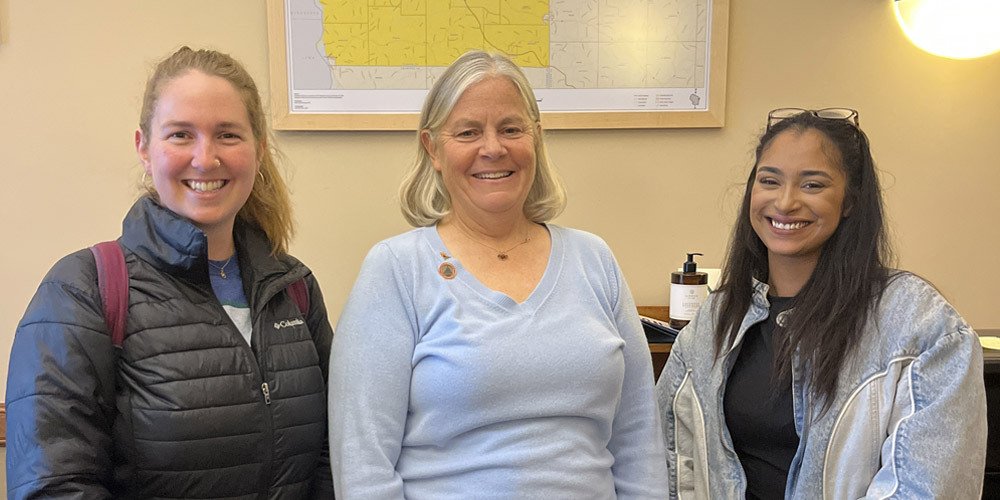
Free Press Action’s Sarah Stone and Arin Anderson with Wisconsin State Rep. Tara Johnson (center)
Free Press Action is also working to build momentum for two bills in Pennsylvania: One would create a Pennsylvania Civic Information Consortium modeled after the NJCIC, and one would create a state fellowship for local reporters. Both bills passed out of committee in early 2026.
In California, which has lost 25 percent of its newspapers since 2004, Free Press Action has long called on leaders to invest sufficient public funds to address the dire needs in the state. The governor struck a deal with Google to fill some of these gaps — and Free Press Action worked with local civic-media leaders to urge lawmakers to use the funding to address the most critical community-information needs, with a priority focus on overlooked communities and the independent outlets best equipped to serve them. Though the state agreement with Google was supposed to be a multi-year commitment, there is no funding allocated beyond 2026.
On a brighter note, California lawmakers allocated $15 million to continue supporting the Local News Fellowship program, which helps early-career journalists working in underserved communities across the state. More than 100 journalists have taken part, with fellows reporting on topics including education, local government, the environment, housing and law enforcement.
In 2026, we will lead the creation of a new public-media system that expands independent local news and serves people across class, cultures and languages. We will focus our initial efforts in California, Massachusetts, New Jersey, Pennsylvania, Washington State and Wisconsin.
EXPOSING MEDIA CAPITULATION
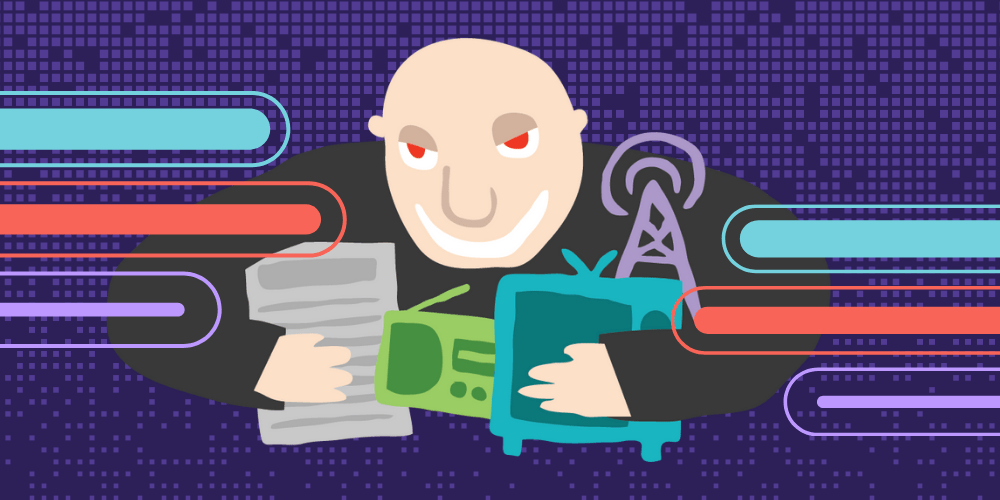
In July, we launched the Media Capitulation Index, an investigation into the independence of the 35 largest media and tech conglomerates in the United States. Almost all of them are failing to defend democracy and a free press against authoritarian threats. This capitulation to the Trump administration is a pervasive trend that applies to nearly all commercial media, including cable and telecommunications firms and online platforms. Our index rates the companies on a scale from “independent” to “vulnerable” to “compromising” to “capitulating” to “obeying” to “propaganda.”
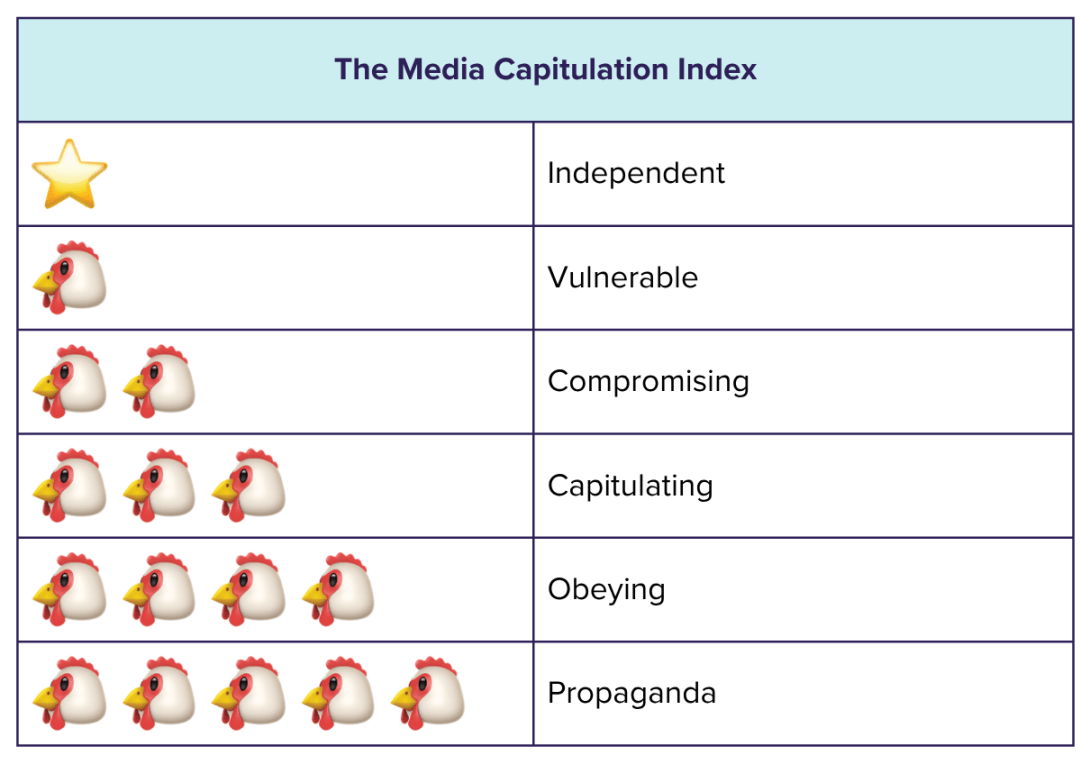
“Media capitulation is a slippery slope,” said Senior Director of Strategy and Communications Timothy Karr, who led the investigation. “Once these owners compromise their companies’ editorial independence — once they step across the line into compliance — the temptation to cave further to official pressure grows even stronger. The editorial slide toward state propaganda becomes inevitable when a media owner’s financial interests align fully with those of a corrupt and bigoted regime.”
Karr wrote the accompanying report: A More Perfect Media: Saving America’s Fourth Estate from Billionaires, Broligarchy and Trump. The study offers a number of solutions to the capitulation crisis, including funding the kind of independent journalism that holds the powerful accountable and provides space for dissenting voices.
Both the report and the Media Capitulation Index drew considerable press attention, with significant coverage appearing in NiemanLab and the popular “American Crisis” newsletter from former New York Times public editor Margaret Sullivan.
Free Press confronted media capitulation on multiple fronts in 2025. After the FCC approved the Paramount Skydance merger, Chairman and CEO David Ellison later installed Bari Weiss — the founder of the reactionary newsletter The Free Press — as CBS’ editor-in-chief. In her role at CBS, she undermined investigative journalists and withheld 60 Minutes segments that criticized the administration.
“While Weiss borrowed our name, the two organizations could not be more different,” Karr wrote. “This Free Press doesn’t turn a blind eye to Trump’s censorship. Where we stand firmly behind the First Amendment, THE Free Press has attacked reporters for challenging the White House and cheered for crackdowns on pro-Palestine student protesters. Where we are lighting the path to a diverse and equitable media system, THE Free Press frequently condemns inclusivity and slams anything it regards as ‘woke’ or ‘antiracist.’”
FIGHTING MEDIA CONSOLIDATION
Authoritarian regimes and aspiring autocrats systematically consolidate media to monopolize the public-information sphere, eliminate dissent and manufacture consent for their rule. Free Press has long documented and opposed how the FCC has fueled media consolidation and limited ownership opportunities for women and people of color. In 2025, Brendan Carr launched two separate proceedings to pave the way for more media consolidation. In one, he proposes to eliminate the national TV-station ownership cap Congress set, which limits the number of stations any one broadcast behemoth can own across the United States. In the other, Carr proposes to eliminate local broadcast-ownership limits, allowing any one company to own virtually all of the TV and radio stations in a geographic region.
In August, Free Press slammed Carr for violating the law, settled precedent and the First Amendment in pursuit of a partisan agenda. Later that same month, we joined with civil-liberties organizations, labor unions and other press-freedom groups to urge the FCC to press pause on this reckless plan and first assess how media consolidation has restricted communities’ access to local news and information.
In December, Free Press filed comments in the FCC’s Quadrennial Regulatory Review that called on the agency to reject local media consolidation. We debunked broadcasters’ absurd claim that consolidation is in the public interest — showing that communities have always suffered whenever the agency has loosened local ownership limits.
Amid all this pro-consolidation momentum, Nexstar Media Group — the nation’s largest television-station conglomerate, and one that has already bent the knee to Trump — announced its plans to buy its rival Tegna, the country’s fourth-largest broadcaster. This merger violates both federal law and FCC rules, and it would concentrate a massive number of stations into the hands of a right-wing media owner — one of the same companies that yanked Jimmy Kimmel’s show off the air under FCC pressure.
“Chairman Carr has made it known that every FCC-licensed firm’s continued existence will now be contingent upon that company’s editorial and internal personnel decisions aligning with the White House’s wishes,” said Senior Advisor of Economic and Policy Analysis S. Derek Turner. “Media consolidation and deal approvals are now explicitly a way for President Trump to further consolidate his dictatorial power through explicit loyalty tests and pledges to use the public airwaves as a propaganda tool against the American public.”
Free Press teamed up with a coalition of media-justice groups and labor unions to file a formal FCC petition to deny the Nexstar-Tegna deal — noting that the combined company would reach over 80 percent of U.S. households, far exceeding the legal limit Congress set.
INSPIRING HOLLYWOOD TO CHALLENGE MEGA-MERGERS
In November, Jane Fonda invited Jessica J. González and FCC Commissioner Anna Gomez to address the Committee for the First Amendment — the newly revived alliance of Hollywood actors, directors and screenwriters speaking out against government repression. Jessica discussed the administration’s attacks on free speech and explained how the federal government is weaponizing its powers over pending media mergers to censor critics and reward Trump allies.
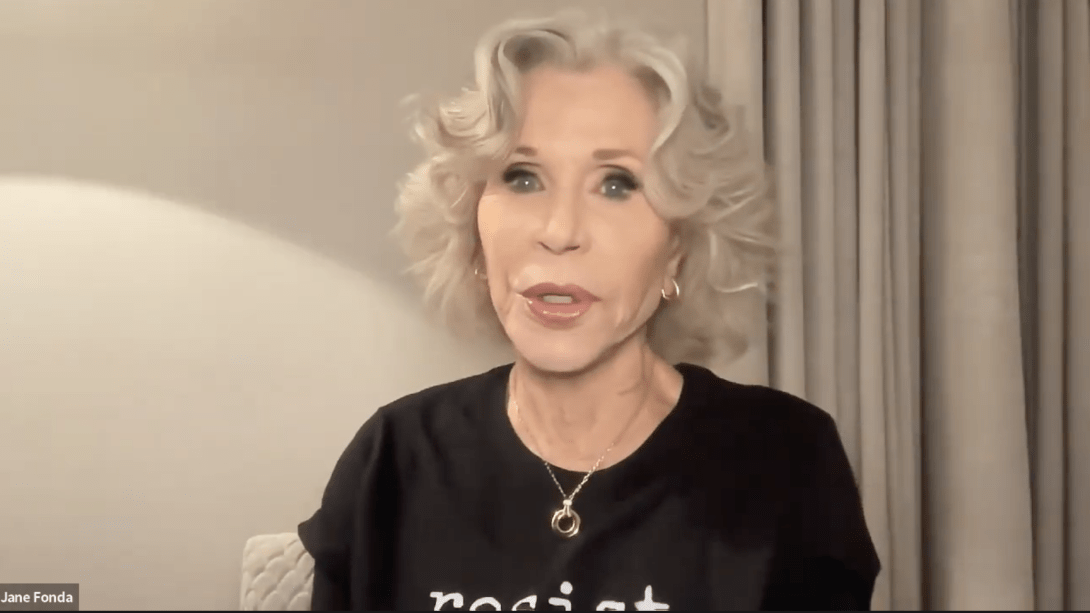
Jane Fonda addressing the Committee for the First Amendment
As Netflix and Paramount Skydance battle each other for control of Warner Bros. Discovery, Free Press underscored how these kinds of monster mergers lead to higher prices, job losses, fewer choices, less opportunity and diversity in Hollywood, and — in the Trump era — more capitulation to the regime. At an International Documentary Association event in Los Angeles and a follow-up online teach-in that attracted an audience of more than 1,000 filmmakers and allies, Craig Aaron spoke about ways to combat these kinds of deals. “When we have these huge mergers there’s this huge push at the start to make them inevitable,” he said. “I want to emphasize that we are much closer to the beginning than we are to the end of this fight.”
All of this education and relationship building has paid off: The International Documentary Association launched a website opposing the Warner Bros. Discovery merger, and the group joined the Committee for the First Amendment and SAG-AFTRA in signing on to letters to Congress and the FCC opposing the Nexstar-Tegna deal. Jane Fonda discussed the harmful impact of media consolidation in multiple videos. And in December, González spoke to a Committee for the First Amendment gathering of actors, producers, directors and writers about how consolidation harms the entertainment industry — and society at large.
As the Paramount Skydance merger shows, handing control of too much media to Trump’s cronies has had terrible impacts for our democracy. Where Paramount Skydance CEO David Ellison has allowed Bari Weiss to wreak havoc at CBS, his father, Larry, is set to wield control over one of the world’s most powerful social-media platforms. In September, Trump issued an executive order clearing the path for the transfer of ownership of TikTok’s U.S. operations to a consortium of private-equity funds, media corporations and tech companies that his political allies — including the senior Ellison — control. We condemned this move as further proof of Trump’s determination to crush dissent.
“Handing control of TikTok to mega-wealthy presidential yes men is the kind of move we’ve seen in other repressive regimes — the same ones the United States once criticized for their blatant disregard of democratic principles,” said Nora Benavidez. “It’s clearer than ever that we need a broad-based and full-throated rejection of Trump’s campaign against free speech.”
DEFENDING JOURNALISTS UNDER ATTACK
For months, Free Press pushed the government to release reporter Mario Guevara from ICE detention. At the time, Guevara was the only journalist in custody in the United States whose arrest related to newsgathering. ICE arrested him in June while he was covering a No Kings Day protest in the Atlanta area. Even though the charges against Guevara were dropped — and even though he was a legal resident of the United States — he remained in detention for more than three months, primarily in solitary confinement.
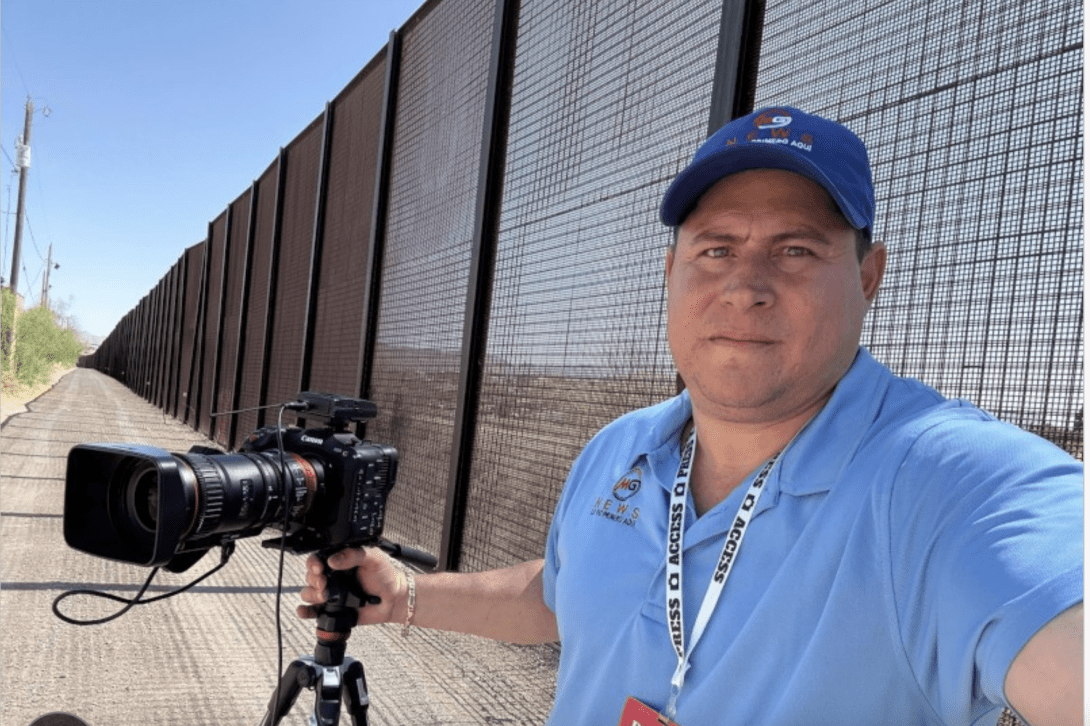
Facebook page for Mario Guevara
Nora Benavidez delivered powerful remarks about Guevara at the Georgia statehouse in July. “If people like Mario Guevara are somehow cast as dangerous,” she said, “that says more about the kind of nation we are becoming than it does about who Mr. Guevara is.” In August, we joined with other press-freedom groups in urging Homeland Security Secretary Kristi Noem calling for Guevara’s immediate release.
After the Board of Immigration Appeals called for his imminent deportation in September, we joined forces with the Committee to Protect Journalists and other press-freedom groups to denounce the decision and call for emergency relief. Later that same month, we filed an amicus brief with this same coalition in support of Guevara’s habeas corpus petition challenging his prolonged confinement. The U.S. Court of Appeals for the 11th Circuit — while acknowledging Guevara’s First Amendment rights — cited his failure to file certain immigration documents as justification for his deportation to El Salvador in October.
In June, we joined a coalition of other free-speech groups to file an amicus brief in United States v. Burke, a federal criminal prosecution of reporter Timothy Burke for publishing unaired footage from the former Fox News talk show Tucker Carlson Tonight. “The court’s decision in this case has massive ramifications for reporters and everyday people alike,” said Yanni Chen. “Reporters must not be forced to refrain from using the internet to gather newsworthy content just because powerful entities want to keep what journalists find under wraps.”
We had a big win in September when a judge dismissed seven of the 14 charges against Burke — and cited our brief in her ruling. This ruling affirms the essential protections journalists deserve — protections that are even more necessary in a hostile newsgathering environment.
PROTECTING PRIVACY AND FIGHTING SURVEILLANCE
Free Press spoke out as soon as Elon Musk’s Department of Government Efficiency started exploiting its government standing to collect Americans’ private data. In February, we convened a panel of experts to participate in our webinar “Into the Breach: Exposing Musk’s Assault on the Privacy Rights of All Americans,” which Advocacy Director Jenna Ruddock moderated. The discussion explored how Musk’s takeover of several agencies set in motion what may be the largest data breach in U.S. history — with panelists highlighting how DOGE reportedly accessed classified information, millions of Americans’ sensitive personal and financial data, and the Treasury Department systems that control everything from Social Security payments to tax refunds.
As the Department of Homeland Security wages an all-out assault in cities like Charlotte, Chicago, Los Angeles, Minneapolis, Portland and Washington, D.C., Free Press tracked how invasive surveillance tools enable DHS agencies to track, target and terrorize immigrants and other community members. We also called out Apple and Google for caving to the Trump administration and removing from their app stores any apps that allow community members to share information about ICE raids. We highlighted how this kind of capitulation silences dissent and makes people less safe.
Free Press also joined other groups calling on DHS to abandon its proposal to require extensive biometric data from anyone applying for an immigration benefit — and anyone associated with the applicant. This data would include images of people’s faces, fingerprints, signatures, eye scans, voice and DNA — and would also apply to minors. This continuous vetting of immigrants would also violate their First Amendment rights: “Face recognition and similar technologies make it possible to identify and track people from afar and in real time,” the letter reads, “including at lawful political protests and other sensitive gatherings.”
CONFRONTING AI ABUSES
In 2025, Free Press worked to rein in tech companies intent on supercharging AI at the expense of local communities. We forged alliances with tech-justice groups mobilizing against the harmful consequences of data centers. Free Press Action and allies helped defeat a dangerous provision in Trump’s megabill that would have enacted a 10-year moratorium blocking state governments from regulating AI.
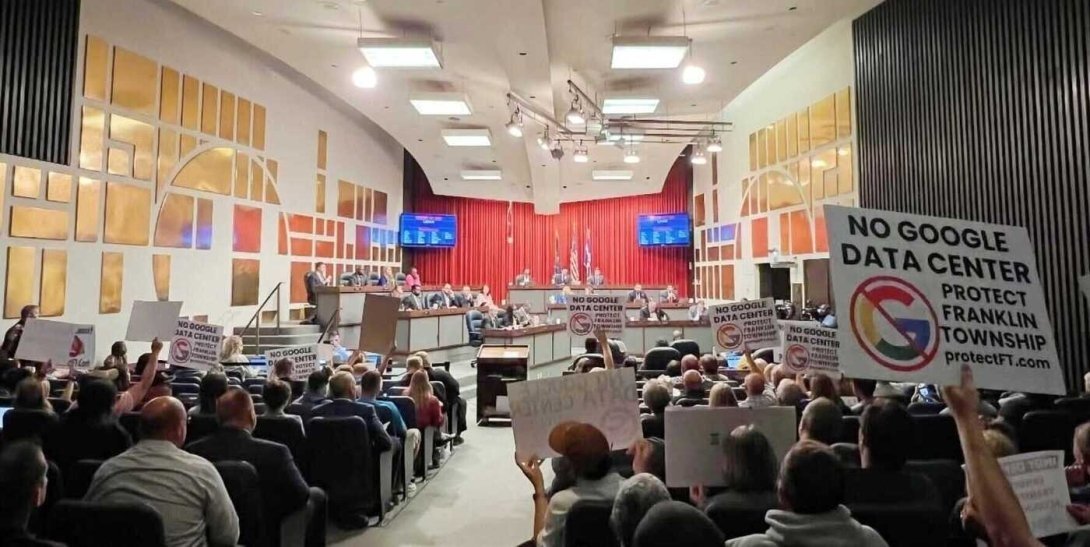
Citizens Action Coalition Indiana’s Instagram page
As the Trump administration races to clear the way for data-center construction, Jenna Ruddock helped coordinate the Data Center Working Group, a coalition working to ensure that local communities have a voice in AI’s future. The Data Center Working Group has provided research, policy and organizing support to community-led fights to stop data-center construction in communities including Amarillo, Texas, and Tucson, Arizona. Free Press also contributed to critical organizing and policy resources that allied organizations produced. Jenna’s original research on the growing trend of local data-center moratoriums has been cited in news reports and in testimony before Congress.
Free Press also exposed how AI models and algorithms are built and trained on decades of institutionalized discrimination and segregation. In 2024, Free Press Action supported the Artificial Intelligence Civil Rights Act, which would help eliminate these kinds of biases from AI tools. Sen. Ed Markey reintroduced the bill in September 2025, and we mobilized support for this important legislation — work that will continue in 2026.
ORGANIZING FOR MEDIA REPARATIONS AND CULTURAL REPAIR
In May, the Media 2070 project presented the “Riot to Repair Soundscape Exhibition” in Los Angeles as part of the ongoing Black Future Newsstand series. An immersive multimedia exhibit presented in collaboration with a range of partners, Riot to Repair invited people to step into a world where Black narratives are celebrated and uplifted.
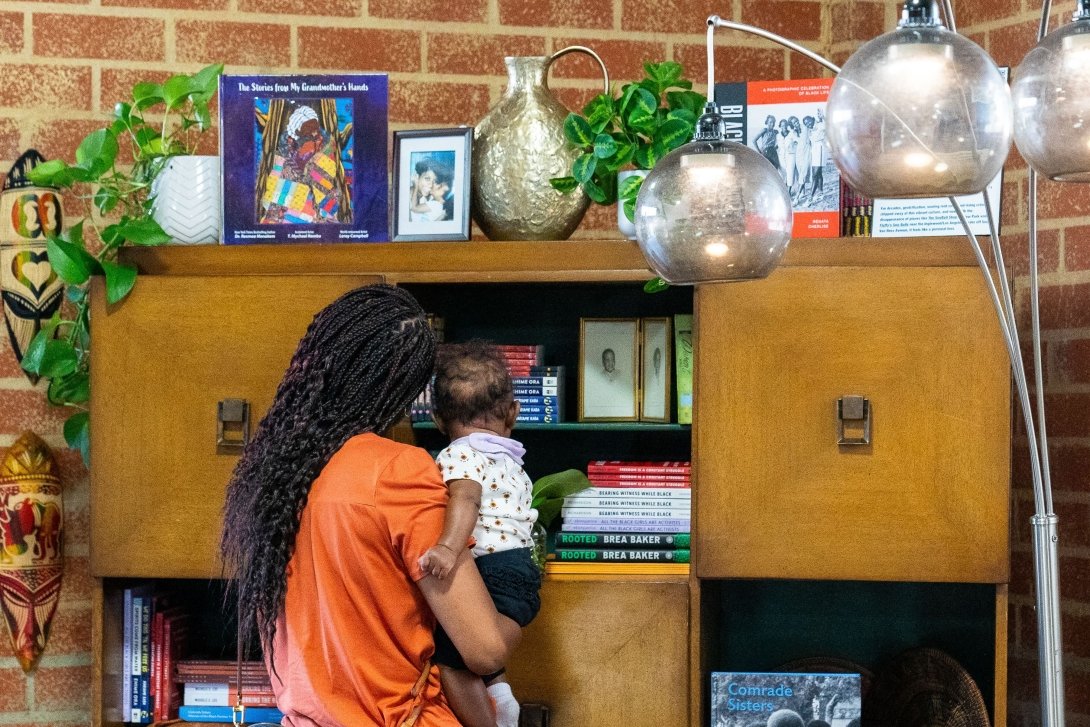
A woman examines objects in the living room created for the Black Future Newsstand exhibit in Los Angeles.
Halline Overby
The centerpiece of the exhibit was an audio archive that Dr. Allissa Richardson and students at the USC Charlotta Bass Journalism & Justice Lab created. The archive features interviews with L.A. residents describing their experiences of the death of George Floyd and the 2020 racial-justice uprisings. “Riot to Repair” also included panel discussions, workshops and four additional installations, including a depiction of a grandmother’s living room that paid homage to the different places and people that create space for Black storytellers to thrive. The multidisciplinary exhibit captured the power of culture, media and arts to tell reparative and transformative stories.
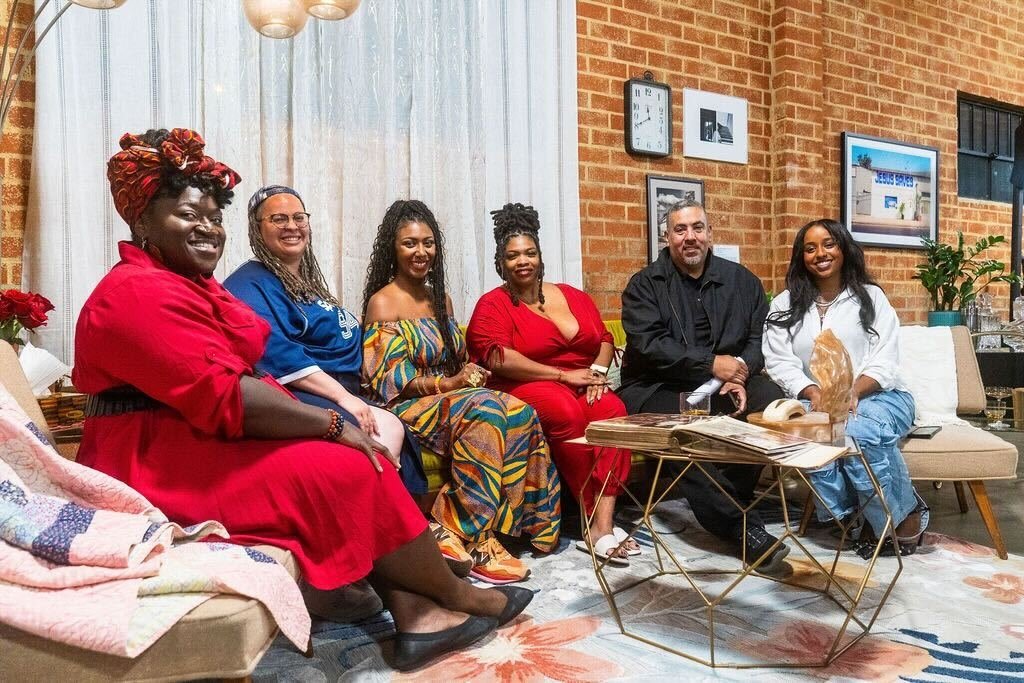
Members of the Media 2070 team sit within the Black Future Newsstand exhibit
Halline Overby
Media 2070 partnered with PECAN Project to bring the Black Future Newsstand to Texas in October and November, with programming presented over the course of three weeks in both Houston and surrounding communities. Featuring art, music, media, live performances, teach-ins and more, the series explored how Afro-Texans have created media-care models and shared reparative storytelling around climate justice, technology and reproductive rights. Previous versions of the newsstand appeared in Harlem, Austin, Chicago and Los Angeles.

Media 2070 co-founder and Free Press senior advisor Joseph Torres advanced the fight for reparations in a number of important columns and interviews. In a piece for The Objective, he wrote about how FCC policies have undermined the 14th Amendment rights of Black people and Black communities. He delved into some of these policies in interviews with CounterSpin, which is heard on 160 radio stations across the country.
“The Federal Communications Commission today is trying, as part of Trump’s agenda, to roll back the very protections that were won over the past 60 years, as a way to consolidate power,” he said. “The FCC is pushing companies to roll back their commitments to DEI, but really, it’s saying the presence of Black and Brown people within these institutions represents something inherently illegal or unlawfully gained.”
In 2023 and 2024, Free Press and Media 2070 released a powerful three-part Reparative Journalism Video Series. In May 2025, these videos — which Diamond Hardiman, Courtney Morrison and Qing Saville created — beat out some industry heavyweights to win the bronze prize in the Education & Discovery category at the international Telly Awards, which honors excellence in television and video. In 2025, the team also released a reflection and discussion guide as a companion to the series; the resource is aimed at journalism professors, students and newsroom leaders.
The Philadelphia Safer Journalism Project, a project of Free Press and Media 2070, launched Safer Reporting for Safer Communities: A Code of Ethics for Community Reporting in Philadelphia in May. The Public Safety Coverage Cohort, a group of local partners in Philadelphia, wrote the code of ethics and will be taking ownership of the project going forward.
The Media 2070 project departed Free Press in December to become an independent initiative under the fiscal sponsorship of Allied Media Projects. “Our transition reflects a core truth we have championed since day one: Black communities must own, shape, and tell our narratives,” said Media 2070 Senior Director Anshantia Oso. “This new stage allows us to more fully embody our values and move intentionally toward the media future we deserve.”
Free Press remains a dedicated ally to Media 2070. We will work to support this groundbreaking project’s continued success and the historical research of Torres, who remains at Free Press and will be a visiting scholar at the University of Pennsylvania starting in 2026.
LOSING NET NEUTRALITY
In 2024, Free Press celebrated a huge milestone when the FCC restored the Net Neutrality rules the first Trump administration had overturned. The agency also reinstated its Title II authority, giving it the power to protect people from internet service providers’ privacy invasions, promote broadband competition and deployment, and take action against hidden junk fees, data caps and billing rip-offs. After industry groups sued to block the FCC’s restored rules, Free Press went to court to fight back.
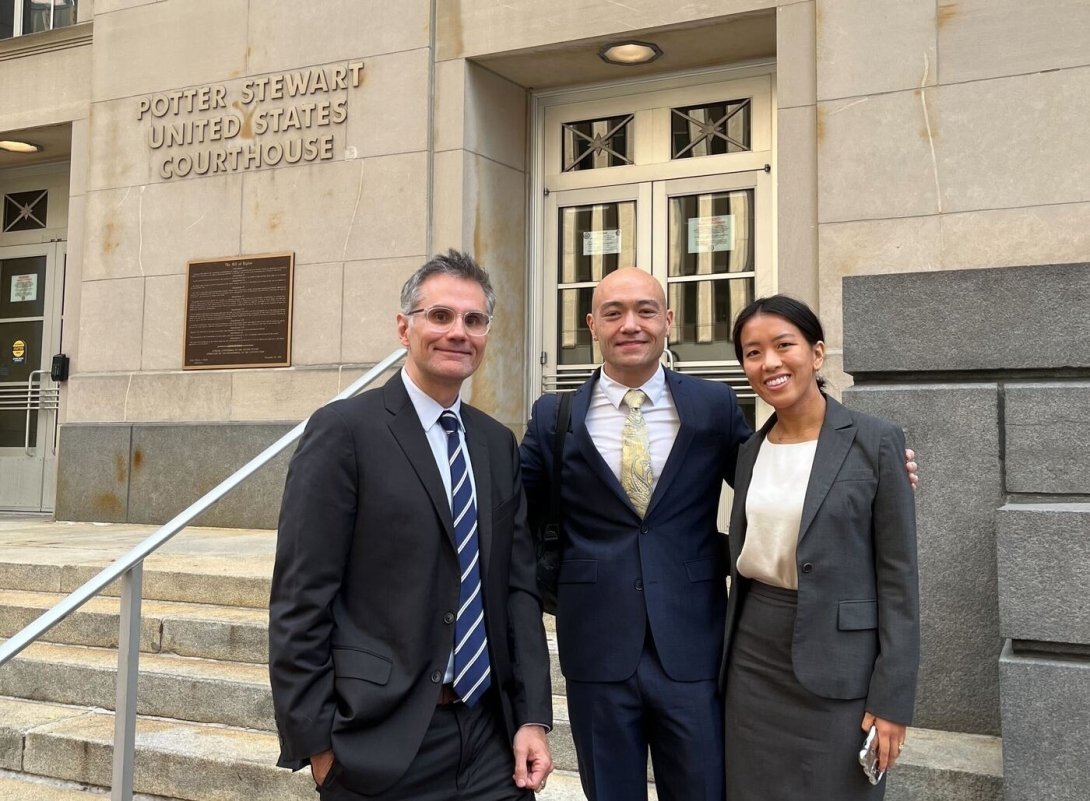
Free Press’ Matt Wood and Yanni Chen flank Daniel Woofter, the attorney who represented Free Press and allies in the court case to save Title II and Net Neutrality.
We suffered a loss in early 2025, when the U.S. Court of Appeals for the 6th Circuit sided with industry and overturned the Biden FCC’s 2024 decision. A three-judge panel issued this flawed ruling, which Free Press Vice President of Policy and General Counsel Matt Wood described as “wrong at every level of analysis.” In February, we filed a petition calling on the full appeals court to hear the case.
After the court refused our request, we debated bringing the case to the Supreme Court — but decided against it out of concern over an even-worse outcome. Despite these setbacks, Free Press will continue to fight for an open, fair and free communications network for all — and will keep monitoring how companies like AT&T, Comcast and Verizon treat their customers.
CLOSING THE DIGITAL DIVIDE
Back in 2021, Free Press Action’s advocacy paved the way for historic broadband provisions in the infrastructure package. In 2023, the Biden administration announced $42 billion in funding for the Broadband Equity, Access, and Deployment program, which grew out of the infrastructure bill. The money from the BEAD program was designed to help all 50 states build high-speed internet networks in communities that lack access.
But in 2025, the Trump administration undermined the program — with changes that would directly benefit Elon Musk’s Starlink satellite-internet service. A Free Press investigation of a program created during the first Trump administration found that Starlink and other providers sought subsidies to bring internet access to unoccupied parking lots and traffic islands, as well as to urban areas that other companies already served. Thanks to S. Derek Turner’s research, the Biden FCC stripped $886 million in subsidies from Starlink. Under the BEAD program, Congress had required states to prioritize broadband deployments that would provide the best and most reliable service. We are tracking giveaways to Musk and any other attempts to sabotage this program.
In May, Trump threatened to eliminate funding for programs created under the Digital Equity Act, targeting $2.75 billion in federal grants that Congress had committed in 2021’s infrastructure bill to help close the digital divide. This money was designed to give the elderly, working people, veterans, disabled individuals, low-income families and people in rural communities better access to jobs, educational opportunities, and lifesaving news and information. Earlier in the year, Free Press Action trained people from all over the country to advocate for their work in digital equity and then escorted them to meetings at the Capitol with their lawmakers. The goal: to get members of Congress to demand that the Commerce Department release the funding their states had been promised.
The fight to overturn the Trump administration’s canceling of Digital Equity Act funding is ongoing. Twenty-two states sued the Commerce Department in July — and Free Press Action will continue to put pressure on lawmakers to speak out.
In 2024, the Biden FCC expanded access to billions of dollars in federal funding to ensure that schools and libraries across the country would have reliable and affordable broadband. After the Trump FCC — with the support of Sen. Ted Cruz — announced a plan to eliminate this program, Free Press pushed the agency to preserve it, noting that this proposal would make life harder for millions of families. Unfortunately the agency voted along party lines to end this program.
While we’ve made great strides in closing the digital divide, broadband adoption in low-income households remains behind adoption in higher-income homes. Though temporary, the Affordable Connectivity Program that Free Press Action fought for proved that steep prices are the primary barrier for low-income people seeking to get online. We will continue to work in Congress and at the FCC to create a permanent low-income broadband subsidy to ensure that everyone can access high-speed internet.
OPPOSING TRUMP’S TRASHING OF THE FTC
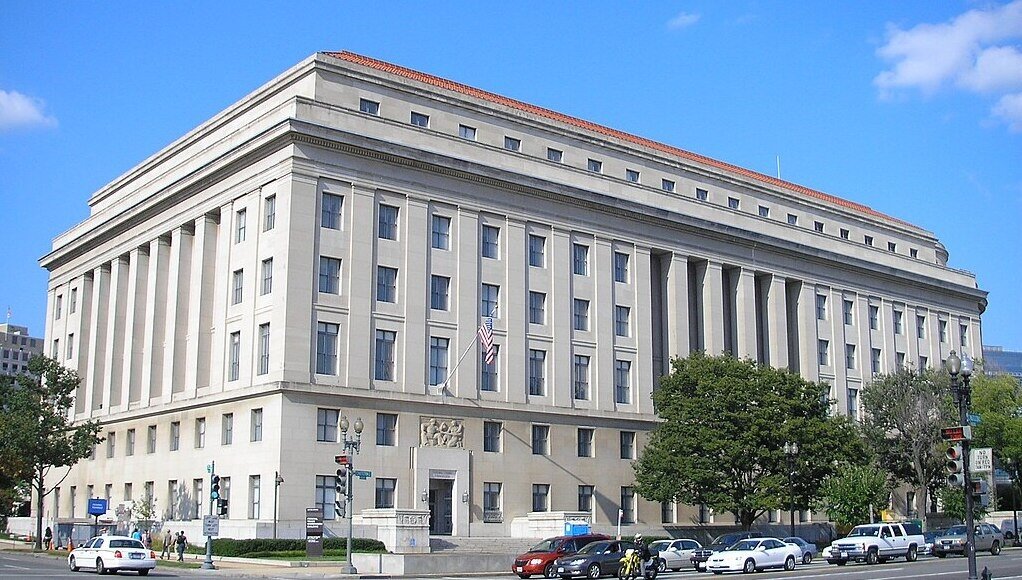
Trump is doing everything he can to undermine agencies like the Federal Trade Commission.
Original photo by Wikimedia Commons user Gryffindor
In March, Trump fired Democratic FTC Commissioners Rebecca Kelly Slaughter and Alvaro Bedoya (a former Free Press board member) without cause. This move, which defies a long-standing Supreme Court precedent, hobbled an agency charged with preventing fraud, deception and unfair practices. The two commissioners subsequently sued the administration, and Free Press urged the courts and Congress to stop enabling the Trump administration’s attacks on independent agencies. The case is now before the Supreme Court.
Free Press spoke out when Trump announced that he would elevate Federal Trade Commissioner Andrew Ferguson to serve as chairman of the agency. “Andrew Ferguson is an extreme pick for FTC chair,” said Jessica J. González. “He has openly suggested that the government should force social-media platforms to leave up hate and disinformation — and investigate companies that elect not to advertise next to hateful and extremist content.”
Our warnings were borne out when Ferguson attacked the transgender community and also launched an inquiry into whether and how tech platforms deny or degrade users’ access based on their speech or affiliations. This inquiry reflects an unconstitutional intrusion into content-based censorship.
In May, we filed comments urging the FTC to preserve tech platforms’ First Amendment right to create their own content-moderation policies. The agency has not moved forward in this proceeding — which is a big win for free expression.
“Free Press continues to push tech platforms to adopt content-moderation policies and practices that are more robust, transparent and responsive to the interests and needs of users,” said Jenna Ruddock. “Yet we also recognize that government intervention in these decisions is unwise and unlawful. Any action the FTC undertakes here could easily travel down a slippery slope to censorship, and that seems to be the point.”
REACHING NEW AUDIENCES
In July, Free Press launched Pressing Issues, a twice-weekly newsletter with ideas and analysis about everything happening at the intersection of media, technology and democracy. Craig Aaron and Julio Ricardo Varela created Pressing Issues, which features contributions from a range of in-house experts as well as interviews with prominent media figures like journalist Wajahat Ali and Chicago Tribune reporter Laura Rodríguez Presa.
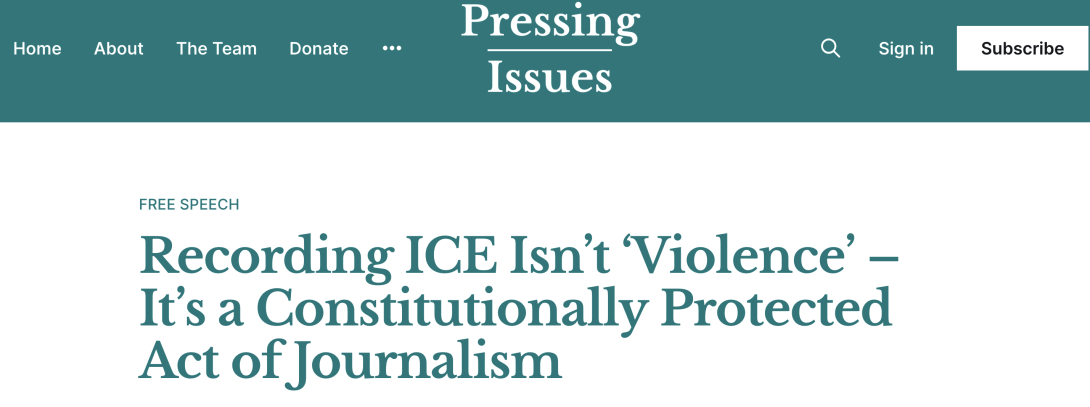
The newsletter has covered topics ranging from Paramount’s capitulation to the Trump regime to an L.A. newsroom’s coverage of ICE raids. “We’re driven by a belief that the media isn’t just something that happens to us,” wrote Craig Aaron in the inaugural column. “It’s something that we can and must shape and change to create a true multiracial democracy.”
GETTING THE WORD OUT
We had nearly 3,000 press hits in 2025 in outlets including the Associated Press, Bloomberg, CNN, The Guardian, NBC, The New York Times, Reuters and The Washington Post. We also placed 18 Op-Eds in a range of outlets, including The New York Times.
To join our community online and stay up to date on our work, you can follow Free Press on Bluesky, Facebook, Instagram, Threads and TikTok.
FUND THE FIGHT
Your generosity makes our work possible. Please give what you can today to make sure we have the resources we need to combat authoritarianism and push for equitable media and tech policies that improve people’s lives. We’re actively fundraising to ensure we maintain and expand our capacity to fight for your rights to connect and communicate in the future. You can give with confidence knowing that Free Press and Free Press Action do not accept money from business, government or political parties.
You can support us by making a one-time or monthly donation below or by mailing a check to 1763 Columbia Rd NW, Ste 175, PMB 270297, Washington, DC 20009-2891. You can also make a contribution through a donor-advised fund, a gift of stocks or securities, or a planned gift. For more information, please visit other ways to give or reach out to us.
Donate to Free Press
Help support our research, public education and organizing work in Washington and across the United States. Gifts to Free Press are tax deductible as allowed by law.
Donate to Free Press Action
Help us mobilize direct and grassroots advocacy efforts that oppose or support specific federal or state policies or legislation and advance the public interest. Gifts to Free Press Action are not tax deductible.
Thank you for your support!
ABOUT US
Free Press was created to give people a voice in the crucial decisions that shape our media. We seek to change the media to transform democracy to realize a just society. Learn more about our mission.
Our amazing staff of organizers, lawyers, strategists, storytellers, researchers and advocates is 36 people strong. We’re building an organization that can bring to life a media system that supports a just and multiracial democracy. Learn more about our staff and board.
We will share our 2025 financial information when it becomes available.
Free Press and Free Press Action are nonpartisan organizations fighting for your rights to connect and communicate. Free Press and Free Press Action do not support or oppose any candidate for public office.