Free Press Action’s Matt Wood Testifies Before House Subcommittee Examining the 30-Year History of the Telecommunications Act
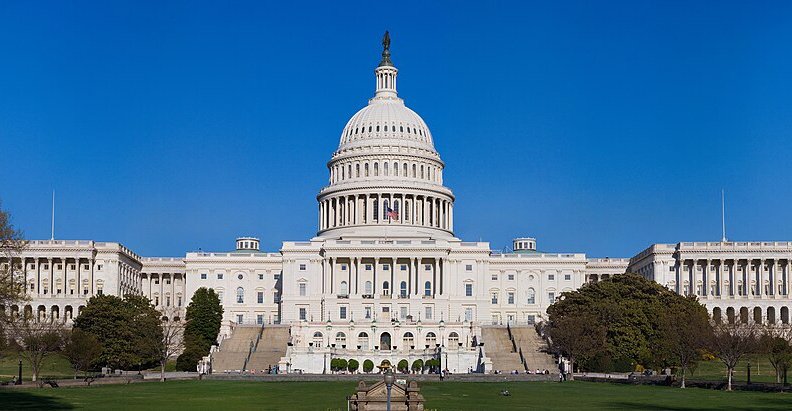
WASHINGTON — On Thursday, Free Press Action Vice President of Policy and General Counsel Matt Wood testified before the House of Representatives about the successes and failures of the landmark Telecommunications Act of 1996.
According to the hearing memo, the Subcommittee on Communications and Technology convened the hearing to “examine what parts of the law have worked, what have not, and how Congress can build on those lessons to modernize our laws to promote innovation, strengthen competition, and drive investment in modern communications networks.”
Wood’s full written testimony is available here. What follows is his opening statement as prepared for delivery to the subcommittee:
Thank you for inviting me to this landmark hearing.
Such discussions about three decades of change often look back to laugh at now quaint-sounding tech trends and touchstones. Yet there are timeless principles in the 1996 Act: places your predecessors (and their former staff, like my fellow witnesses) got it exactly right — not always in the terms they wrote, but in the values they espoused.
Sadly, the Trump administration is trashing many of those values. I’d like to explain how, then look forward to four ways this Subcommittee and agencies you authorize can meet the Act’s goals.
Those include:
- Establishing solid ground for federal oversight of our nation’s networks;
- Investing in affordable broadband for everyone;
- Promoting diverse media, not cheerleading mergers and censorship; and
- Staying out of online content regulation and AI preemption, where agencies under your watch have no role.
First: The FCC abdicated authority Congress gave it over the essential service we now call broadband.
While we can disagree on which protections should apply to that service, including Net Neutrality rules often debated in this room, we must move beyond the word games about what qualifies as a “telecom service.” Free Press believes broadband clearly fits that definition. The Sixth Circuit decision that held otherwise is plainly wrong.
But we must fill this vacuum if we want deployment, to quote the Act, “of advanced telecommunications capability to all Americans.” Funding universal broadband and protecting users from overlong outages and other abuses requires sound jurisdiction.
Industry’s assault has erased “advanced telecommunications” from the law Congress wrote. Not every Title II provision should port over; but the heart of that law, updated in 1996, is ensuring service on just, reasonable, and non-discriminatory terms.
That’s a timeless promise. No expiration date. No tether to past networks. We need a firm, flexible framework for public investment and safeguards. Corporate forces alone won’t provide affordable, robust access to every corner of your districts.
Lawmakers must do more too. The Lifeline program remains crucial, but $9.25 a month isn’t adequate. Yet Chairman Carr wants to cut enrollment to score partisan points. And this NTIA has delayed BEAD money — a funny remedy for charges of prior delay.
Instead of renewing the Affordable Connectivity Program, as Commissioner O’Rielly advised, Congress let it lapse. Will we really spend a billion dollars a day for reckless wars but not $30 a month to keep a kid connected for homework?
The FCC should not set broadband prices. But it should know what they are! Carr has ignored statutory mandates and stopped even looking. He claimed in your last oversight hearing that these prices he won’t measure are falling. As my written testimony explains, Carr is misleading you again.
This FCC chairman ignores facts, laws, even the Constitution, when he pleases — so long as it pleases this president. He attacks free speech and freedom of the press. He threatens broadcasters for coverage he doesn’t like. Carr twists the public interest standard, then blames Democrats and says “they did it first!” No one can criticize past administrations but stay silent on Carr’s abuses if they truly want to defend the First Amendment.
Carr says this is all to “empower” local broadcasters. But he’s just favoring the conglomerates he likes better. Giants like Nexstar are “local” the same way CVS is a local pharmacy. Nexstar eagerly joined in Carr’s “Jimmy Kimmel” debacle, to win these favors. Senator Cruz and others rightly called it out as dangerous.
The prospect of local TV news monopolies complying with government demands is dire. It’s frightening for any democracy that values debate and dissent. Yet just last week, Carr unilaterally blessed Nexstar’s merger — flouting the national cap Congress set in 2004.
It should alarm Members on both sides when any FCC ignores statutes. Commissioner O’Rielly once called this specific trick a “preposterous” attempt at “one of the biggest backdoors in the history of legislating.”
Carr wrongly holds up some deals though, until companies end diversity and inclusion efforts, with no proof of wrongdoing or relevance to merger review. He imagines invidious harms to people who look like him. Looking at this panel though, I’d say white men still have a shot in this field.
My written testimony addresses bad ideas like the FCC preempting state AI laws, or using Section 230 to police platforms outside FCC jurisdiction. The latter reminds me of what I believe Mr. Thierer wryly calls some conservatives’ “evolving” views on regulating the internet.
Free Press Action supports Section 230, as I testified here in 2021. I know not all of you do. Yet I hope we can all agree this provision is not the FCC’s to enforce. So, agencies and Congress must do more to honor the Act’s goals. But no more of the damage this administration’s done in just over a year.
###