News We Trust:
Bright Spots in the Movement to Grow Civic Media
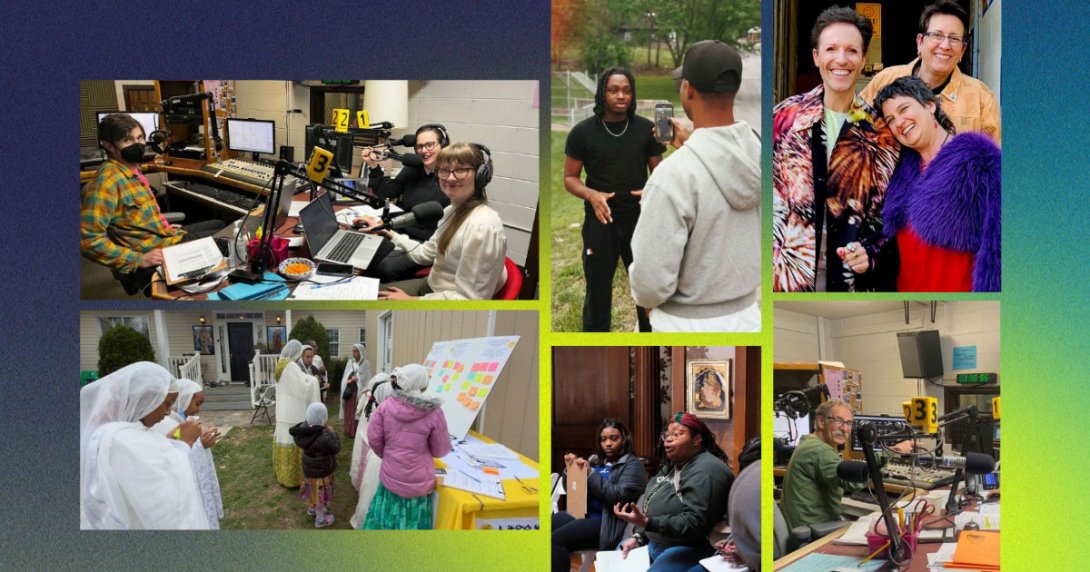
There is a growing movement to strengthen local news in the United States that’s inspiring a wave of civic-information providers to innovate ways to inform people about their communities. In the past, local newspapers and traditional commercial-media outlets dominated the journalism space. But today, as digital technologies evolve and local news disappears, community-centered information providers are becoming critical parts of local-news ecosystems. As we reimagine the future of journalism, we wanted to spotlight a few of the inspiring practitioners who are redefining what it means to empower communities with information, earn their trust and inspire them to take civic action.
If we study the ways in which information flows in a community — both in places where there are many media options as well as in communities that are media-deficient — we can observe that the for-profit media system has by and large failed to inform people about crucial matters that affect their lives. But there are hundreds of civic-information practitioners across the country working to fill the gaps. These practitioners are a crucial part of the media ecosystem and merit further study on how they are facilitating civic participation.
To that end, we’ve interviewed and profiled five civic-media organizations to better understand how they provide more than just news in their communities. In this report, we examine their motivations, challenges and opportunities. We also explore the unique ways in which they are forging relationships, building trust and inspiring often-disengaged communities to participate in civic processes. We found that their role in the community transcends what traditional newsrooms provide.
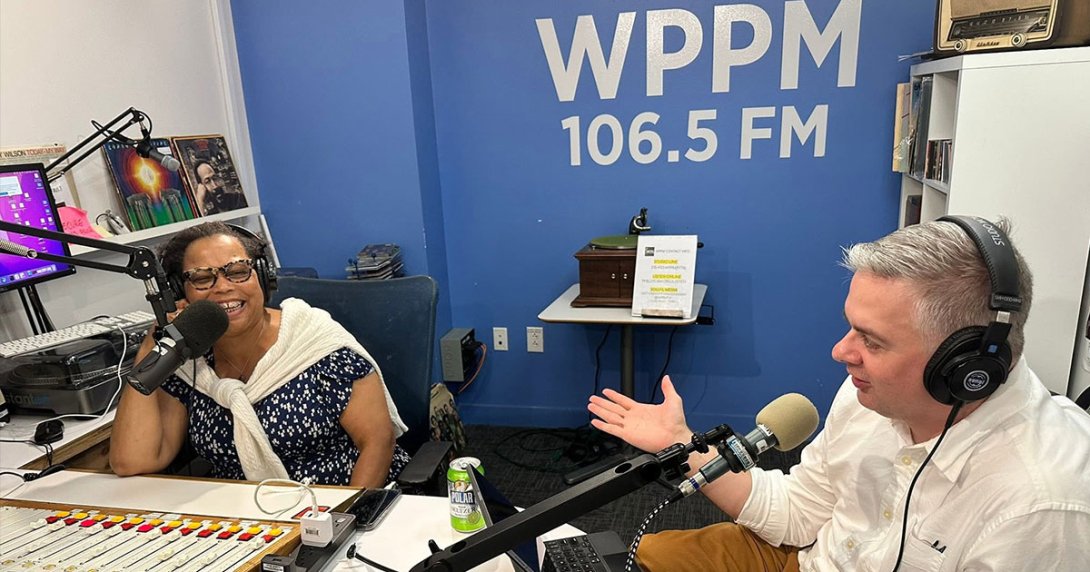
Denise Clay-Murray and Lawrence McGlynn record a weekly broadcast of the Philadelphia Hall Monitor’s program.
Photo by Vanessa Maria Graber
These organizations view civic information as a public good. They go beyond just providing content and don’t approach journalism as an extractive process. They engage in physical spaces, make an ongoing effort to get to know their audiences and connect civic processes to the quality of life in their communities.
All of this is strengthening civic health — and by building a strong civil society, they are countering the harmful media practices that corporate-media outlets use in marginalized communities. These organizations are providing more than journalism; they’re helping their communities resist harmful policies, access public resources and strengthen civil society at a time when authoritarianism is on the rise.
Many of these groups are doing this work with limited capacity and resources because they are driven by the love of their communities and the desire to create positive change. What would these organizations look like if they were fully funded? Imagine how engaged the public would be with robust local-news ecosystems and civic-media providers that meet all of their information needs with care.
Trustworthy Media Makers
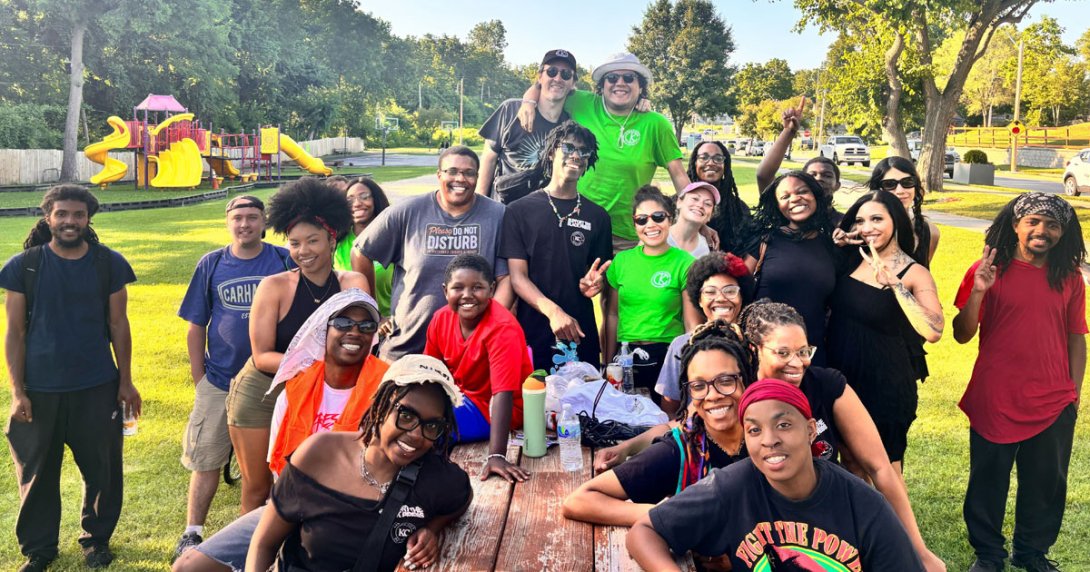
The Kansas City Defender community gathers to celebrate Juneteenth 2025.
Photo by The Kansas City Defender
For this project, we profiled five organizations: CivicLex, the Kansas City Defender, the Listening Post Collective, the Philadelphia Hall Monitor and WORT-FM.
We engaged these providers through in-depth interviews about their motivations, philosophies, practices and visions for the future of local news and civic media. We also did a content analysis of their websites, social media, news stories and educational content to understand their work.
The case studies represent a small glimpse into the growing field of civic journalism and community media — and shed light on how these organizations are practicing a community-driven, reparative approach to storytelling. Learn more about the organizations below and download the report to read their full profiles.
- CivicLex
Location: Lexington, Kentucky
Established: 2017
Website: civiclex.org
Engagement and Offerings:- CivicLex Weekly: Local news and reporting on the lifecycles of local legislation
- Civic-education programs in K-12 schools and workshops for adults
- Local-government partnerships to change local decision-making processes
Communities served: Residents of Fayette County, Kentucky
Lineage/Background: Community development
Led by: Founder and Executive Director Richard Young“We’ve seen pretty significant structural changes in our government because of our work. We’ve changed how public meetings function. We’ve created new positions in local government through our work. We have seen tangible, major shifts in how our community governs itself.”
— CivicLex Founder and Executive Director Richard Young
- The Kansas City Defender
Location: Kansas City, Missouri
Established: 2021
Website: kansascitydefender.com
Engagement and Offerings:- Journalism arm includes a website and social-media presence
- Community arm includes the Mutual Aid Committee (offering clothing donations, a free grocery program, etc.); the Political Education Committee (featuring the B-REAL Academy freedom school); and the Arts & Culture Committee (featuring Black creative workshops, 3v3 basketball tournaments, etc.)
Communities served: Residents of Kansas City, Missouri
Lineage/Background: The radical Black press
Led by: Founder and Executive Editor Ryan A. Sorrell“The fact that no information written by Black people was reaching young Black audiences and communities — that was one motivation for wanting to start the Defender.”
— The Kansas City Defender Founder and Executive Director Ryan A. Sorrell
- The Listening Post Collective
Location: National focus
Established: 2013
Website: listeningpostcollective.org
Engagement and Offerings:- Community-information landscape model
- Online course
- Grants and coaching
- Civic Information Index
Communities served: Open to all U.S.-based media work, with a focus on communities facing a deficit of cultural- or language-appropriate local news and civic information; immigrant communities; Appalachian areas; Indigenous communities; and communities in the Southern United States
Lineage/Background: International media development
Led by: Carolyn Powers, director of U.S. programs at Internews (founder Jesse Hardman led the Listening Post Collective until 2026)“Journalism doesn’t operate in isolation. Education, public health, literacy — if you understand a more holistic version of a community, I think you’ll have a better sense of how journalism can have an impact.”
— The Listening Post Collective Founder Jesse Hardman
- The Philadelphia Hall Monitor
Location: Philadelphia
Established: 2016
Website: hallmonitor.org
Engagement and Offerings:- Weekly community radio and public-access TV show
- Facebook and YouTube stream and social-media content Weekly newsletter and online news website
- Live weekly broadcasts from the Philadelphia City Council meetings
- Fact-checking and verification services
Communities served: All English-speaking Philadelphians, especially the 23 percent of people experiencing poverty, who are likely most impacted by what happens at City Hall
Lineage/Background: Civic journalism and accountability reporting
Led by: Co-operative owners and reporters Denise Clay-Murray, Vanessa Maria Graber, Lance Haver and Lawrence McGlynn“We’re the most unequal big city in America. How do we get information to the people who need it the most?”
— The Philadelphia Hall Monitor cooperative owner and reporter Lawrence McGlynn
- WORT-FM
Location: Madison, Wisconsin
Established: 1975
Website: wortfm.org
Engagement and Offerings:- Radio programs
- Media-production trainings
- Volunteer-led programming
- Community-access hour
Communities served: All Madison residents; 300 volunteers; language-specific communities served via a bilingual Hmong show and a Spanish-language show
Lineage/Background: Community-radio movement and community-media centers
Led by: News and Public Affairs Director Nate Carlin“One of the strong needs that we hope to [meet] is the need for community. There’s a lot of people that are feeling adrift and tossed about by media.”
— WORT-FM News and Public Affairs Director Nate Carlin
Recommendations
Civic-media practitioners play a vital role in giving people the tools to participate in civil society. Our field needs shared ways to document how news and information can improve neighborhood well-being, deepen trust in government institutions and better hold those in power accountable. Funders should consider the various ways in which these organizations are contributing to the civic health of their communities instead of focusing solely on how many followers and subscribers they have. Civic information plays an important role in building infrastructure like information networks. Long-term, year-round civic participation is a valuable metric for a community’s civic health.
Read below for a summary of our recommendations and download the report to get the details.
- For Local-News and Civic-Information Providers
- Who are you specifically serving? Who are you accountable to? (e.g., Black youth in Kansas City; the 23 percent of Philadelphians who live on $26,000 per year or less, etc.)
- Engage first — and engage consistently. Listen to community members as much as you can with an eye toward building long-term relationships.
- Name the specific value you bring to your local-news ecosystem. Prioritize where you can have the most meaningful impact with the time, resources and networks you have.
- Think beyond just doing journalism. Don’t just report on the aftermath of a decision: Instead, offer people opportunities to engage with local civics before leaders make decisions.
- Make time to document impact. Choose metrics that are meaningful to your community’s unique information needs.
- For Funders
- Name which communities you are accountable to. Which civic-information providers — including and beyond news outlets — have relationships with and serve those communities?
- Look beyond funding “typical journalists” and “traditional newsrooms.” Funders should invest in groups that are strengthening civil society and providing civic information, especially in places that are otherwise media-deficient.
- Trust the people who are serving their communities with tailored solutions. Avoid enforcing a “one-size-fits-all” approach, including around delivery methods, platforms and engagement activities.
- Be mindful when hearing judgments that a civic-media outlet is “too activist/advocate.” For example, many BIPOC-centered media outlets are operating within the context of a long history of media harm against their communities.
- Investing in civic-media organizations will help them become more sustainable and better inform their communities. Civic-information providers help improve their communities’ health, but these outlets are not resourced in proportion to the importance of their work.
- For Policymakers
- Consider adopting the Media Power Collaborative’s Policy Agenda to help build infrastructure for local news and civic media. Free Press’ Media Power Collaborative provides a comprehensive local-news blueprint that lawmakers can implement to help sustain local news.
- Cultivate relationships with allied civic-media practitioners who are working to foster more civic participation in their communities. Legislators can collaborate with civic media to share information about programs and initiatives that will benefit their communities and help stakeholders navigate complicated government processes.
- Engage with civic-information providers by hosting listening sessions, attending local-news events and engaging one on one with community members who live in media-deficient communities. Connect with groups serving BIPOC communities, rural communities, people who speak non-English languages and other underrepresented communities.
- Assess the local-news gaps in your district and determine how they impact your office’s ability to inform communities. Advocate for policy solutions that use public resources to support civic-information providers.