Hollywood's Awards Season Is Better When It Embraces Diversity
Courtesy ABC
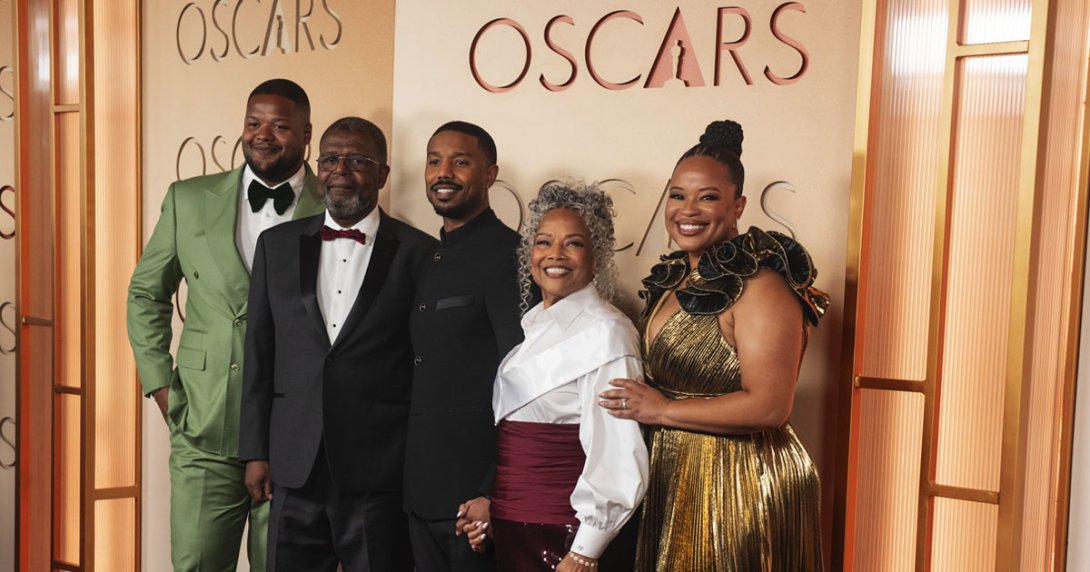
Hollywood’s awards season wrapped with big wins for diversity at the Oscars on Sunday. One Battle After Another, which featured a diverse cast, took home the Best Picture Award. Ryan Coogler’s Sinners earned a record-breaking 16 nominations, and the film’s cinematographer, Autumn Durald Arkapaw, became the first woman and first person of color to win Best Cinematography. Netflix’s KPop Demon Hunters also made history by winning both Best Animated Feature and Best Song for “Golden.”
Diverse and equitable inclusion in Hollywood is good for media workers and for studios that profit from stories of people of color. According to the latest UCLA Hollywood Diversity Report 2026: Part 1 Theatrical, in 2025, theatrical films with casts that were 41 to 50 percent BIPOC dominated nearly every performance metric studied. In short, as the report put it, they “enjoyed the highest median global box office receipts.”
DEI matters because it impacts who gets to work, whose stories are told, and from whose perspective. Without viewpoint diversity, film and TV reinforce bias, misrepresenting, dismissing, devaluing and even erasing the lived experiences of marginalized groups.
Without diverse and equitable inclusion in the media, we do not have free speech. What we have is favored speech reserved for an entitled few who get to tell their stories and prioritize their views. DEI is central because unless we all have free speech, none of us do.
Trump is on a rampage to capture and whitewash the media, demanding companies abandon their commitments to diverse and equitable representation. But studios and news organizations that bow to his demands will pay a price at the box office and during awards season. It’s time for them to grow a spine and stand up for free speech, DEI and storytelling that matters.
Because diversity wins with audiences
If this year’s Oscar nominees are any indication, diversity continues to win in terms of popularity and profit. Sinners has earned $369 million worldwide ($279.9 million domestic and $89.1 million international). KPop Demon Hunters also broke new ground as Netflix’s first-ever #1 box office hit, grossing $24.6 million total ($24.3 million domestic; $320,000 international).
As Dr. Ana-Christina Ramón, director of the Entertainment and Media Research Initiative at UCLA and lead author of UCLA’s annual diversity reports, stated at a recent SAG-AFTRA event, “To say that diversity is not something people want to see is just ridiculous.” In fact, many of the most profitable recent projects have featured diverse characters and storytelling.
DEI is personal for me and so many others
In addition to authoring our Free Press COMPLICIT report, I’m also an actress. On March 1, I co-hosted the “SAG-AFTRA en Español” podcast from the Actor Awards red carpet. I spoke with SAG-AFTRA President Sean Astin and Netflix CEO Ted Sarandos about the importance of diverse and equitable representation in our industry.
Astin said: “Diversity is a blessing and the more diverse our world gets, the better it is. And I think our industry is a great reflection of that dynamic, and I think this evening is a banner celebration of diversity.” Yet he also acknowledged that we still have a lot of work to do to achieve equitable media representation: “It’s just very clear that the demographics are not represented in the work, so that has to change.”
For the first time, the SAG-AFTRA awards show streamed on Netflix, the only company that refused to abandon its commitments to DEI in our COMPLICIT study, so, I could not pass up the opportunity to thank Sarandos for upholding that commitment. He said, “Well, we tell stories to the world. And there have to be a lot of diverse stories, a lot of diverse storytelling, if you want to represent the world we live in.”
Pushing Hollywood toward better representation works
From movements like #OscarsSoWhite to #MeToo, industry professionals and audiences have pushed Hollywood toward better representation, more equitable ownership of our stories and accountability for harm. April Reign’s 2016 #OscarsSoWhite social media campaign protested the lack of diversity in the Academy Awards. For two years prior, all 20 acting nominees were white. Thanks to Reign’s leadership, the Academy acknowledged it had a problem and started working on diversifying their voting membership. These changes and the resulting more diverse red carpets we see today prove that pushback works.
While diversity films keep outperforming expectations, representation is still not equitable. The UCLA report also found that in 2025 people of color “lost ground among lead actors relative to their white counterparts… and women lost ground, relative to their male counterparts, in three of the four key theatrical film employment arenas in 2025 — among theatrical film leads, directors and total actors.” The industry still has work to do.
DEI and media mergers
Now, Hollywood is having another reckoning. A massive mega-merger is on the horizon. And as we’ve seen with other mergers this past year, Trump likes to leverage the government’s power over merger approvals to undermine these companies’ commitments to diverse viewpoints and representation.
The Paramount-Skydance merger, approved in 2025, is one such example. Paramount ended its DEI efforts to help win approval of the Skydance merger. After the merger, the company disbanded CBS News’ Race and Culture Unit, which came amid a broader rollback of diversity initiatives. CBS also blocked Stephen Colbert’s interview with Democratic Senate candidate James Talarico, in an attempt to silence dissenting voices from public view.
The potential Paramount-Skydance and Warner Bros merger is disastrous for DEI, which means that it is bad for us all. Timothy Karr, Free Press’ senior director of strategy and communications, notes that this WBD merger will result in less consumer choice, less wartime accountability, more propaganda and censorship, more media-industry layoffs and less viewpoint diversity. Enough.
What’s next: pushing for media accountability and structural reforms
Authentic DEI is more than racial diversity. It’s about creating safe and accessible spaces where everyone can participate.
Diversity, equity and inclusion efforts aim to correct discriminatory practices. To make progress we need champions like Netflix who don’t bow to the Trump administration, an industry willing to prioritize DEI and advocacy groups that will fight for media accountability. That is why Free Press, along with more than 50 media organizations have signed an open letter led by our partners at Color of Change to demand corporate accountability for folding their DEI efforts. It’s past time for media companies to not just reinstate their commitments to diversity but double down on them.
What you can do: Join Free Press’ email list to stay up-to-date with upcoming actions. Together, we’re holding corporate media accountable, demanding that they reinstate and improve their DEI commitments.