Wisconsin’s Legislative Session May Be Over but There’s Still Work to Be Done
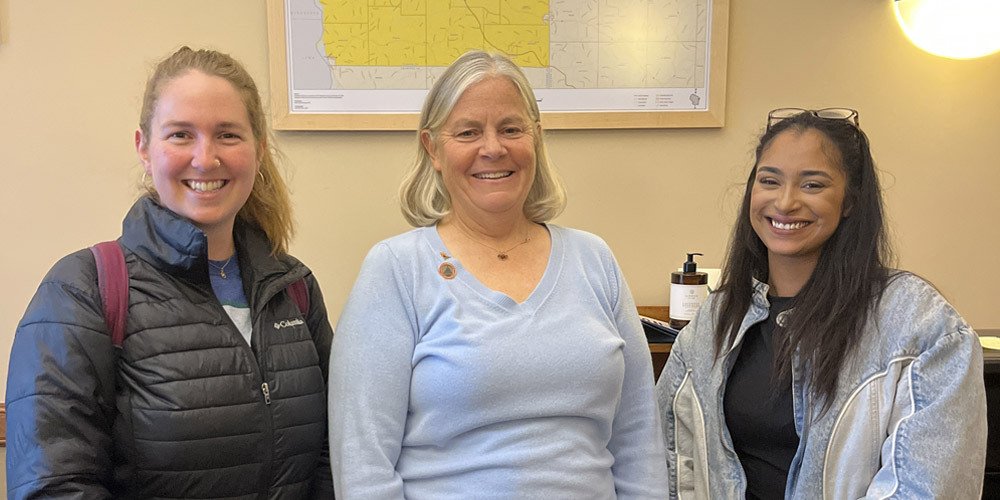
Free Press Action’s Sarah Stone and Arin Anderson with Wisconsin State Rep. Tara Johnson (center)
There’s reason to be optimistic heading into the next session, even with this temporary setback.
On Thursday, March 19, the Wisconsin legislative session came to an end, but legislators left some important work on the table. During the final Senate floor session, the Senate addressed over 80 bills. One — SB 666, which would have protected journalists and community members against frivolous lawsuits meant to stifle speech — was not one of them.
For weeks leading up to and during the session, a collection of media advocates, civic leaders, and legal experts worked tirelessly to get the bill over the finish line. From phone calls to sign-on letters to op-eds to petitions to office drop-ins, journalists and advocates alike leaned hard on the Senate to bring the bill up in the final days of session.
The vital legislation had already sailed through the state’s House and its first Senate committee with broad bipartisan support; a Senate floor vote was the only thing standing in the way of Wisconsin becoming one of the last states in the country to cement this critical protection for free speech.
But the effort fell just short. Here’s what happened, and why there’s still plenty of reason to be optimistic heading into the next session, even with this temporary setback.
In late 2025, state lawmakers introduced the bill to enact what are known as anti-SLAPP protections. The legislation adopted the Uniform Public Expression Protection Act, which seeks to insulate journalists and ordinary community members from strategic lawsuits against public participation (also known as SLAPP suits). Powerful interests often file these lawsuits against those who speak out against official or corporate abuses and other matters of public concern.
The introduction came a little more than a year after the Wausau Pilot and Review — an independent local-news nonprofit — was in danger of bankruptcy after being sued by local businessman Cory Tomczyk, who is now a sitting state senator. Tomczyk sued the outlet for reporting that he used an anti-gay slur toward a 13-year-old boy during a Marathon County meeting in August 2021.
After a circuit court sided with the local outlet, the case was dismissed — which prompted the plaintiff to file an appeal. The subsequent decision only affirmed the lower-court ruling. Although it won in court, the Wausau Pilot and Review racked up nearly $200,000 in legal fees, putting it at risk of closure. Fortunately, the organization created a successful GoFundMe that enabled it to continue operating despite these threats. This example underscores why these protections are necessary, and why 39 other states currently have them in place.
The final days of session
The anti-SLAPP bill passed the House with strong bipartisan support. But as the final weeks of session started to tick by, the bill was conspicuously absent from the Senate floor calendar.
In an attempt to get the bill unstuck, Free Press Action worked with a diverse coalition of free-speech advocates and local media leaders in calling on state lawmakers to pass the bill before the end of the session. Our letter urged lawmakers to adopt the legislation as “a wise nonpartisan investment in protecting the speech and civic health of the commonwealth while laying the groundwork for a sustainable, community-rooted local news ecosystem.”
“Free expression is fundamental to what we do — and fundamental to a functioning democracy,” wrote Jim Malewitz of Wisconsin Watch. “That’s why Wisconsin Watch is joining other newsrooms and free speech advocates in urging the Senate to enact protections against frivolous lawsuits.”
We hand-delivered the letter to members of the Wisconsin Senate, and backed up the effort with dozens of phone calls and emails to legislative offices. Despite a growing chorus of bipartisan support in the Senate, the bill remained stuck.
While Sen. Tomczyk denies blocking the bill’s passage, he stated in a recent Facebook post that he was the only senator to speak against the bill and warned his colleagues “to be very careful and make sure they understand what they are voting for.”
What’s next
While the result was disappointing, there’s plenty of reason to be hopeful coming out of this session. This issue is clearly on the radar of lawmakers on both sides of the aisle, and we’ve heard from multiple offices that they’ll be pushing hard to get this done when the next session convenes in early 2027. Perhaps more importantly, a robust coalition has emerged behind the bill, giving it the backbone it needs to move quickly next session.
And the anti-SLAPP bill isn’t the only item on the table next session, when it comes to supporting local news in the state. Just before the session ended, Sen. Mark Spreitzer and Rep. Brienne Brown introduced a bold package of bills to strengthen local journalism and informed communities in Wisconsin.
This legislation signals a growing commitment from lawmakers looking to support the kind of community-rooted news and information that Wisconsinites rely on to stay engaged, empowered and connected.
The legislation includes a bill to establish a Civic Information Consortium, a concept Free Press Action championed in New Jersey, that a growing number of states are now exploring. Other components include a bill to create a journalism fellowship program within the University of Wisconsin system for early-career journalists, and another bill that would create a state tax credit for local newspaper subscriptions. Former Rep. Jimmy Anderson introduced a similar package in 2024.
As we build momentum for the next legislative session, I’ll be on the ground learning about how people in Wisconsin access information, who the trusted messengers are in their communities, and what gaps and challenges prevent them from getting the information they need. I’ll also be working with media, civic and policy leaders across the state to shape a shared, stakeholder-driven agenda heading into the next session.
Stay tuned for more information on our listening sessions and other ways to get involved this spring and summer.
###
Get involved in the fight to support local news and civic media.