How to Avoid Spreading Misinformation
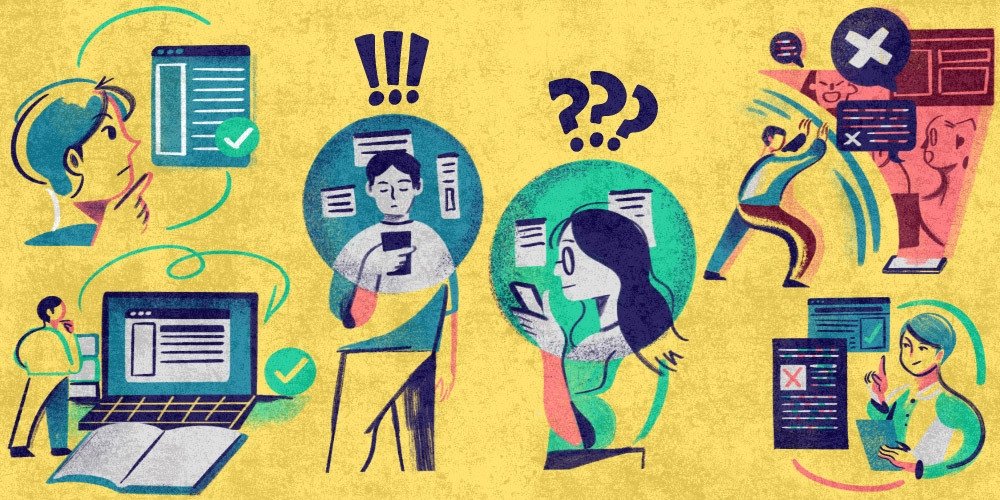
Image by Courtney Morrison
Misinformation is a huge problem — and it isn’t confined to social media. Tech-billionaire bros like Elon Musk are investing hundreds of millions into the midterm elections, using their influence and money in hopes of pushing people to vote for Republicans. Donald Trump himself has made clear his intentions to interfere if results don’t go his way. Meanwhile, big media corporations are failing to debunk some of the most potent lies we’ve seen time after time during election season.
The entire ecosystem we live in — from the online memes we consume to the flyers we’re getting in our mailboxes to the hateful ads that interrupt our favorite TV shows — helps fuel manipulation. That makes it hard for us to make sense of candidate viewpoints and election logistics — and to sift through what really matters as we consider engaging in the democratic process.
So what can you do when news is flying at lightning speed and you’re trying to figure out what’s true and what you can safely share? What do you do when you see or receive something you know is misleading?
This guide is a good place to start.
Think before you share
The moment before you click “share” is the most important moment. We’re all hungry for information and often move quickly to share breaking news, images, videos — and to give our hot take on a rapidly moving situation. This is the best moment to pause. Breathe. And think to yourself: “Why am I seeing this?” When you don’t yet know all of the facts, slow down and seek them out before sharing.
Check facts, images and dates
In rapidly evolving news cycles, our social media and news feeds can be cluttered with low-quality coverage, misleading headlines, manipulated images, outdated articles and other forms of mis- and disinformation. Disinformation is false content created with the intent to mislead. Misinformation is simply false information.
When we share disinformation without realizing that it was targeted at us, that content becomes misinformation. But either way, it’s still bad for our information diet and can truly mislead people or even influence their beliefs and values. Help prevent this by researching your sources:
- Consider why you see the sources you’re seeing.
- Run images through an image checker.
- Check the date of news articles to make sure the content is still relevant.
Find trustworthy news sources
Social media is definitely part of the misinformation problem. Platforms like Meta, X and YouTube have ditched their previous commitments to protect platform integrity. They’ve abandoned key policies and instituted mass layoffs, including staff on the teams that previously worked to keep extremism and lies at bay.
But the problem isn’t limited to social media. Our traditional news outlets — including cable and radio — can also produce coverage that confuses audiences and fails to capture the stakes we face. Think about whether what you’re absorbing is straight news reporting or opinion journalism designed to persuade you of a certain viewpoint. Is there context or history that might be missing?
Seek out diverse sources, including nonprofit and independent news outlets that provide audiences with information about ways to get engaged in their communities and the democratic process.
Talk to people you know about misinformation
It’s highly likely you’ll encounter someone you know who shares something you think is simply untrue. It’s a careful dance, figuring out how and when to approach this. First, do your homework. Controversy online just gets more eyeballs — and the algorithm loves a good fight.
Make sure your own biases aren’t influencing your reaction in thinking someone shared misinformation. Approach them with empathy; perhaps they don’t know they’ve shared something false.
And if you sense your attempts to talk with someone are not helping, know when to avoid confrontation. People who believe conspiracy theories can be difficult to reach. Call them in, instead of calling them out, and remind them you’re available to talk down the line. We need more constructive dialogue, not less.
We hope these recommendations will help as you navigate a news environment that can often feel chaotic. Please stay in touch with Free Press for future resources, webinars and other updates.
****
Help Free Press keep fighting to combat misinformation: Donate today.