The FTC Has Joined the Trump Administration's War on Racial Justice
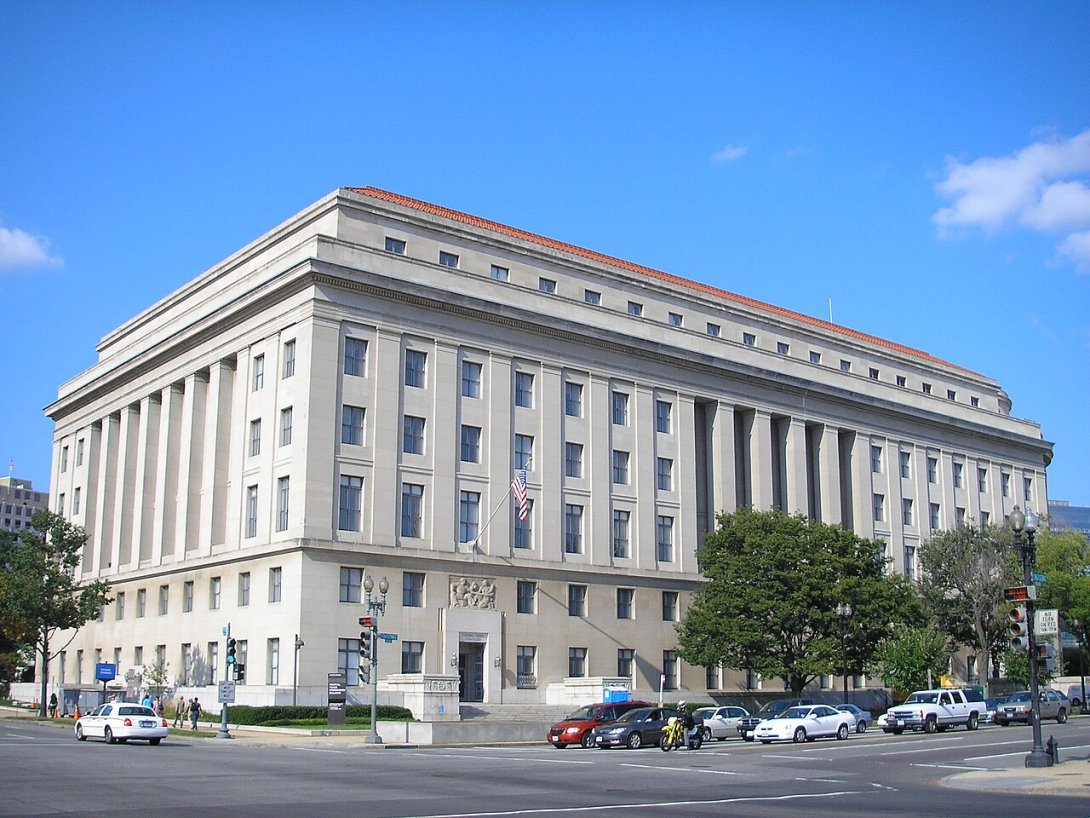
The FTC is the latest federal agency to distort and upend longstanding protections to civil rights and the rule of law.
Gryffindor via Wikimedia Commons
In August, the Federal Trade Commission announced that it would no longer pursue disparate-impact claims — which it slams as “unfair discrimination theories.” Arriving on the heels of another policy proposal to pressure AI companies from remedying algorithmic bias, the agency’s statement marked another attack from the Trump administration on civil-rights enforcement.
Disparate impact — which I’ll expand on below — is a legal theory that addresses policies that are neutral on their face but discriminatory in effect. It’s a key tool to address discriminatory or otherwise adverse effects in various settings. Disparate-impact claims can help investigate discrimination that AI tools cause — a pattern we have documented and fought in court.
Abandonment of civil-rights protections has been a hallmark of the Trump administration, which has worked since day one to dismantle civil-rights-era legal mechanisms and poison discourse around diversity, equity and inclusion (DEI). Prohibitions on using disparate impact could impact how public and private entities navigate the harms of AI.
How algorithmic bias can lead to discriminatory outcomes
As machine learning has accelerated over the past decade, errors have inevitably occurred. These “hallucinations” are responses AI produces that sound correct but are factually incorrect — though the model does not know it. It’s simply trying to predict the next answer in the chain. Some hallucinations can be innocuous and humorous, such as when ChatGPT once told a neuroscientist that the Golden Gate Bridge had been transported across Egypt in 2016. Other errors, however, can tank markets or affect high-stakes domains such as elections and medical, legal or financial information.
Hallucinations can occur for several reasons, including limitations in the design of AI itself. Generative AI models, for example, are trained to generate predictive responses based on observed patterns. These models are not trained, however, to verify the truth of their output. And the data fed into an AI model may itself be inaccurate or biased. Large language models (LLMs) like ChatGPT, Claude and Gemini require the input of vast data sets, which carry bias baked in by the people training such models.
Researchers quickly began to flag potentially discriminatory outcomes as a result of algorithmic bias. In 2017, Amazon had to abandon a resume-screening algorithm that disproportionately screened out female applicants. A 2019 study revealed that a health-care algorithm used to disburse medical funding allocated less money to Black patients. The culprit was a data input showing that Black people were generally less likely to seek care in the early stages of an illness when the costs would be relatively lower.
How a civil-rights legal theory became important for regulating AI
Disparate impact is a legal doctrine that developed during the 20th century as civil- and human-rights advocates challenged discriminatory policies that affected different protected classes, including race, religion, sexual orientation and gender identity. These policies may not necessarily be written to be discriminatory, yet still result in such outcomes. The counterpart of disparate impact, in legal parlance, is disparate treatment, where there is explicit discrimination.
The emblematic case of disparate impact came from federal housing policies in the 1930s that racially segregated neighborhoods by denying mortgages to Black homeowners in certain areas. While some of these policies used explicit language such as the “infiltration of inharmonious racial groups,” this practice of redlining operated through the seemingly neutral language of credit. Now, the same analog redlining problems we see in the real world are playing out online. This is referred to as digital redlining, in which our lived experiences and opportunities online are curated based on our perceived identities, sometimes resulting in discriminatory experiences for users belonging to protected classes.
Disparate-impact claims have emerged as a critical tool for AI researchers to both document and remedy discriminatory outcomes of machine learning. Most algorithmic models are not designed to be discriminatory, and simply reflect the inputs and design choices of human beings. With AI’s rapid expansion, disparate-impact liability is a key legal doctrine to prevent discrimination — which is why it became a target of the Trump administration.
In July, the FTC put out a proposed AI policy that hinted at the statement on disparate impact it subsequently released in August. The policy would treat AI outputs that contain “ideologically motivated distortions” — in other words, views the administration disagrees with — as a deceptive consumer practice. This threat also extends to AI models that correct for bias.
So, if an AI model included information about a historical injustice such as slavery, the FTC could sanction the company. As Free Press wrote in its comments on the proposed policy, “the administration’s effort to police AI bias mitigation is yet another prong of its foolhardy war on [DEI].”
The FTC’s policy statement was simply censorship dressed up in technical jargon.
Why did the FTC drop disparate impact?
Disparate impact and disparate treatment have been codified into federal law for over 60 years — first through the Civil Rights Act of 1964, and then via statutes that became backbones of the work of various government agencies to safeguard against civil-rights violations and racist policy. Contrary to the FTC’s claim that it has no statutory authority to pursue structural discrimination, it’s empowered to bring disparate-impact claims under the Equal Opportunity Credit Act. Racial disparities in credit scores remain between Black, Indigenous and Latino consumers compared to white consumers — a prime issue for the FTC to investigate.
The FTC is only the latest administrative agency to drop disparate-impact claims — part of a wider effort to distort and upend longstanding protections to civil rights and the rule of law. In April 2025, President Trump issued an executive order directing agencies to drop disparate-impact enforcement as a violation of “the Constitution, Federal civil rights laws, and basic American ideals.” Since then, agencies including the Department of Justice and the Department of Housing and Urban Development, which have both made particular use of this doctrine, have also renounced disparate-impact liability.
These decisions are ripple effects of the administration’s scheme to eliminate civil-rights protections and overturn the gains of the Civil Rights Movement. The pockets where white supremacy endures in our country, which howled at the loss of the Confederacy and have slowly plotted their way back to power, have always viewed structures ensuring legal equality as “unfair.” So while the FTC’s statement may seem like a straightforward government business, it carries the legacy of racial justice that we continue to defend.
****
Help Free Press keep fighting to hold the FTC accountable: Donate today.