2026 Fall Update
Fighting Billionaire Control of Our Media
A MESSAGE FROM OUR CO-CEOs
In the face of mounting threats to First Amendment freedoms, Free Press has done some of its most important work to date. We’ve protected free speech, opposed dangerous media mergers and fought the growth of AI data centers and unlawful government surveillance.
At a time when it can feel like our nation is lurching from one crisis to the next, Free Press is putting forward innovative solutions that empower communities to tell their own stories and hold the powerful accountable.
We remain committed to our mission of promoting a just and equitable media system that serves a multiracial democracy. Your generous support keeps Free Press and our sister organization, Free Press Action, independent from the government, political parties and the industries we track — and allows us to work solely for the public interest. Read on to learn what you’ve helped us accomplish so far in 2026.
Onward,
Craig Aaron and Jessica J. González
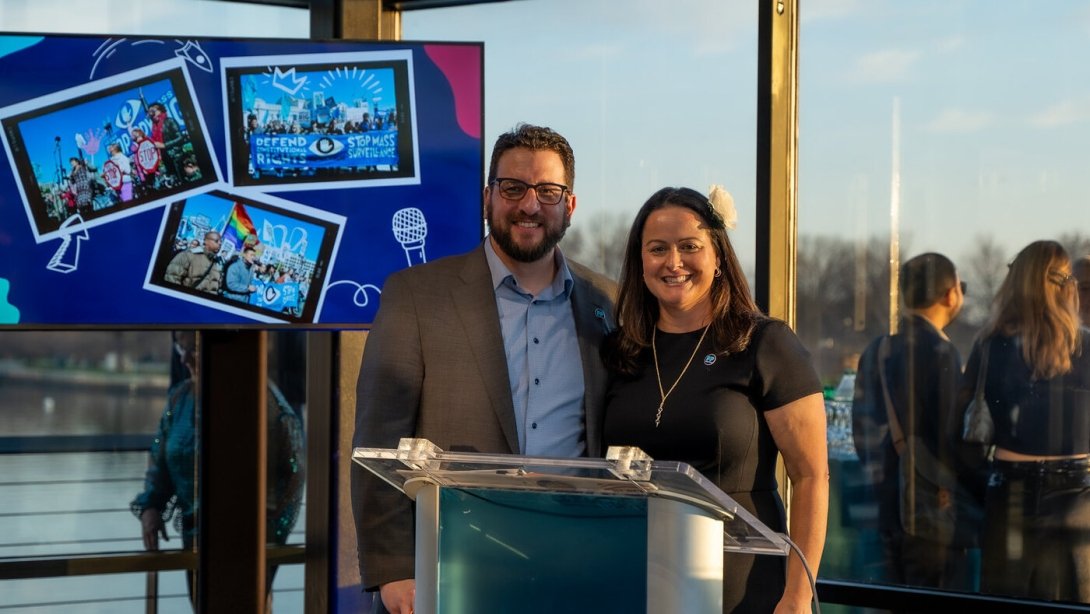
Courtney Morrison
BUILDING A MOVEMENT TO BLOCK MEGA-MERGERS
Free Press led public opposition to Paramount Skydance’s takeover of Warner Bros. Discovery — which will give the Trump-friendly Ellison family control of CBS, CNN, HBO, Nickelodeon, TikTok, two of the five-biggest movie studios and many other prominent media properties. The merger will lead to higher prices, fewer choices and major job losses in the news and entertainment industries. And as Paramount’s stewardship of CBS shows, the merger will lead to more propaganda at a time when trustworthy journalism is already under attack.
Free Press helped steer a broad coalition of First Amendment advocates, unions, consumer-rights groups and Hollywood creatives in opposing the deal. We used a range of creative campaign tactics to raise awareness of the merger’s many harms. We drove protest billboards around the Oscars venue and the Paramount studio and flew an airplane to protest the merger at CBS’ upfronts — an event networks use to promote their fall programming and court advertisers. We also helped frame and amplify a letter signed by more than 5,700 actors, writers, directors, journalists and professionals from across the entertainment industry.
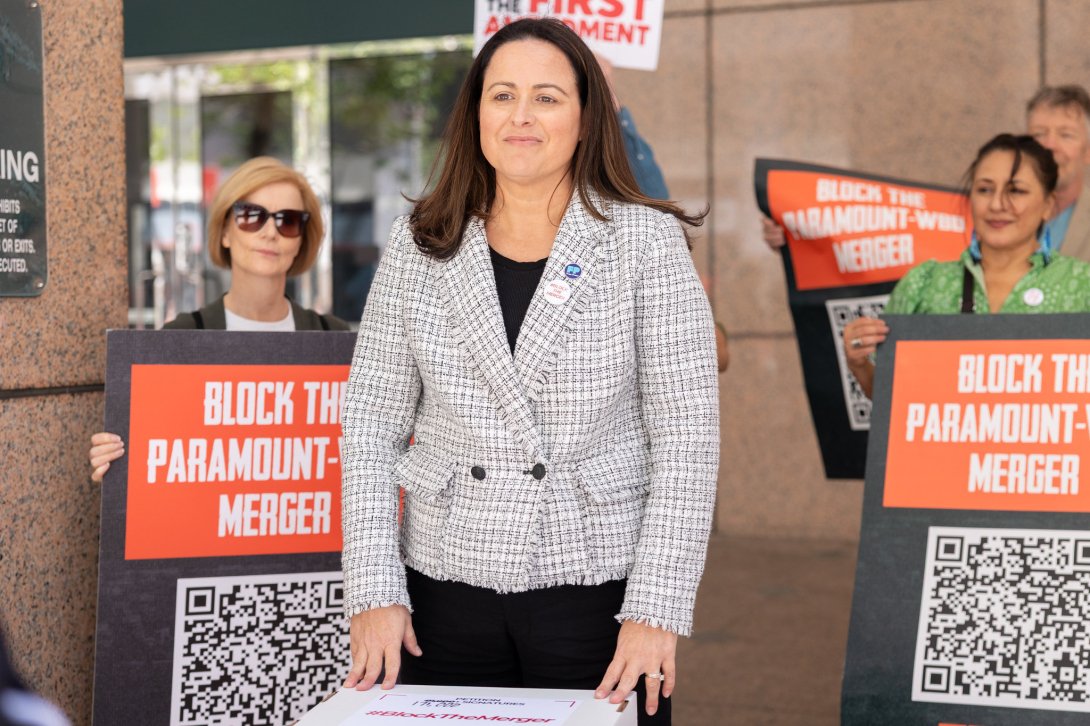
Free Press Co-CEO Jessica J. González and others delivered petitions to California Attorney General Rob Bonta opposing the dangerous Paramount Skydance-Warner Bros. Discovery merger.
Xavier Proctor
We supported anti-merger demonstrations in Los Angeles, New York City, Oakland and Washington, D.C., and delivered over 200,000 petition signatures to California Attorney General Rob Bonta’s office calling on him to block the deal. Free Press, Public Citizen and other advocates protested outside a swanky dinner Paramount held on the Washington Mall honoring Trump and other administration officials while its merger was being reviewed. Co-CEO Craig Aaron delivered remarks at the protest. “A real free press speaks truth to power,” he said in a jab at “The Free Press,” the MAGA-allied property that Paramount owns. “It doesn’t cower and capitulate to would-be dictators.”
In April, Co-CEO Jessica J. González participated in “Artists United for Freedom,” an event held outside the Kennedy Center in Washington, D.C., that Jane Fonda’s Committee for the First Amendment organized. A response to intensifying political pressure and censorship, the gathering featured remarks from luminaries including Jane Fonda, journalists Jim Acosta and Joy Reid, and actors Billy Porter and Sam Waterston, as well as performances from artists including Joan Baez and Maggie Rogers. González discussed how media consolidation undermines artistic independence.
Free Press’ analysis and evidence shaped the lawsuit that 12 state attorneys general filed in July to block the merger. “While Paramount is flaunting its corruption and toasting Trump officials, we’re standing with the workers and artists at the heart of the news and entertainment industries — and with the American people, who deserve a diverse and independent media system that works on their behalf,” said González.
David Ellison and his father Larry — one of the planet’s richest people — used a range of deceitful pressure tactics to push the state AGs to settle the case. In August, Free Press and the other leaders of the Block the Merger coalition launched a platform urging the AGs to stand firm, reject any potential concessions and take their case to trial.
After David Ellison threatened to move Paramount out of California if the AGs continued to pursue their lawsuit, state politicians including Gov. Gavin Newsom ramped up the pressure on Bonta to settle. He capitulated on Sept. 21 — ditching his earlier promise to enforce the law and protect consumers and workers. The toothless settlement fails to address any antitrust concerns and will not stop the Ellisons from destroying CNN in the same way that they’ve demolished CBS News. “Consolidating the media in the hands of friendly oligarchs is right out of the authoritarian playbook,” said González.
Two days after the settlement was announced, Free Press and allies in the Block the Merger coalition went to court to fight back. We submitted an amicus brief that catalogues the settlement’s failure to remedy harms to competition — and to the very people that state attorneys general are supposed to represent. Unfortunately, the judge approved the deal.
A huge silver lining: Over the past year, more people have spoken out against runaway media consolidation, billionaire control and government censorship than ever before. Free Press and our partners in the Block the Merger coalition have built a popular, powerful movement — and we will harness the energy of this fight for the next one.
DERAILING A MAMMOTH BROADCAST-TV DEAL
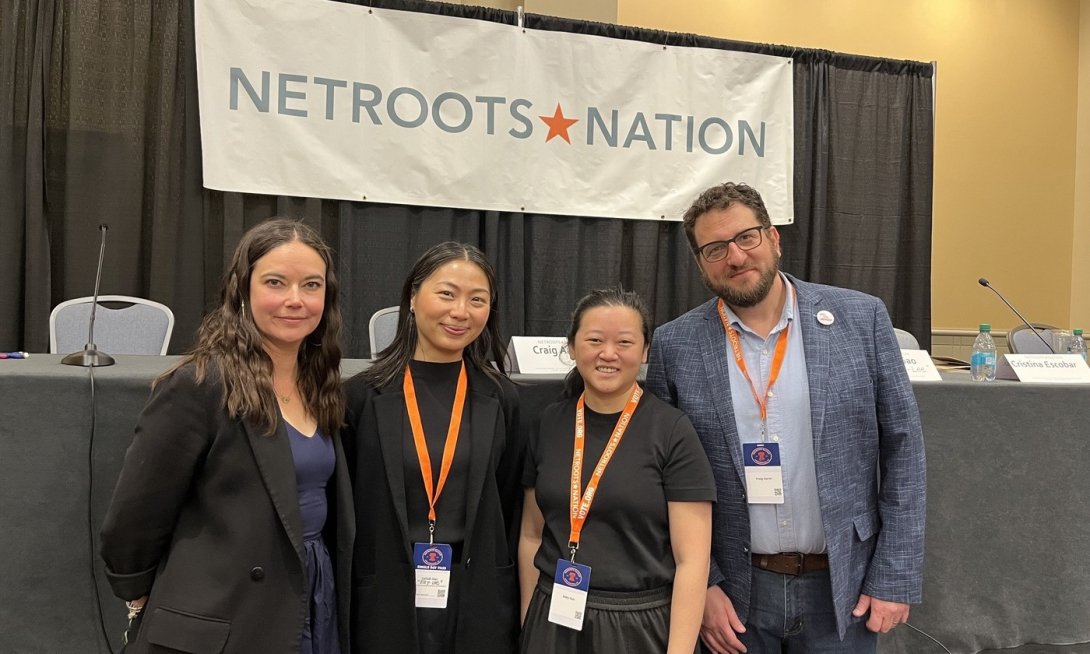
A Netroots panel featuring Free Press’ Cristina Escobar (left) and Craig Aaron (right) with Ceilidh Gao of CWA and Abby Sun of the International Documentary Association underscored the anti-democratic harms of media mergers.
Jonathan Lawson
Since late 2025, Free Press has led the public-interest coalition fighting Nexstar’s takeover of Tegna — which would be the largest broadcast merger in U.S. history. In December 2025, Free Press teamed up with a coalition of media-justice groups and labor unions to file a formal FCC petition to deny the deal — noting that it would give Nexstar control of local-TV stations reaching 80 percent of U.S. television households.
This is more than double the 39 percent national-ownership limit that Congress set. In many markets, Nexstar would control at least half of all commercial stations that air English-language news, further limiting options in already concentrated markets.
Nexstar is a Trump-aligned company that has censored content — including Jimmy Kimmel’s show — to please the president. That’s why FCC Chairman Brendan Carr has been so eager to bend the rules to wave this merger through. After the FCC approved the deal in May — in a blatant violation of the national TV-ownership cap — Free Press filed a lawsuit to overturn this decision.
In April, a federal judge in California issued an injunction that blocked the merger from proceeding in response to an antitrust lawsuit from state attorneys general, which cited evidence from Free Press. The AGs’ lawsuit focuses not only on “how this merger would raise the prices we pay for pay-TV services,” said Senior Advisor of Economic and Policy Analysis S. Derek Turner, “but how Nexstar’s business model of closing newsrooms and duplicating coverage across its stations would harm local communities and broadcast workers.”
The FCC voted along party lines in August to eliminate the national television-ownership cap, in clear violation of the law Congress passed. Eliminating the cap would further reduce competition, diminish viewpoint diversity, weaken local news and benefit only the nation’s largest station owners. “After his legally dubious maneuvers to waive the national cap for Nexstar’s takeover of Tegna, Carr is doubling down, seeking to overturn a vital media-ownership limit he has no actual authority to eliminate,” said Vice President of Policy and General Counsel Matt Wood. Free Press plans to challenge the FCC decision in court.
CHALLENGING FCC CHAIRMAN CARR’S ATTACKS ON FREE SPEECH
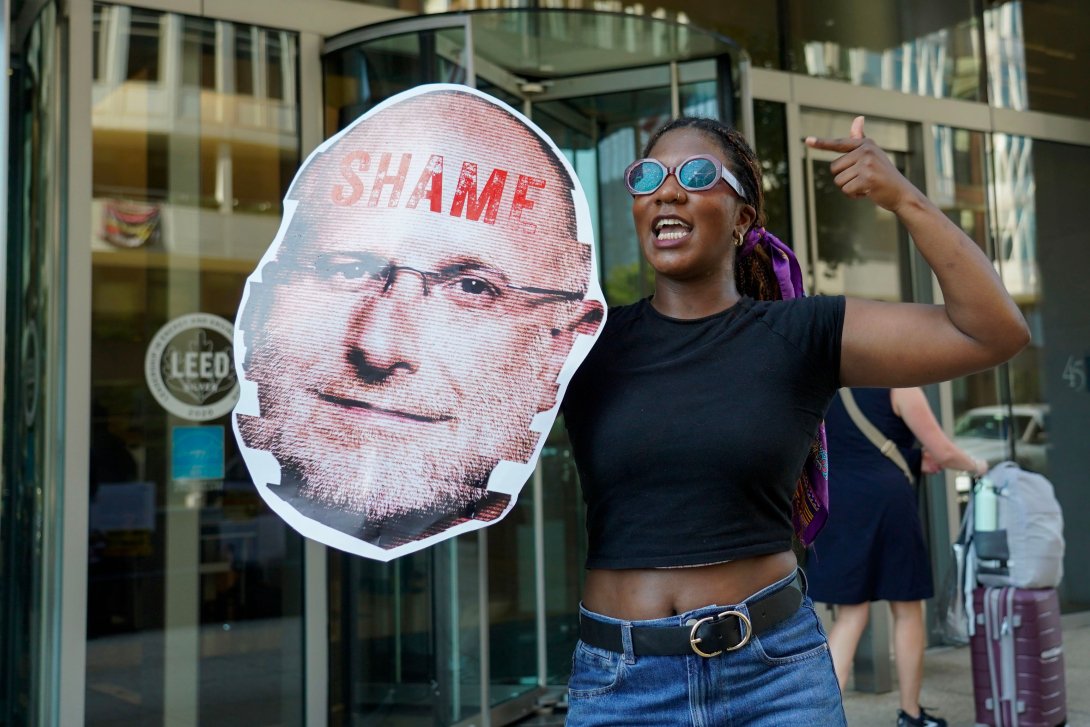
Free Press Campaign Manager Raelyn Roberson outside the FCC
Leigh Vogel, Getty Images for Free Press
Free Press has tracked and challenged the Trump administration’s assault on free speech and free expression. Throughout the year we have held FCC Chairman Carr accountable for everything he’s done to facilitate Trump’s attacks on our democracy.
In March, Free Press joined a broad coalition of civil-society groups, litigators, and leading First Amendment and media-policy scholars calling on Carr to stop trying to silence viewpoints that President Trump dislikes. Our letter chronicles Carr’s various efforts to censor and control the media, calling the chairman’s threats “unlawful jawboning” in violation of the First Amendment. “Chairman Carr mistakenly believes he has the power to shake down media companies, censor broadcasters and punish newsrooms that won’t twist their coverage to placate an erratic and image-obsessed president,” said Matt Wood.
Amid these threats Free Press launched a mobile billboard to protest Carr’s unconstitutional campaign to censor and control any media that displeases Trump. The billboard, which labeled Carr as the “Censorship Czar,” circled key locations in Washington, D.C., including FCC headquarters and Capitol Hill.
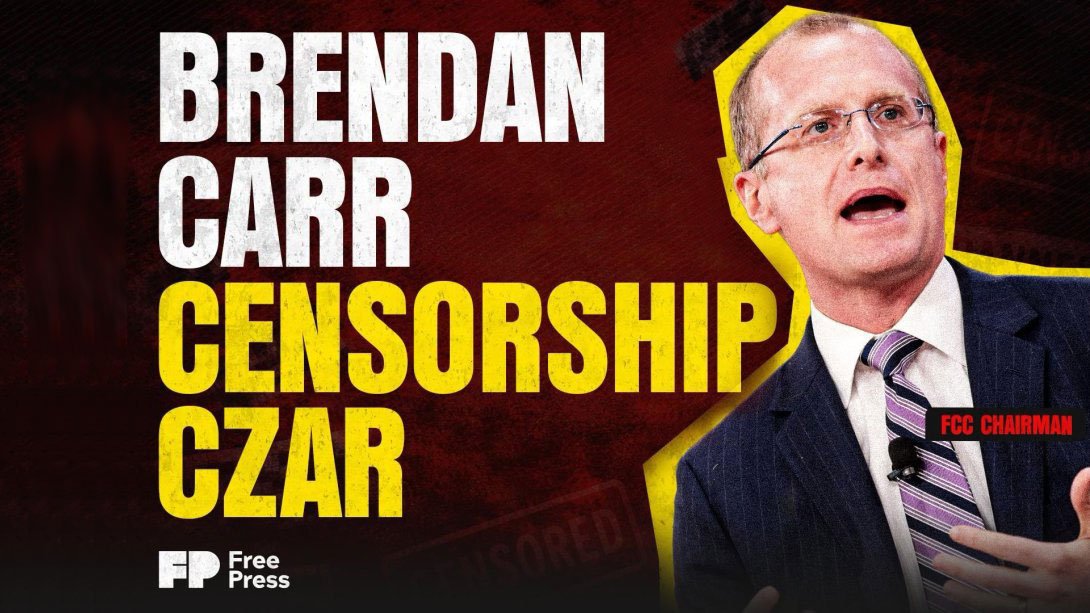
The design for the mobile billboard of Chairman Carr the censorship czar
In April, we spoke out after Carr threatened ABC’s broadcast-station licenses just one day after Trump called for the network to fire Jimmy Kimmel. Since becoming chairman, Carr has launched multiple actions against ABC and has opened at least three dubious investigations into the broadcaster, all following instances in which its programming upset Trump. “Carr will try to dress up this latest attack like a legitimate FCC procedure, but his motivations are clear,” said Jessica J. González. “He is using his position of power to silence dissent at the president’s beck and call.”
In June, Free Press denounced the campaign from the White House and FCC to suppress the voices of people who disagree with or challenge the president and his views. In a filing about whether the ABC program The View still qualifies for an exemption from the FCC’s Equal Opportunities Rule for political-candidate interviews, Free Press noted that “The FCC is explicitly prohibited from dictating the editorial decisions of national news networks, late-night television programs, local newscasts, or any other media outlet.”
In July, Free Press called Carr out for engaging in a political crusade against ABC that violates free-speech rights and weaponizes agency rules and procedures to please a censorial president. In our filing, we debunked Carr’s claim that Disney — ABC’s parent company — has engaged in discrimination. “This kind of capricious law enforcement has no place in a legitimate democracy,” said Wood.
In comments filed in May and June, Free Press urged the FCC to abandon its morally repugnant efforts to silence the LGBTQ+ community. The FCC issued a notice in April to consider whether the industry’s voluntary television-ratings system should apply warning labels to programs that feature transgender and nonbinary characters or discuss gender-identity themes. “The primary intent and impact of the FCC notice is to chill content featuring any LGBTQ+ perspectives and to silence the voices of creators from this community,” said Policy Counsel Shilpa Jindia, who co-authored our comments to the FCC. “Television-program ratings are wholly outside of the FCC’s control, and the use of this public-comment procedure to coerce change raises constitutional concerns.”
On Aug. 6, Free Press presented a “Corruption Walk” outside the FCC building in Washington, D.C. The demonstration exposed the FCC chairman’s role as Trump’s censorship czar. This shameful history, recounted in a series of 11 signs, details Carr’s corrupt attempts to bully any media outlet that refuses to bow to Trump’s anti-democratic White House agenda. The signs were displayed prior to the FCC’s monthly open meeting, allowing attendees to read about the ways in which Carr has violated his oath of office as they entered the building.
SUPPORTING JOURNALISTS UNDER ATTACK
In January, Free Press Action and a coalition of 30 press-freedom and civil-liberties groups published a joint statement condemning the government invasion of the home of Washington Post journalist Hannah Natanson. The FBI searched Natanson’s home and seized her computers and other materials as part of an investigation into a government contractor’s handling of classified documents. The letter’s signers called on Congress to protect journalists and whistleblowers from prosecution.
That same month, Free Press Action spoke out after then-Attorney General Pam Bondi ordered the arrest of independent journalists Georgia Fort and Don Lemon, who were covering a protest inside a church against ICE and Border Patrol violence in Minneapolis. In August, we joined an amicus brief calling on authorities to drop the charges against Fort and Lemon.
In March, Free Press mobilized a coalition of 45 civil-society and press-freedom groups to demand that ICE release journalist Estefany Rodríguez, a Spanish-language reporter for Nashville Noticias. ICE failed to produce a warrant when it arrested Rodríguez, who fled to the United States in 2021 after facing threats in her native Colombia for her coverage of the country’s paramilitary groups. She has since applied for political asylum in the United States. ICE released Rodríguez in April, and she remains at risk of deportation.
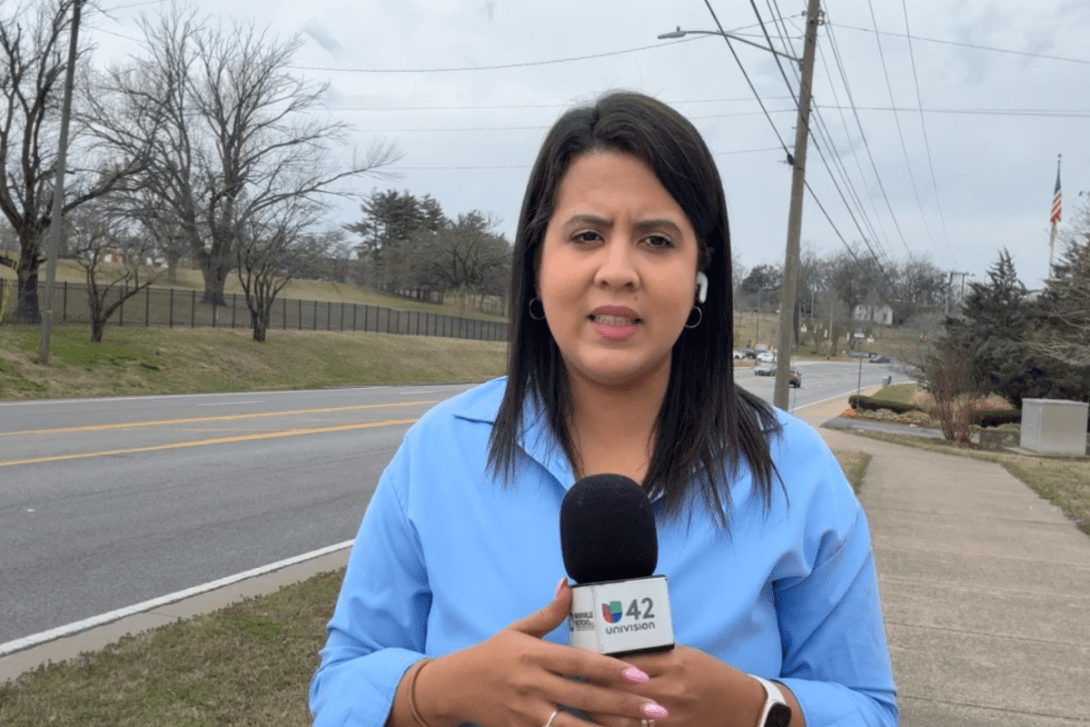
Journalist Estefany Rodríguez spent more than two weeks in ICE custody.
Courtesy of Nashville Noticias
Free Press and a coalition of press-freedom groups condemned the arrests and harassment of journalists covering abuses at Delaney Hall, an immigrant-detention facility in Newark, New Jersey. “We remain deeply troubled by the systemic law-enforcement campaign to silence reporters who cover ICE’s gross mistreatment of immigrants,” said Senior Director of Journalism and Media Education Vanessa Maria Graber. “We will continue to fight for journalists’ ability to cover their communities without fear of retaliation.”
In August, our newsletter Pressing Issues shed light on the case of journalist Carlitos Ricardo Parias — also known as Richard LA. The journalist has long documented ICE raids in the Los Angeles region for his TikTok followers; in October 2025, an ICE official shot and detained him. He’s been in ICE custody ever since — without access to adequate medical care for his injuries — even though he has never been convicted of anything. Free Press interviewed Richard LA’s lawyer, who shared harrowing details of the journalist’s confinement.
In September, Free Press mobilized a coalition of press-freedom groups that urged ICE to release Miami-based journalist Luis Galeano. Galeano came to the United States in 2018 from Nicaragua, where his reporting had exposed the government’s significant human-rights abuses. Since arriving in the United States, he has conducted Spanish-language reporting for communities throughout Florida and has a pending asylum case filed nearly seven years ago.
“When the government arrests and detains a journalist and prevents them from doing their work, it sends a chilling message to other reporters and civilians considering speaking truth to power,” said Free Press Senior Counsel Nora Benavidez. “It’s horrifying that Luis Galeano is now the latest in a long line of journalists who came to the United States to report on issues of the day and instead face deportation.” ICE released Galeano in September after our coalition drew attention to his case.
After Trump barred CNN, MS Now and Politico from the White House press pool, Free Press joined nearly 80 other groups filing an amicus brief opposing the administration’s decision. Benavidez wrote about the ban in a piece for Pressing Issues. “The government doesn’t get to say: You may cover us, but only if we approve of how you cover us. If it does, that’s blatant speech suppression.” In September, a judge extended a temporary restraining order barring the administration from enforcing its ban.
FIGHTING FOR TRANSFORMATIVE JOURNALISM POLICIES
In July, Free Press Action played a key role in saving funding for the New Jersey Civic Information Consortium. Since 2021, the NJCIC — which we helped design and create — has awarded grants totaling more than $12.5 million to more than 50 organizations focused on diversifying journalism, improving government transparency, providing community-health news and better serving communities of color and immigrant communities. The governor’s proposed budget had initially zeroed out funding for the NJCIC, but Free Press Action organized multiple lobby days at the statehouse in Trenton — and helped mobilize 95 community leaders, media organizations and advocates to speak out. As a result of our efforts, the state allocated $1 million for the consortium.
Free Press partnered with the NJCIC and other state allies on the report New Jersey Public Media, which explores ways to build the strongest statewide public-media system in the country. We conducted extensive outreach to ensure that communities could weigh in on “how their tax dollars should be spent to better inform New Jersey residents.” The report informed efforts to return control of New Jersey public media to local hands at Montclair State University.
Free Press Action is working to build momentum for two bills in Pennsylvania: One would create a Pennsylvania Civic Information Consortium modeled after the NJCIC, and one would establish a state-backed fellowship program to place early- and mid-career journalists in community newsrooms. Pennsylvania’s House Committee on Communications & Technology passed the legislation in February.
In June, Vanessa Maria Graber and Civic Media Campaign Manager Eric Thurm visited the statehouse in Harrisburg to brief lawmakers from various caucuses about the legislation. The team has also traveled everywhere from Pittsburgh to State College to build support for these bills, which would fill crucial information gaps. In Pennsylvania, 17 counties have only one — or in some cases, zero — local-news sources, and the newsrooms that remain often have just a handful of reporters.
In October, Free Press, Temple University’s Center for Community-Engaged Media and other Pennsylvania allies organized a panel discussion on how local news can inform people about crucial issues during an election year. Vanessa Maria moderated the conversation, which featured remarks from state Rep. Chris Rabb, the lead sponsor of the journalism bills.
Free Press Action has also ramped up its work in Massachusetts — and in April organized a lobbying day at the statehouse in support of public grantmaking to fund local news and information. A dozen local-newsroom leaders, journalists and community advocates took part. The group met with nearly 20 legislative offices and spoke with lawmakers about the need for funding that invests in outlets serving rural and urban communities alike. Participants also advocated for legislation that supports both immigrant communities and Spanish-language journalists.
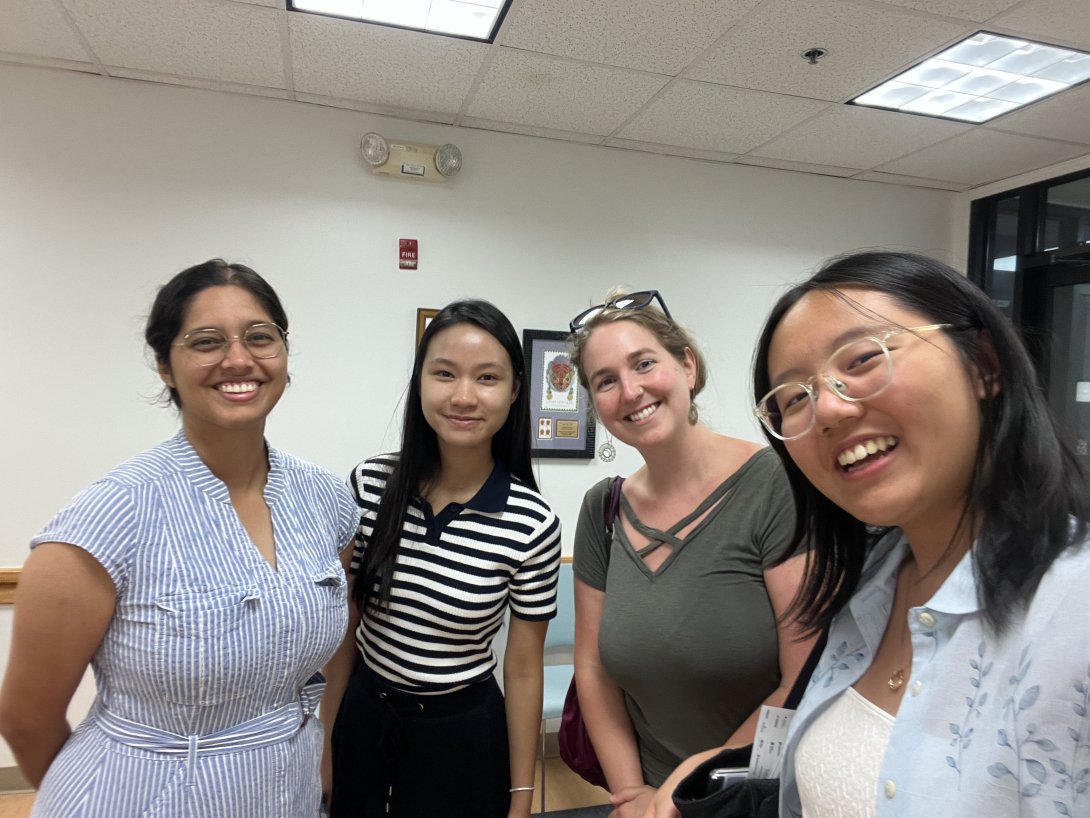
Free Press’ Sarah Stone and Angela Chen (third and fourth from left) at a stop on their AAPI listening tour in Massachusetts.
Angela Chen
In the summer, National Field Director Sarah Stone traveled 1,000 miles around the state — visiting a range of communities to learn how access to local news and information impacts people’s lives. She and summer fellow Angela Chen led a listening tour in Boston and Quincy focused on AAPI-led newsrooms and community organizations. Free Press also worked with the Chelsea-based outlet El Planeta — one of the area’s original Spanish-language outlets — to create a video on how local residents stay informed about immigration laws and ICE activity.
In Wisconsin, Free Press Action led a diverse coalition of free-speech advocates and local-media organizations in calling on lawmakers to pass anti-SLAPP legislation. Powerful interests often file strategic lawsuits against public participation to intimidate those who speak out about official or corporate abuses. “SLAPP suits can be used against individuals and organizations to intimidate and silence public critiques,” said Wisconsin Civic Media Campaign Manager Arin Anderson. “Plaintiffs bring expensive legal proceedings against defendants, who are then forced to rack up exorbitant legal fees defending themselves against baseless charges.” The Wisconsin State Assembly passed the bill with strong bipartisan support in February, but a state senator who had filed a defamation lawsuit against a newspaper blocked the legislation. We will continue advocating for this bill once the next legislative session begins.
Wisconsin has lost roughly 60 percent of its newspapers since 2004 — and Free Press Action is supporting a package of bills to strengthen local journalism across the state. The bills would establish a consortium modeled after the NJCIC, create a journalism-fellowship program at the University of Wisconsin and enact a tax credit for local-newspaper subscriptions. Lawmakers plan to reintroduce the legislation in 2027.
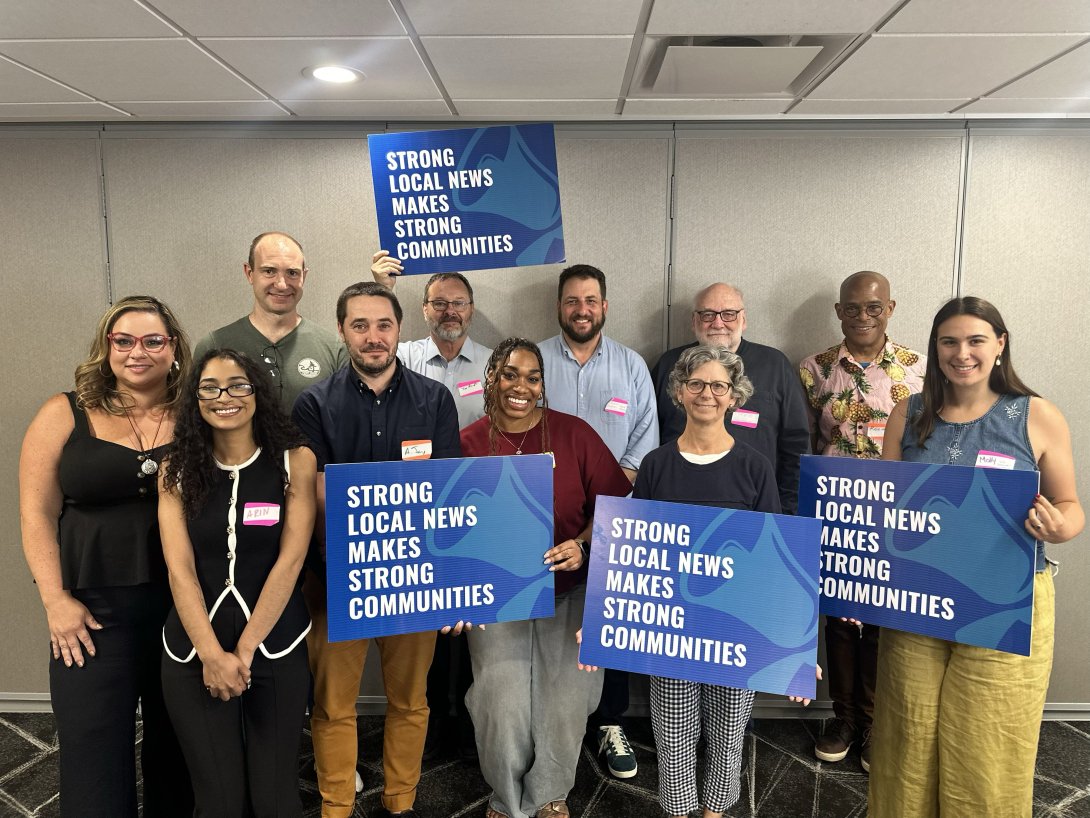
Free Press Action’s Vanessa Maria Graber and Arin Anderson (first and second on left) and Craig Aaron (center of back row) with allies in Wisconsin
In June, Free Press Action convened a group of 10 newsroom leaders, community leaders and journalists for a strategy roundtable in Madison. The gathering focused on building a plan to strengthen local news and better inform communities around the state. In August, we hosted our first community-listening session in Wisconsin. During the event at the Milwaukee Public Library, a reporter from The Capital Times facilitated a workshop exploring how Black and Brown community members can own their stories in the media. Afterwards, attendees discussed ways to stay informed about crucial issues. We plan to host additional community-listening sessions to ensure that any legislation reflects input from residents and other local stakeholders.
In California, which has lost 25 percent of its newspapers since 2004, Free Press Action has long called on leaders to invest public funds to address the state’s dire needs. In June, the state unveiled details on its new California Civic Media Program, which will distribute an initial $20 million in grants as a public-private investment in local reporting. In the months leading up to the announcement, Free Press Action worked to ensure the funding mechanism better supported essential local journalism and nonprofit newsrooms. As a result of our efforts, 13 percent of the money will go to smaller newsrooms and outlets serving communities with the biggest information gaps. “This announcement marks a meaningful step forward for public investment in local news — and is also a clear signal of how much work remains to build the kind of local information landscape our communities actually need,” said Free Press Action Journalism Advocacy Director Alex Frandsen.
In October, Free Press and allies at the Latino Media Collaborative, Maynard Institute and Rebuild Local News hosted the National News Policy Summit in San Antonio, Texas. The first national event of its kind, the summit brought together legislators, journalists, advocates and philanthropic leaders to explore ways to advance strong journalism policies on the state level. Frandsen moderated the panel discussion “Funding the Information Communities Need” while Senior Advisor of Reparative Policy and Programs Joseph Torres took part in a discussion about equity in local-news policy. Craig Aaron moderated a discussion about the need to expand our definition of public media — and build something better.
“If we don’t address the problems of the media, we will never address problems of corruption or inequality, racism or the attacks on the very foundations of our democracy,” Aaron said in his closing remarks at the summit. “But the public won’t care about journalism until we show them journalism that cares about the public.”
CHARTING A NEW FUTURE FOR PUBLIC MEDIA
In 2025, Free Press Action helped lead the nationwide opposition to Trump’s demand that Congress rescind the $1.1 billion it had previously appropriated for the Corporation for Public Broadcasting. Despite our best efforts, Congress passed the rescission package — and the CPB ceased operations in January 2026. We’re now working to create a new public-media system that’s grounded in community, committed to local newsgathering and freed from partisan meddling.
“The fight for public media’s future can’t be about piecing back together what we used to have,” said Craig Aaron. “This new fight must focus on mobilizing a broader community of public-media makers and allies, planting deeper local roots, and never abandoning diversity and equity when they’re under attack.”
The Media Power Collaborative is an essential part of that work. The project, which Free Press Action launched in 2022, brings together more than 330 local journalists, media activists, academic experts and funders to develop and win transformative policies that treat journalism and civic information as public goods. MPC holds ongoing webinars and trainings — and more than 60 leading journalism, pro-democracy and civic-information organizations and outlets have endorsed MPC’s national policy agenda, Local News for the People.
In 2026, the MPC and News Futures launched the Civic Media Policy Leaders Network, a working group designed to cultivate state-level leaders capable of responding when opportunities to advance policy solutions emerge. The group will begin its work in Hawaii, Michigan and New York.
In June, Free Press and allies co-hosted the Media Power Collaborative webinar “New Horizons for Publicly Funded Media: Building a Civic-Information Infrastructure,” which Senior Director of Journalism and Civic Information Mike Rispoli moderated. The discussion brought together leaders from nonprofit news, independent publishing, community broadcasting and documentary film.
Right now industry groups and lobbyists for big media corporations often wield too much influence over state-level proposals to strengthen local news. To counteract this trend Alex Frandsen is facilitating the MPC Strategy Roundtable, which is working to ensure that independent publishers, nonprofit newsrooms, community broadcasters and other civic-media leaders have a role in shaping these policies — and giving people the news and information they need to thrive.
“The central lesson: We cannot build the next generation of public-interest media by asking each sector to fight alone,” said Frandsen. “The future of publicly funded media must be broader than public broadcasting as we’ve known it, and broader than local journalism as an industry category.”
SUPPORTING SPANISH-LANGUAGE JOURNALISTS IN PHILLY
Free Press teamed up with Centro Integral de la Mujer Madre Tierra, PhillyCAM and Temple University’s Center for Community-Engaged Media to launch Comunicadores, a collaborative of Spanish-speaking journalists, media workers, content creators and communications professionals in Philadelphia. Vanessa Maria Graber is coordinating this project, which meets monthly to build solidarity and share information and resources. These gatherings have explored everything from the impact of immigration policies to concerns around press freedom to ways to be more ethical in reporting. In October, Graber partnered with the organizations Madre Tierra and Factchequeado to offer a training for Comunicadores participants on AI and disinformation.
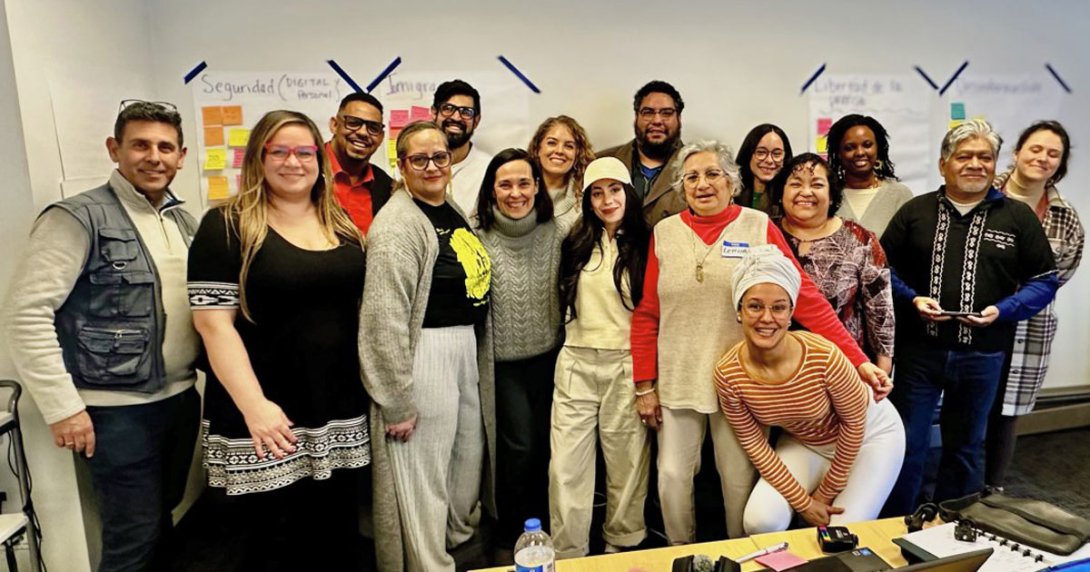
Comunicadores met over the winter in Philadelphia to discuss the challenges Spanish-speaking media workers face and what more can be done to support their vital work.
Graber has spread the word about this important initiative at a number of prominent conferences. In March, she organized a Spanish-speakers meetup at the Online News Association conference in Chicago. In May, she spoke at the Collaborative Journalism Summit at Temple University in Philadelphia. She began her lightning talk — “How the Philly Comunicadores Collaborative Is Supporting Spanish-Speaking Media Members” — by speaking in Spanish. Then she switched to English. “If you didn’t understand what I said then you can put yourselves in the shoes of the thousands of Spanish-speaking journalists, content creators, producers, filmmakers and communicators that are desperately looking for support, mutual aid, education and collaboration across the U.S.,” she said.
In July, she facilitated the panel discussion ”Building Power, Safety and Sustainability for Spanish-Language Media” at the National Association for Hispanic Journalists conference in New Orleans. During this Spanish-language conversation, which she organized in partnership with the International Women’s Media Foundation, panelists discussed issues impacting Latino journalists and explored the need for more collaboration and mutual-aid networks. Graber discussed the Comunicadores project and explained why reporters need to be prepared for times of crisis.
PROTECTING PRIVACY AND FIGHTING SURVEILLANCE
For years, Free Press Action has urged Congress to reform Section 702 of the Foreign Intelligence Surveillance Act. The federal government has abused this authority to spy on protesters, immigrants, journalists and political candidates. In March, Free Press Action and Demand Progress organized 90 civil-society groups to call on Democratic leaders in Congress to reject White House efforts to extend government-surveillance powers under Section 702. “This White House has labeled perceived political opponents as ‘domestic terrorists,’ justifying in their minds the relentless surveillance and persecution of those who oppose the administration’s agenda,” said Advocacy Director Jenna Ruddock. “Congress must insist on common-sense reforms and put the civil and constitutional rights of Americans above the authoritarian desires of Stephen Miller and others in the Trump administration.”
Free Press Action worked on Capitol Hill to defeat the reauthorization of Section 702. Driving over 1,000 calls to members of Congress, we defeated Speaker Mike Johnson’s attempt to sneak reauthorization through with a midnight vote. Following two failed votes, the House of Representatives passed a three-year extension of Section 702. Free Press Action urged the Senate to demand a vote on real reforms — including a warrant requirement — to this spying authority. We notched a victory in June when a bipartisan group of senators blocked the reauthorization of Section 702 altogether. This is a huge win at a time when the Trump administration is criminalizing dissent.
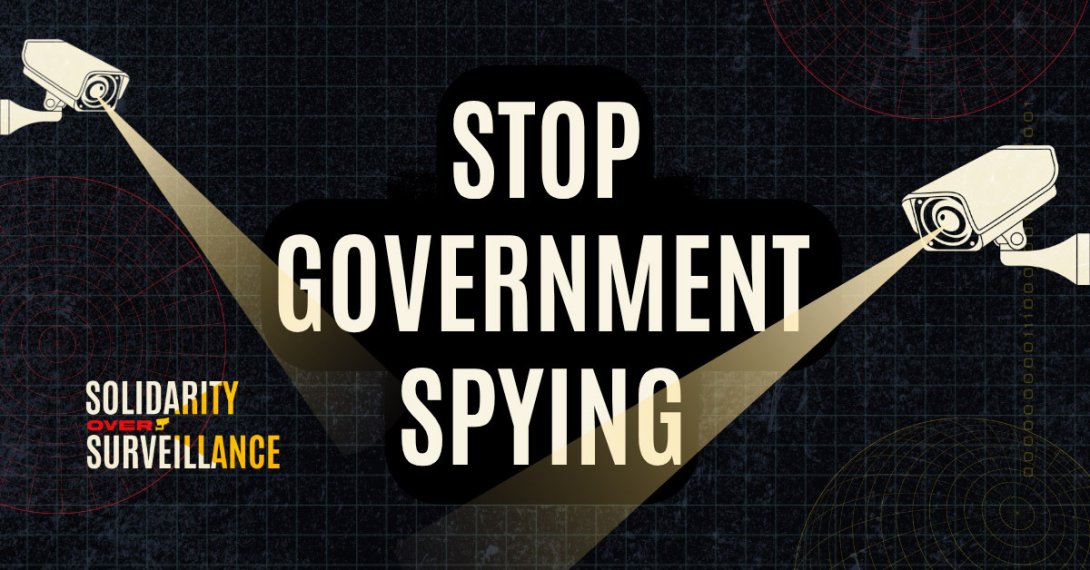
In May, Free Press and the Disinfo Defense League launched Solidarity Over Surveillance, a multistate initiative designed to engage individuals, communities and organizations in the fight against corporate and government-sponsored surveillance. A broad coalition of grassroots, civil-rights and press-freedom groups endorsed the project. The effort is working to stop data brokers from selling sensitive user information to law enforcement; protect dissent, privacy and anonymity in an age of AI-powered surveillance; empower people to use open-records requests to expose local and state governments’ surveillance partnerships; and challenge the government’s weaponization of domestic-terrorism powers.
To kick off the initiative, Free Press hosted a webinar examining how all-encompassing the surveillance state is — and how it disproportionately impacts Black, Brown, Muslim and immigrant communities. Free Press has also hosted community salons in Atlanta and Los Angeles. Campaign Manager Raelyn Roberson teamed up with the Kairos Fellowship to lead a hands-on workshop on how to write effective letters to the editor to oppose surveillance. And in August, Free Press joined DeFlock, an anti-surveillance activist group, for a national week of action opposing automated license-plate readers and other mass-surveillance technology.
In the coming months, we will pair public education with engagement with lawmakers in key states, advancing model legislation to protect consumer privacy and constitutional rights. We’re activating allies in various states — including California, Georgia, Illinois, New York and Washington — interested in closing the data-broker loophole and passing digital civil-rights protections. In recent months, allies have helped usher forward a series of local wins, including a proposal in Oakland to issue a moratorium on data-center construction and a call to pause Flock contracts in various Georgia counties. Meanwhile, our allies in Seattle passed a surveillance-pricing ban, which prohibits large grocery stores from using personal data to set individualized prices.
Since 2021, Free Press Action has urged Congress to pass the Fourth Amendment Is Not for Sale Act, which would restrict law enforcement and intelligence agencies from purchasing data on people in the United States without a warrant. In 2024, the bill passed the House — the farthest the legislation has advanced. The Solidarity Over Surveillance campaign is tracking opportunities to reintroduce this bill and is also supporting the Facial Recognition and Biometric Technology Moratorium Act. We’re also opposing federal efforts to impose a ban or moratorium on state AI regulations and state privacy laws.
RESTRICTING DATA CENTERS
Free Press is helping lead the nationwide opposition to data centers, which pollute the air and water, deplete natural resources, lead to skyrocketing utility bills and disrupt community members’ lives. Jenna Ruddock helps coordinate the Data Center Working Group, a coalition working to ensure that local communities have a voice in AI’s future. The group has provided research, policy and organizing support to community-led fights to stop data-center construction in communities everywhere from Georgia to Michigan.
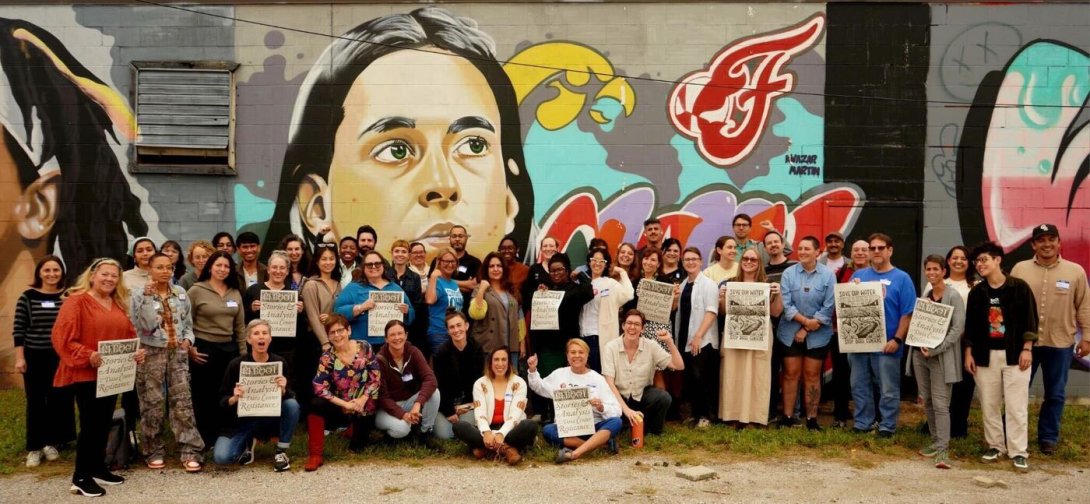
Jenna Ruddock with other organizers who gathered in Indiana to discuss ways to stop the construction of data centers.
Bryce Gustafson of the Indiana Citizens Action Coalition
In July, Free Press organized a virtual briefing for legislative offices on Capitol Hill in partnership with AI Now, the Athena Coalition, the Center for Biological Diversity and the Data Center Working Group. “Stopping the Growth of Data Centers: Leaders from the Frontlines,” which Ruddock moderated, featured remarks from Sen. Ed Markey and advocates from Indiana, Minnesota, Pennsylvania and Texas who are organizing grassroots efforts to rein in data-center construction.
“Data centers aren’t being built in Mar-a-Lago, next to Zuckerberg’s apocalypse bunker in Hawaii,” Markey said. “They’re being built in your backyards, in the backyards of working-class Americans who don’t have the time, don’t have the money, don’t have the big White House connections that this industry wields against regular communities all across our country.”
Ruddock’s original research on the growing trend of local data-center moratoriums has been cited in prominent news reports. In August, she helped organize and facilitate the webinar “You Passed a Data Center Moratorium; Now What?!” Free Press hosted this conversation alongside the Data Center Working Group, AI Now and other allies. The discussion explored the policy tools and organizing strategies that protect against data-center construction.
Ruddock also co-authored the AI Now report Corporate Power Players in the Data Center Industry: Mapping Industry Actors in the U.S. Data Center Market and Their Tactics of Corporate Control. The study identifies the industry players profiting from data-center development and provides tools communities can use to fight back.
CONFRONTING AI ABUSES
Free Press has documented how AI models and algorithms are built and trained on decades of institutionalized discrimination and segregation. But the Trump administration has rejected efforts to investigate algorithmic discrimination. In July, the Federal Trade Commission invited comments on a proposed policy that would treat AI outputs the administration considers “ideologically motivated” as a deceptive consumer product. Free Press told the FTC that its effort to regulate AI distorts the law — and is an unconstitutional abuse of the agency’s authority. “The ultimate aim of the agency’s policy statement is to anoint itself judge and jury over AI content, deciding on the truthfulness and accuracy of what it vaguely describes as ‘ideological’ statements,” said Shilpa Jindia, who co-authored Free Press’ comments.
In August, we condemned the FTC’s abandonment of disparate impact, a tool that’s been codified in federal law since the Civil Rights Act of 1964. Under Trump, multiple federal agencies have ditched disparate impact, which has historically allowed the government to safeguard against civil-rights violations. “Disparate-impact claims have emerged as a critical tool for AI researchers to both document and remedy discriminatory outcomes of machine learning,” Jindia said. “With AI’s rapid expansion, disparate-impact liability is a key legal doctrine to prevent discrimination — which is why it became a target of the Trump administration.”
PROTECTING INTERNET ACCESS FOR LOW-INCOME COMMUNITIES
In March, Free Press Action’s Matt Wood testified in the House of Representatives in a hearing about the successes and failures of the Telecommunications Act of 1996. In his remarks, he noted how the Trump FCC has undermined affordable internet access, with Chairman Carr ditching the authority Congress gave the agency over the nation’s communication networks.
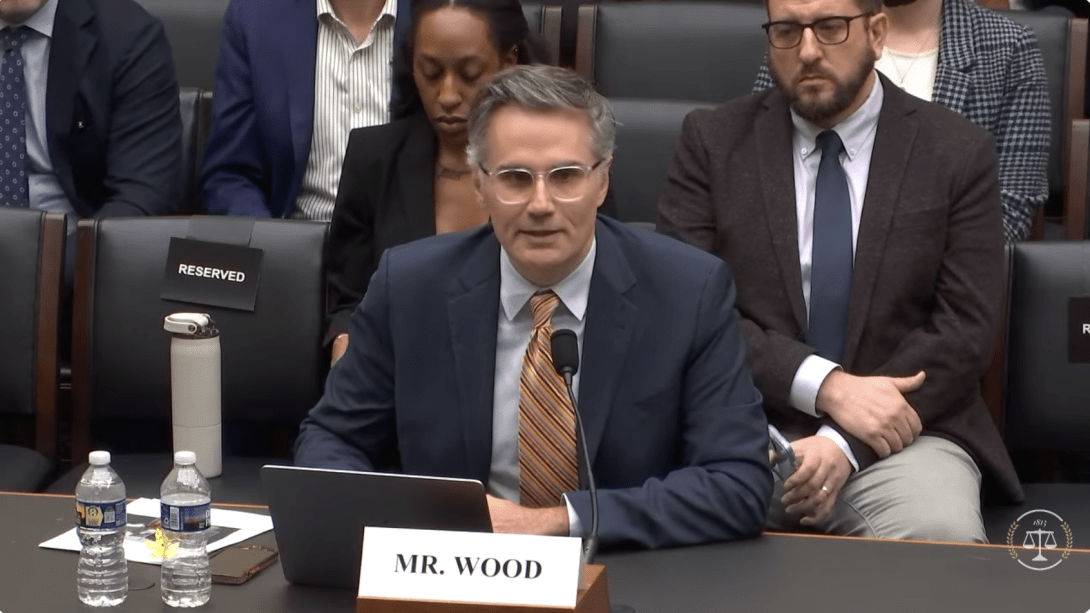
Free Press Action VP Matt Wood testifying in the House of Representatives
Since the beginning of the year, FCC Chairman Carr has sought to sabotage the Lifeline program, which was created during the Reagan administration to help make communications services more affordable for low-income communities. Carr has attacked the program and proposed changes that could intimidate eligible people from applying for Lifeline benefits. In May, Free Press filed comments denouncing these so-called reform efforts. Our filing shows how Lifeline has helped narrow long-standing digital divides related to race, ethnicity and income.
“The FCC’s latest proposed changes to Lifeline are not based on reason or evidence, but on Chairman Carr’s extremist politics, and his apparent belief that attacking the most vulnerable members of society aligns with the Trumpist agenda,” said Wood. “Because Lifeline is now working as intended for nearly eight million low-income households — and because of Brendan Carr’s demonstrated unseriousness and untrustworthiness — our central recommendation is for the FCC to preserve the Lifeline rules and reject the chairman’s harmful recommendations in their entirety.”
EXPOSING CORPORATE COWARDICE
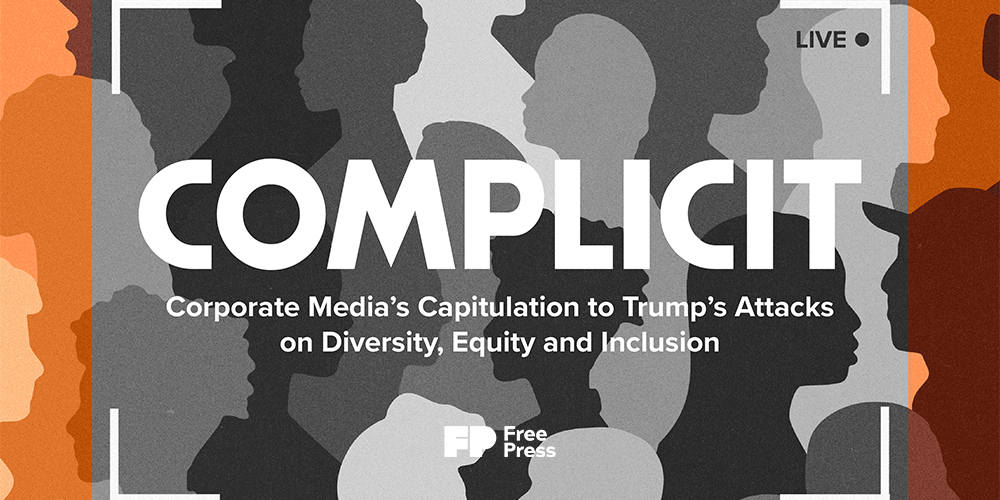
In January, Free Press released COMPLICIT: Corporate Media’s Capitulation to Trump’s Attacks on Diversity, Equity and Inclusion. Upon taking office in January 2025, Trump issued two anti-DEI executive orders to dismantle decades of civil-rights gains. This report documents how the nation’s largest media, tech and telecom companies subsequently retreated from prior commitments to promote DEI principles in their workplaces, policies and reporting.
Julia Sorrenti of Neta Collab
“A civil society thrives when diverse communities are fully represented and everyone is safe to express their opinions,” said Campaign Manager Ruth Livier, who wrote the report. “These vital principles are now under sustained assault from a Trump administration seeking to whitewash history, control the narrative and undermine opportunity for people of color and other targeted communities. Failing to serve as an essential check against tyranny, corporate players are increasingly serving as megaphones for the MAGA movement, putting vulnerable communities at greater risk of attack — and betraying our democratic values.”
PROVIDING INSIGHTS ON RACISM IN THE MEDIA INDUSTRY
Joseph Torres has done significant scholarship in his time at Free Press. He’s the co-author of the New York Times bestseller News for All the People: The Epic Story of Race and the American Media, which he wrote with Democracy Now! co-host Juan González. He’s also the co-author of the acclaimed essay Media 2070: An Invitation to Dream Up Media Reparations.
While continuing his work at Free Press, Torres is also currently serving as a visiting scholar at the Media, Inequality, and Change Center at the University of Pennsylvania. His original research explores the role that racism and capitalism have played in shaping U.S. media and information infrastructure. He continues to advise the Media 2070 project, a now-independent organization that Free Press incubated.
Torres is an executive producer of the documentary Barrio Television, which centers on Puerto Rican activists who, in 1972, created the first bilingual public-affairs series by and for Latinos on U.S. television. The documentary — directed by our longtime ally Christina DiPasquale — was a finalist for the prestigious Library of Congress Lavine/Ken Burns Prize for Film. Free Press partnered with DiPasquale to screen her film at the East Harlem branch of the New York Public Library, and Torres spoke during a panel discussion at the event.
In September, Torres gave a keynote address at Borealis Philanthropy’s conference in Chicago. “Reconstruction of our society is critical to our communities’ short-term and long-term well-being,” he said. “This means the reconstruction of our media system and media policies that support racial subordination — this means media reparations.”
REACHING NEW AUDIENCES
In September, Free Press marked the one-year anniversary of Pressing Issues, our twice-weekly newsletter with ideas and analysis about everything happening at the intersection of media, technology and democracy. Craig Aaron and Senior Producer and Strategist Julio Ricardo Varela created Pressing Issues, which features contributions from a range of in-house experts as well as interviews with prominent figures like Democracy Now! co-host Amy Goodman, Sen. Ed Markey and scholar Kimberlé Williams Crenshaw.
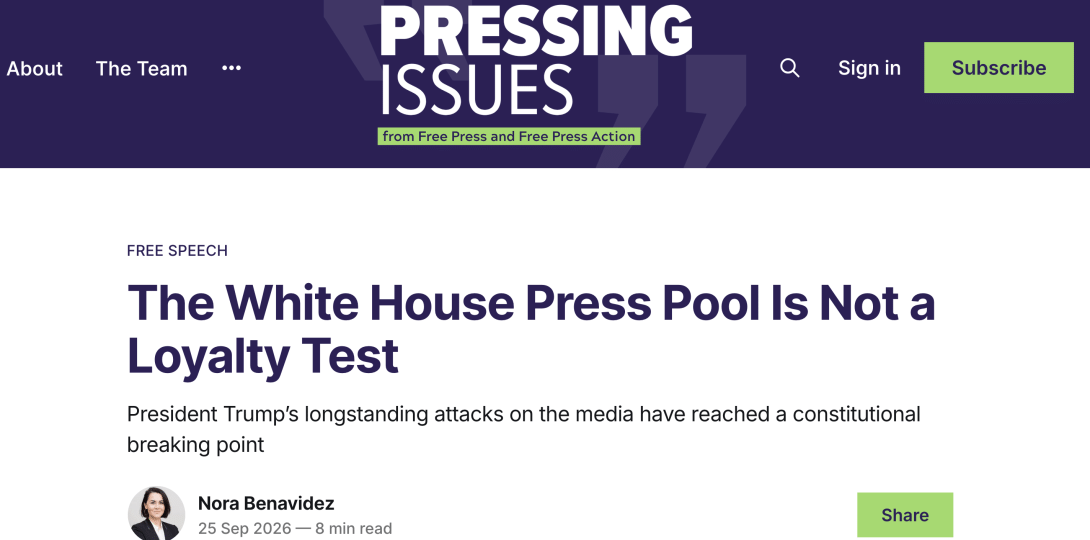
The newsletter has covered topics ranging from the rise of AI chatbots to challenges confronting community-media stations to the plight of the longest-detained journalist in ICE custody. “We’re driven by a belief that the media isn’t just something that happens to us,” Aaron wrote in the inaugural column. “It’s something that we can and must shape and change to create a true multiracial democracy.”
GETTING THE WORD OUT
We’ve had 2,800 press hits so far in 2026 in outlets including Agence France Presse, Al Jazeera, The Associated Press, CNN, Democracy Now!, The Guardian, The Los Angeles Times, MS Now, NBC News, The New York Times, Reuters and The Washington Post.
To join our community online and stay up to date on our work, you can follow Free Press on Bluesky, Facebook, Instagram, Threads and TikTok.
FUND THE FIGHT
Your generosity makes our work possible. Please give what you can today to make sure we have the resources we need to combat authoritarianism and push for equitable media and tech policies that improve people’s lives. We’re actively fundraising to ensure we preserve our skilled capacity to fight for your rights to connect and communicate in the future. You can give with confidence knowing that Free Press and Free Press Action are staunchly independent: We do not accept money from business, government or political parties.
You can support us by making a one-time or monthly donation below or by mailing a check to 1763 Columbia Road NW, Suite 175, PMB 270297, Washington, D.C. 20009. You can also make a contribution through a donor-advised fund, a qualified charitable distribution, a gift of stocks or securities, or a planned gift. For more information, please visit other ways to give or reach out to us.
Donate to Free Press
Help support our research, public education and organizing work in Washington and across the United States. Gifts to Free Press are tax deductible as allowed by law.
Donate to Free Press Action
Help us mobilize direct and grassroots advocacy efforts that oppose or support specific federal or state policies or legislation and advance the public interest. Gifts to Free Press Action are not tax deductible.
Thank you for your support!